I was sitting at my desk late last night, finally diving into some new astrophysics research after a long 10-hour shift at the bank. I usually love getting lost in these topics—you guys know how much I obsess over Interstellar, The Martian, and the dream of humanity becoming a space-faring civilization. But as I kept reading through the actual, unfiltered medical data from prolonged space missions, I literally got chills.
We all love the romantic idea of hopping on a starship, leaving Earth behind, and exploring the cosmos. We watch sleek sci-fi shows where everyone looks great in zero gravity. But the truth? The gritty, biological truth that space agencies rarely put in their PR videos is absolutely terrifying.
Our bodies were forged by Earth’s gravity over millions of years. When you take that away, the human machine doesn’t just get confused—it starts to systematically shut down. Let’s talk about exactly what happens to us in the deep dark of space, and why I personally might just prefer to stay grounded right here.
The Upward Shift: When Your Heart Overworks

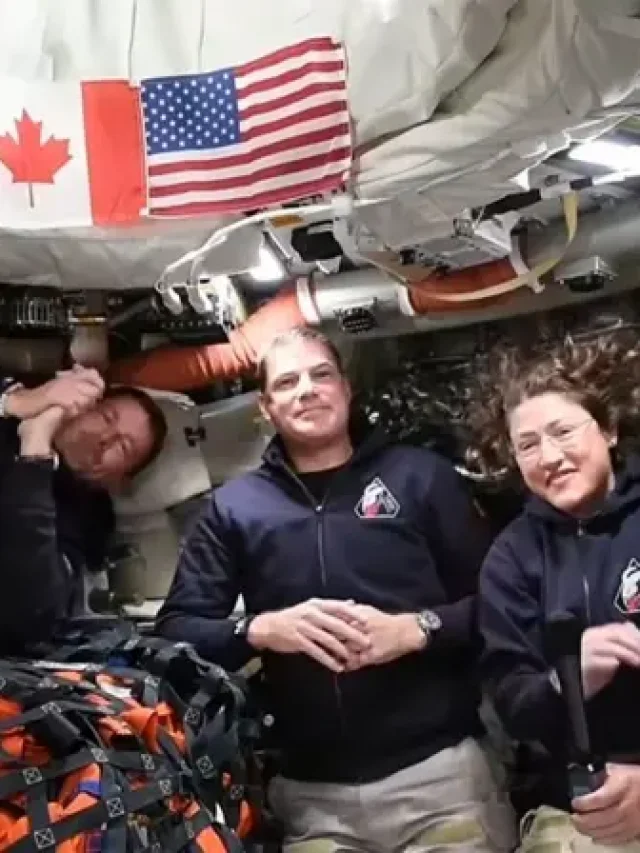
Down here on Earth, gravity is our invisible anchor. It pulls our blood down, and our heart is essentially a highly calibrated, high-powered pump designed specifically to push that blood up to our brain against that constant downward force.
So, what happens when you remove gravity completely?
- The Massive Fluid Rush: Without gravity pulling fluids down to your legs, all that blood violently shifts upwards into your chest and head.
- The “Puffy Face” and “Chicken Legs”: Within hours of leaving Earth’s atmosphere, astronauts’ faces become swollen and red, while their legs literally shrink in circumference because the fluid has completely abandoned them.
- Constant Pressure: Imagine hanging upside down from a tree branch. You know that intense, throbbing pressure in your head? Now imagine that feeling never going away.
When I realized that these brilliant engineers and scientists just have to live with this constant, agonizing cranial pressure while trying to perform complex orbital mechanics, my respect for them skyrocketed. But my desire to join them? It plummeted.
The Great Hormonal Crash: System Override

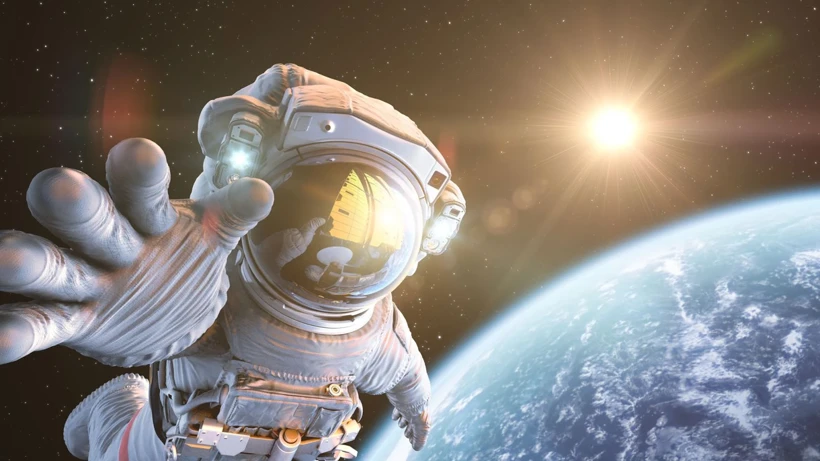
This is the part of the research that truly shocked me. Because your brain suddenly registers this massive influx of fluid rushing into your head, your body panics. It assumes you are drowning in your own fluids.
To save you, your biological system essentially pulls the plug on everything it deems “non-essential.” It’s exactly like your smartphone switching to extreme “Low Power Mode” when it hits 5% battery.
- Drastic Blood Loss: Your body actively starts eliminating blood plasma to relieve the pressure in your head. You can lose up to 20% of your total blood volume in space.
- Hormones Offline: With your system heavily stressed and resources aggressively reallocated, your hormones completely crash.
- The End of Intimacy: Because of this extreme, sustained biological trauma, the physiological systems responsible for reproduction and intimacy basically go completely offline. Your body decides that surviving the next 24 hours is the only priority, and everything else is a waste of energy.
I sat back in my chair, sipping my cold coffee, and really thought about this. We talk about generation ships, about starting families among the stars and building a new civilization. But our bodies fundamentally shut down the very mechanisms required to do so while we are in transit.
Wasting Away: The Battle for Your Bones


If the fluid shifts and hormonal crashes weren’t enough, your skeletal system decides to give up, too.
On Earth, every step you take puts stress on your bones, which signals your body to keep them dense and strong. In the weightlessness of deep space, your body acts like a ruthless accountant. It looks at your skeleton, realizes you aren’t using it to support any weight, and decides to stop funding it.
- Space Osteoporosis: Astronauts can lose up to 1% to 2% of their bone mass every single month they are in space. To put that in perspective, elderly men and women on Earth lose about 0.5% to 1% per year.
- Muscle Atrophy: Without gravity to fight against, your muscles start wasting away almost immediately.
To combat this, astronauts are forced to work out intensely for at least two hours every single day, strapped to specialized resistance machines, just to ensure they don’t turn into literal jelly by the time they return home. It’s a desperate, exhausting fight against your own biology.
The Claustrophobic Reality of the Tin Can

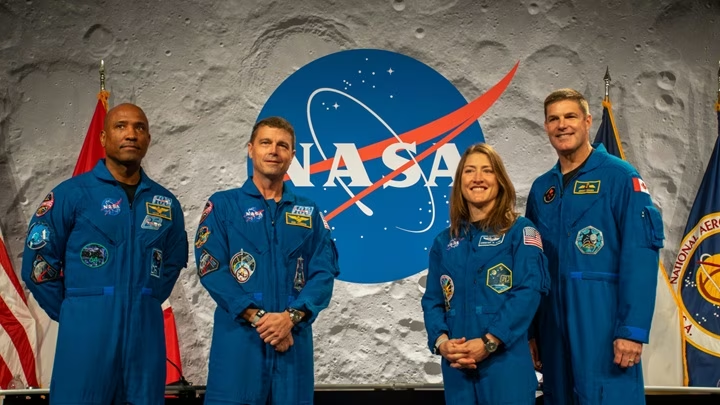
Beyond the physical decay, there is the raw, undeniable psychological and spatial reality. You aren’t cruising in the massive, luxurious hallways of the Starship Enterprise.
You are trapped in a highly pressurized, tiny tin can, surrounded by a lethal vacuum.
Every breath you take is mechanically recycled. Every drop of water you drink is chemically processed (and yes, that includes recycled sweat and urine). You cannot open a window to get some fresh air. You cannot take a walk in the woods to clear your head. The air smells metallic, and the background hum of life-support machinery never, ever stops.
As someone who works in an office all day and then spends the night editing videos at a desk, I know what feeling confined is like. But the isolation of deep space is a completely different monster. I honestly could never live in that tiny, claustrophobic capsule for months or years, knowing my body is shutting down, losing bone density, and sacrificing basic human functions just to survive the dark.
Are We Meant for the Stars?

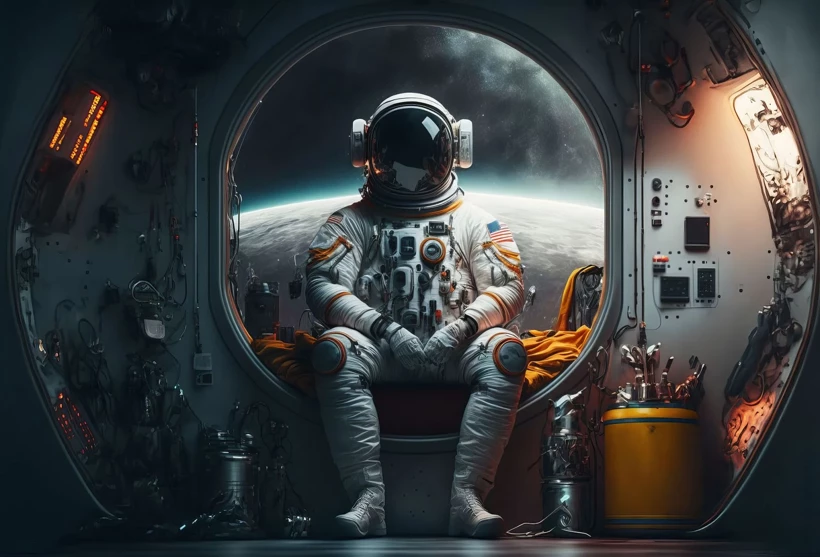
Listen, Spartans, we need pioneers. Humanity’s future relies on incredibly brave individuals who are willing to endure this biological torment so we can take our next giant leap into the cosmos. I love the technology, the rockets, and the science behind it all. I just know, without a shadow of a doubt, that I am not the one getting on that ship. The price is simply too high.
But this brings me to a massive question that I want to ask all of you.
Knowing all of this—knowing the severe physical toll, the extreme confinement, the loss of bone density, and the complete shutdown of your hormonal normalcy—would you do it? Would you pay this massive biological price just to be one of the first humans to truly conquer deep space?
Let me know your honest thoughts in the comments below. Would you give up your Earthly biology for the stars?
You Might Also Like;
- Samsung Enters the Robotics Arms Race: Inside the New RX Unit
- The Danger of AI Confidence: Why We Are More Wrong Than Ever
- The Hidden Threat Above Us: Are We Facing a Nuclear Arms Race in Space?
-
-
-

-

-

-

-

-

-
-

-

-