Are you ready to get lost in the darkness of space?
I sat down with a calculator the other night, thinking about our neighboring red planet, and I decided to run some numbers. We always hear about rockets and billionaire space races, but humanizing the sheer scale of the cosmos is something else entirely. The average distance between Earth and Mars is exactly 225 million kilometers.
When I calculated what that number actually means in everyday human terms, I was truly shocked. Space is so massive, so incomprehensibly huge, that our standard ways of measuring travel completely break down.
Let me break down these mind-bending numbers for you.
The Ultimate Commute: Everyday Vehicles vs. The Cosmic Void

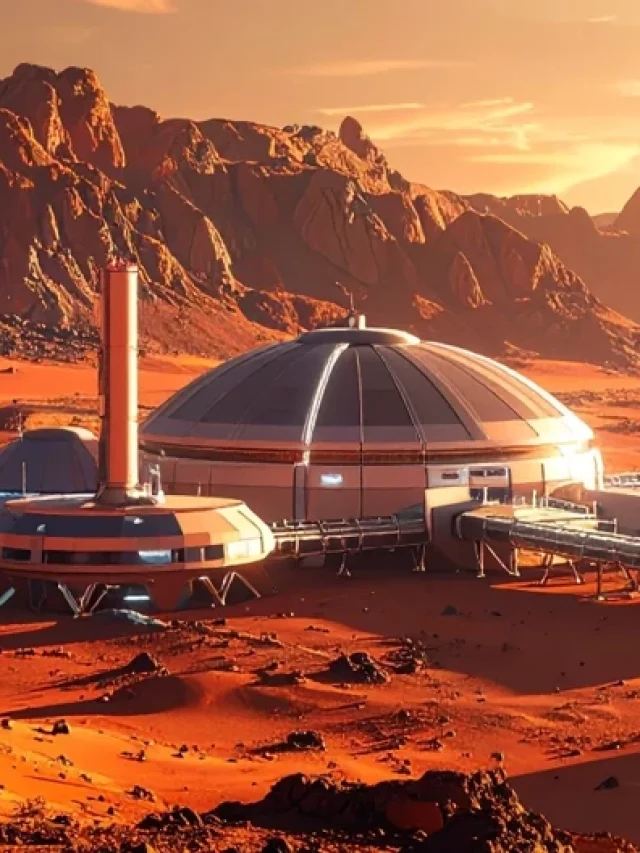
If we strip away the massive Saturn V rockets and the cutting-edge Starships, how long would it take to bridge that 225 million kilometer gap using the transport we use every day?
Here is what that journey looks like:
- The Walking Dead (or Just Really Tired): If you were to put on a pair of comfortable sneakers and walk non-stop toward Mars, reaching the red planet would take exactly 5,136 years. To put that in perspective, if you had started walking when the Great Pyramid of Giza was being built, you’d just be arriving now.
- Pedaling Through the Void: What about by bicycle? If you get on a bike and pedal at a steady, relentless pace without ever stopping for water or sleep, the journey takes 1,284 years.
- A Cosmic Road Trip: Imagine you are in a car, cruising at a comfortable 100 kilometers per hour in the vacuum of space. No traffic, no red lights. This bizarre road trip would take 256 years. You’d need a few generations of drivers just to handle the wheel.
- The Aerial Route: Even if you board a modern commercial passenger plane and fly at cruising altitude speed, you must stay in the air for 28 years. That is a quarter of a century staring out of a tiny plastic window into the endless dark.
When I think about how massive and ruthless space is, I literally get goosebumps. We are a tiny, fragile species living on a pale blue dot, looking out at distances that defy human logic.
Why The Distance Keeps Changing

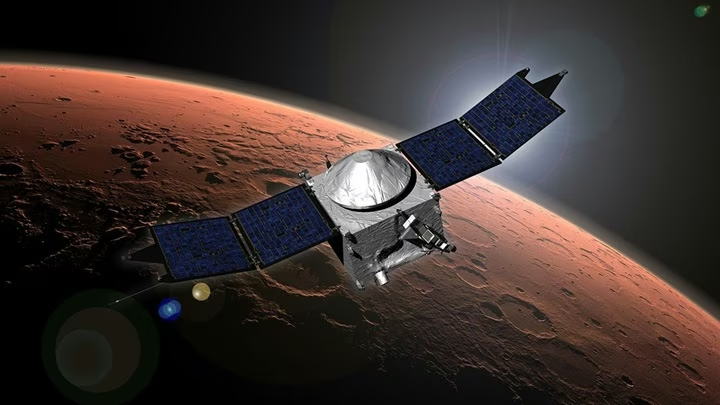
Here is the thing I always find fascinating about orbital mechanics: Mars isn’t just sitting there waiting for us. Both Earth and Mars are essentially racing around the Sun on different tracks and at different speeds.
This means the distance between us is constantly changing.
- Closest Approach: When Earth and Mars are on the exact same side of the Sun, the distance can shrink to about 54.6 million kilometers.
- Farthest Point: When we are on completely opposite sides of the Sun, that gap widens to a terrifying 401 million kilometers.
Because of this constant cosmic dance, space agencies can’t just launch a rocket whenever they feel like it. They have to wait for a “launch window”—a specific alignment that happens roughly every 26 months. If you miss that window, you are grounded for over two years.
How Real Astronauts Will Make the Journey


So, how do we actually do it? Since we clearly aren’t biking, we rely on chemical rockets. Using our current technology, a spacecraft takes roughly 7 to 9 months to reach Mars.
But distance is only half the battle. While researching the biological challenges of deep space, I realized that getting there is arguably the easy part. Keeping humans alive during the transit is where the real nightmare begins.
The Biological and Mental Toll
If you are locked in a metal tube for 9 months, you face several terrifying threats:
- Cosmic Radiation: Outside Earth’s protective magnetic field, astronauts are bombarded by solar flares and galactic cosmic rays. It damages DNA and poses massive health risks.
- Microgravity: Without gravity, human bones lose density and muscles atrophy. You can work out for hours a day, but your body still weakens.
- Isolation: Imagine being locked in a small room with three other people for almost a year, watching Earth shrink into a tiny, indistinguishable star. The psychological endurance required for this is immense.
The Future of Interplanetary Travel


I don’t believe we will be stuck with 9-month journeys forever. The tech world is moving incredibly fast, and there are concepts on the drawing board right now that could revolutionize how we traverse the solar system.
- Nuclear Thermal Propulsion (NTP): Instead of burning chemical fuel, these engines use a nuclear reactor to heat a propellant like liquid hydrogen. This could potentially cut the trip to Mars down to just 3 to 4 months, drastically reducing radiation exposure.
- Plasma Engines: Advanced ion thrusters and plasma propulsion systems are currently being tested. They provide a slow, steady acceleration that builds up to blistering speeds over time in a vacuum.
These aren’t just sci-fi concepts anymore; they are active engineering challenges. We are on the bleeding edge of becoming a multi-planetary species, and it is happening right in front of our eyes.
The Final Verdict
Looking at the numbers—5,136 years to walk, 28 years to fly, or 9 months packed in a highly explosive metal cylinder—it is clear that the universe doesn’t exactly want us to leave our home. But that has never stopped us before.
Which vehicle do you think would be the best for this journey? Would you brave the 9-month transit with today’s rockets, or would you wait until we figure out faster nuclear engines? Choose a side, drop your thoughts in the comments, and let’s discuss this.
Come on, subscribe now, join the community, and please support me as we continue to decode the future together!
You Might Also Like;
- AI World Cup Prediction: Spain Takes the Crown, But Turkey Shocks the Globe
- Airbus Reveals the Fully Autonomous U145 Helicopter: A Pilotless Revolution
- Ridley Scott Returns to the Post-Apocalypse: The Dog Stars Trailer Breakdown
-

-

-

-
-
-

-
-

-
-
-

-