I have a confession to make. For the longest time, whenever I saw those grainy, declassified videos of unidentified objects doing impossible, physics-defying zig-zags in the sky, a part of me was absolutely convinced: The aliens are finally here.
Whenever official sources released statements claiming these sightings were just “weather balloons,” I would literally roll my eyes. It felt like the ultimate, lazy government cover-up cliché. I mean, how could a slow, drifting piece of latex mimic the hyper-advanced maneuvers of an extraterrestrial spacecraft?
But recently, I decided to fall down a deep research rabbit hole to debunk this famous excuse once and for all. What I found completely shattered my perspective. When I looked into the actual atmospheric science and radar mechanics behind these balloons, I was shocked. Let me tell you, the scientific truth hiding in our upper atmosphere is honestly just as bizarre—and fascinating—as the alien theory itself.
The Invisible Giants of the Sky


To understand why a balloon can look like a UFO, I had to completely unlearn what I thought a “balloon” was. We usually picture something like a party balloon drifting lazily over a park. High-altitude weather balloons are a totally different beast.
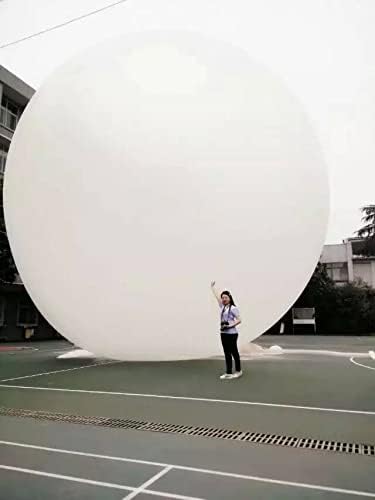
When they are launched, they are only partially inflated. But as they rise into the stratosphere—sometimes reaching altitudes of 100,000 feet (about 30 kilometers)—the atmospheric pressure drops drastically. This causes the gas inside to expand, turning the balloon into a massive sphere the size of a small building.
Here is where the radar mystery comes in, and this is what really blew my mind:
- Nearly Empty Space: A fully expanded weather balloon is almost entirely empty space filled with highly diffuse helium or hydrogen.
- Radar Invisibility: Traditional radar systems work by bouncing radio waves off solid, dense objects (like the metal fuselage of a jet). Because the balloon’s skin is incredibly thin and the inside is mostly gas, radar waves pass right through it.
- The Tiny Payload: The only thing the radar can occasionally detect is the tiny “radiosonde” box dangling beneath it.
To a military radar system, this setup looks incredibly confusing. The system might catch fleeting, erratic glimpses of a tiny payload swinging wildly on a string, completely failing to register the massive balloon carrying it. It registers as a tiny, ghostly object appearing and disappearing on the screen.
The Physics of “Impossible Maneuvers”


If you’re anything like me, you’re probably asking: “Okay, but what about the insane speeds and sharp turns? A balloon can’t do a 90-degree turn at Mach 2!”
This was my biggest sticking point. UFO sightings always feature these unbelievable, instant changes in direction that would instantly crush a human pilot with G-forces. How does a weather balloon explain that?
The answer lies in the invisible, chaotic violence of our upper atmosphere.
Swept Away by the Jet Stream
Up in the stratosphere, the air isn’t just calmly drifting. The atmosphere is layered with extreme, high-velocity wind currents called jet streams. These currents can reach speeds exceeding 200 to 250 miles per hour.
When a weather balloon ascends through the troposphere and suddenly hits a powerful jet stream, the results are visually spectacular:
- Instant Acceleration: A balloon drifting gently upward can be violently snatched by a jet stream, accelerating from 10 mph to 200 mph in a matter of seconds.
- Wind Shear Deflection: The atmosphere is full of shear layers—areas where wind currents blow in completely different directions just a few hundred feet apart. When a balloon crosses a shear boundary, it is violently violently whipped into a new trajectory.
- The Ground Illusion: Because these balloons are so incredibly high up, ground observers lack visual reference points. We can’t see the massive, roaring river of wind carrying the object. We just see a tiny, glowing dot (often reflecting the sun after it has set on the ground) suddenly darting sideways at an unbelievable speed.
When you combine a nearly invisible, radar-dodging profile with the ability to instantly catch a 200 mph invisible wind current, you get the exact signature of an alien spacecraft.
Trust, Aliens, and the Human Brain

Researching this really changed how I view not just UFOs, but how we process information. Our brains are hardwired to look for patterns and intent. When we see something moving with purpose and sudden speed in the sky, we instinctively assign intelligence to it. We want it to be a pilot. We want it to be an alien civilization coming to say hello.
It’s hard to accept that the true pilot is just the chaotic, raw physics of Earth’s atmosphere.
Of course, the historical context doesn’t help. Famous incidents like the 1947 Roswell crash were initially covered up by the military—not because they were hiding aliens, but because they were hiding highly classified acoustic balloons designed to detect Soviet nuclear tests (Project Mogul). That initial lie birthed decades of justified skepticism. Once trust is broken, “it’s a weather balloon” sounds like an insult to our intelligence.
Reality is Wilder Than Fiction
I started this journey wanting to prove the weather balloon excuse was a joke. Instead, I walked away with a profound respect for the wild, invisible mechanics of our planet. The idea that giant, ghostly spheres are constantly silently surfing invisible, 200-mph atmospheric tsunamis on the edge of space is, to me, incredibly poetic.
Sometimes, the scientific explanation isn’t the boring one. Sometimes, it just reveals that nature has a physics engine that puts our best sci-fi movies to shame.
But I’m just one person digging through the data, and I want to hear from you. After looking at the sheer atmospheric chaos these balloons get caught in, do you buy the scientific explanation for these impossible maneuvers? Or do you think the government is still using high-altitude physics as a convenient cover for something truly extraterrestrial hiding among us? Let me know what you think in the comments below!
You Might Also Like;
- Unmasking the Sky: The Bizarre Science of UFOs and Weather Balloons
- Alien: Isolation 2 is Officially Announced: Why I am Thrilled (and Terrified)
- Chasing the Ultimate Power Source: The World’s Largest Private Laser Fires Up for Commercial Fusion
-
-

-

-

-

-

-
-

-

-

-

-