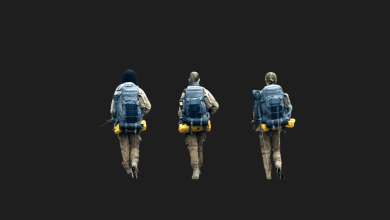
If you are one of those who constantly dream of leaving Earth and building a new life on Mars, this deep dive might just keep you awake at night. Grab a coffee, because we need to talk.
I’ve spent the last few weeks digging through declassified reports, scientific white papers, and actual mission data, and I was genuinely shocked by what I found. We all sit back and watch those magnificent, polished presentations by Elon Musk and SpaceX. We see the sleek Starships and the beautiful renders of domed cities. But the dark truths being discussed behind closed doors by astrophysicists and biologists are completely different.
I decided to look past the hype and examine the brutal, unforgiving reality of the Red Planet. What I discovered isn’t a sci-fi utopia; it’s a biological hell. Here are the 10 blood-curdling facts about Mars that made me think twice about ever wanting to board that spaceship.
1. The Gravity Trap: Your Muscles Will Literally Melt


We often talk about the journey, but what happens when you actually step foot on the surface? Mars only has 38% of Earth’s gravity. At first, bouncing around sounds fun, but I was horrified to read what this does to the human body long-term.
- Bone Density Loss: Without the constant pull of Earth’s gravity, your skeleton essentially decides it doesn’t need to be strong anymore. You lose bone mass at an alarming rate, making you incredibly fragile.
- Muscle Atrophy: Your heart is a muscle. Pumping blood in 38% gravity takes almost no effort. Over time, the heart shrinks and weakens.
If you spend a few years on Mars and try to return to Earth, simply standing up could crush your own skeleton. It’s a one-way ticket for your biology.
2. That Famous “Red Dirt” is a Deadly Poison


Whenever I looked at pictures from the Curiosity or Perseverance rovers, I always thought the red landscape looked beautifully rustic. But the truth? That dust is toxic.
The Martian soil, or regolith, is heavily concentrated with perchlorates—toxic chemical compounds used in rocket fuel here on Earth. Because the dust on Mars is as fine as baby powder, it will stick to spacesuits, get dragged into the airlocks, and eventually be inhaled. Long-term exposure to perchlorates attacks the thyroid gland and can be fatal. We aren’t just trying to survive the lack of oxygen; we’ll be living in a chemical hazard zone.
3. The 44-Minute Scream in the Void

This is the one that really got to my claustrophobia. Imagine something goes wrong. A habitat breach, a failing life-support system, or a severe medical emergency. Your instinct is to call Mission Control for help.
Because of the orbital distance between Earth and Mars, communication isn’t instantaneous. At its worst, there is a 22-minute delay one way.
- You scream for help: 22 minutes.
- Earth hears you and sends a solution: 22 minutes.
That’s a 44-minute communication blackout for a single question and answer. I realized that astronauts won’t just be explorers; they will be entirely, terrifyingly alone.
4. An Invisible Microwave Oven
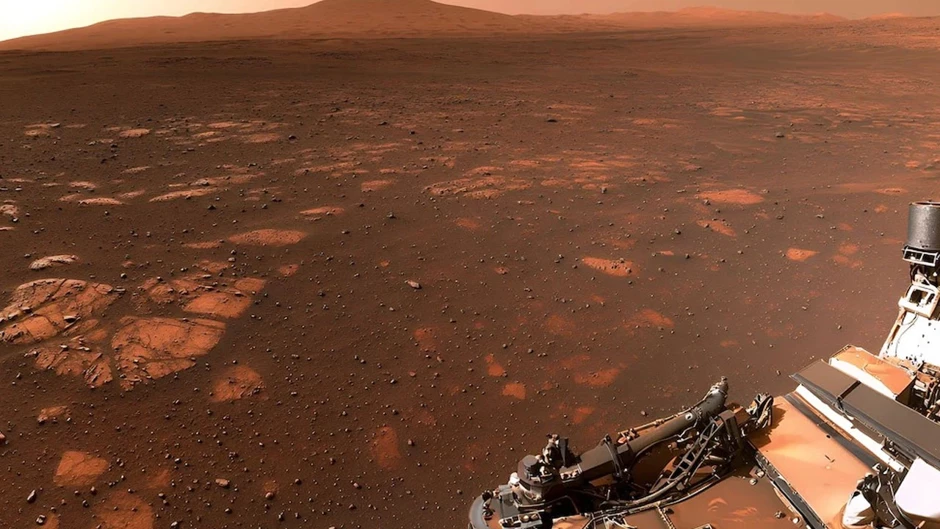
Earth has a massive, beautiful magnetic field that protects us from the brutal radiation of the sun and deep space. Mars? Its magnetic core died billions of years ago.
Stepping onto the surface of Mars is like stepping inside a slow-cooking microwave. The solar and cosmic radiation is so intense that living on the surface in glass domes is a complete fantasy. To survive, early colonists will likely have to live in cramped, artificial caves buried deep underground or under meters of ice. You won’t be staring out at a crimson sunset; you’ll be looking at a concrete wall.
5. Global Dust Storms That Swallow the Sun


We have storms on Earth, but nothing like this. I was reading up on the Martian weather cycles, and every few years, the planet experiences global dust storms.
These aren’t just passing clouds. These storms can blanket the entire planet for months at a time, completely blocking out the sun. If your colony relies heavily on solar panels for power—and therefore heat, water filtration, and oxygen generation—a months-long blackout is a death sentence.
6. The Ultimate Cabin Fever


Forget the physical dangers for a second; let’s talk about the mind. Psychological isolation is one of the biggest unspoken fears at NASA.
You will be locked in a pressurized tin can with the exact same small group of people for years. You can never go outside for a breath of fresh air. You can never feel the wind. You can never hear a bird. I tried to imagine living in my bathroom for three years without opening the window, and honestly, the sheer mental fortitude required is incomprehensible.
7. Invisible Bullets from the Sky
Because Mars has an incredibly thin atmosphere (about 1% the density of Earth’s), it doesn’t burn up space debris the way our sky does.
This means micro-meteorites—tiny rocks traveling at tens of thousands of miles per hour—constantly bombard the surface. They are essentially invisible, silent bullets. A single strike on a habitat module or a spacesuit visor could cause explosive decompression in seconds.
8. The Freezing Reality
Mars looks like a hot desert, but it’s actually a frozen wasteland. The average temperature is around -81°F (-62°C). While it can reach a balmy 70°F (20°C) near the equator on a summer day, the temperature plummets instantly when the sun goes down because there is no thick atmosphere to trap the heat. If your habitat’s heating system fails during a Martian night, you will freeze to death before Earth even receives your distress signal.
9. DIY Surgery in the Dark
What happens if you get appendicitis on Mars? Or break a femur? There are no hospitals, no specialist surgeons, and as we discussed, an agonizing communication delay.
Medical emergencies will have to be handled by crew members with limited medical supplies. I read a study suggesting that surgical procedures in micro or low gravity are incredibly dangerous because bodily fluids don’t pool—they float. A simple bleeding wound becomes a blinding, floating hazard inside a medical bay.
10. You Will Evolve into Something Else
If humanity somehow manages to survive the poison, the radiation, the gravity, and the isolation, the final secret is the most profound: We will stop being human.
Over generations, the harsh environment of Mars will force biological adaptations. The lack of gravity will permanently alter our bone structures, making us taller and much more fragile. The radiation might force genetic mutations. I realized that a successful Mars colony means giving birth to a completely new species—Martians who could never physically survive a trip back to the beautiful blue planet their ancestors called home.
So, What Do You Choose?
After going through all these facts, staring down the barrel of toxic soil, melting muscles, and absolute isolation, the glamorous sci-fi illusion shattered for me. We are deeply, biologically tied to Earth.
Do you think humanity is really ready to sacrifice its own body to this biological hell just to say we conquered another world?
I want to know what you think. Let’s vote in the comments below: Knowing the dark truth, would you still choose to be a test subject on Mars, or are you perfectly happy staying right here on Earth?
Don’t forget to subscribe to the newsletter and support my deep dives into the tech and space world. See you in the comments!
You Might Also Like;
- Unmasking the Sky: The Bizarre Science of UFOs and Weather Balloons
- Alien: Isolation 2 is Officially Announced: Why I am Thrilled (and Terrified)
- Chasing the Ultimate Power Source: The World’s Largest Private Laser Fires Up for Commercial Fusion
-
-
-

-
-
-
-
-
-
-
-

-