
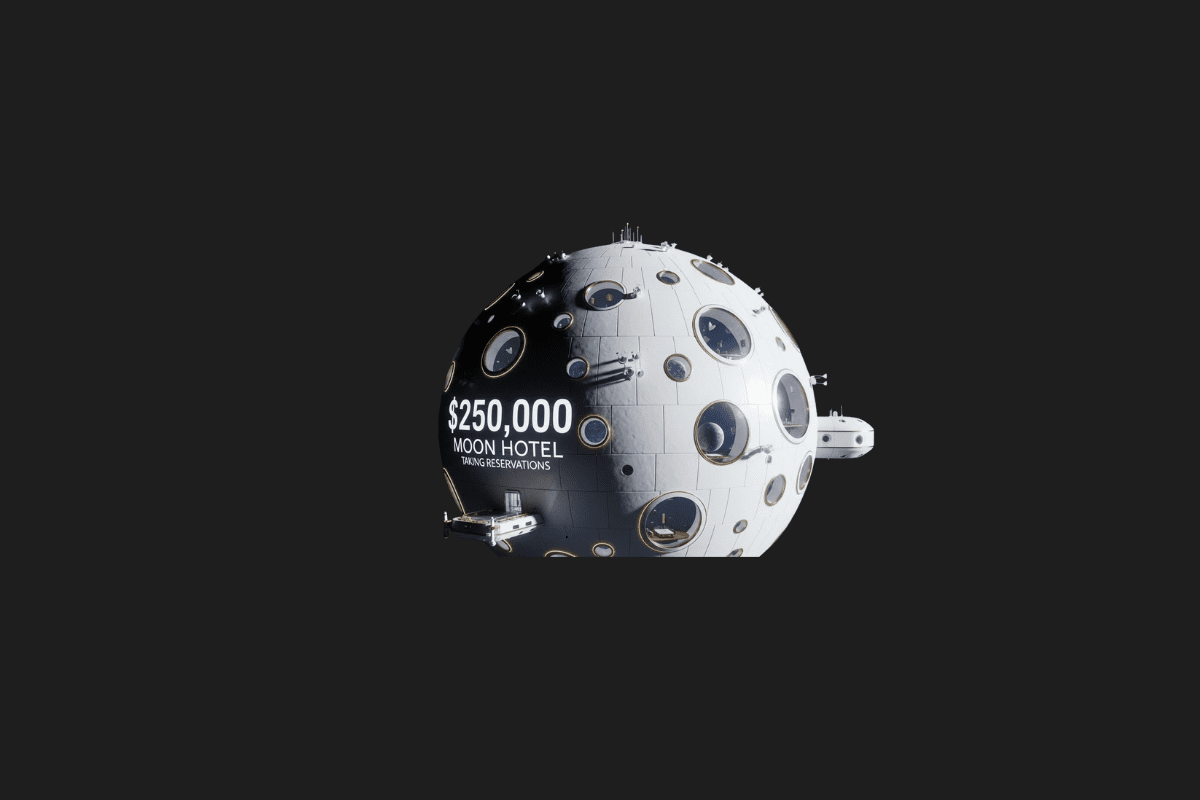
I have always been completely fascinated by the idea of humanity becoming an interplanetary species. Every time I watch a movie like The Martian, I catch myself wondering exactly how long it will take for us to actually figure out how to grow crops in the unforgiving, dead dirt of another world. Well, while digging into the latest developments in space science this week, I realized something incredible: that science fiction reality isn’t a distant dream anymore. It is happening right now, and the first major tests for lunar farming have just been successfully completed.
Recently, a critical symposium took place in Izmir, bringing together top minds from Turkey and Japan to crack the code on building a sustainable ecosystem on the Moon. We are no longer just looking at the sky with a desire to explore; we are actively trying to figure out how to survive and thrive out there. And spoiler alert: it all comes down to agriculture.
Why Farming on the Moon is the Ultimate Survival Test

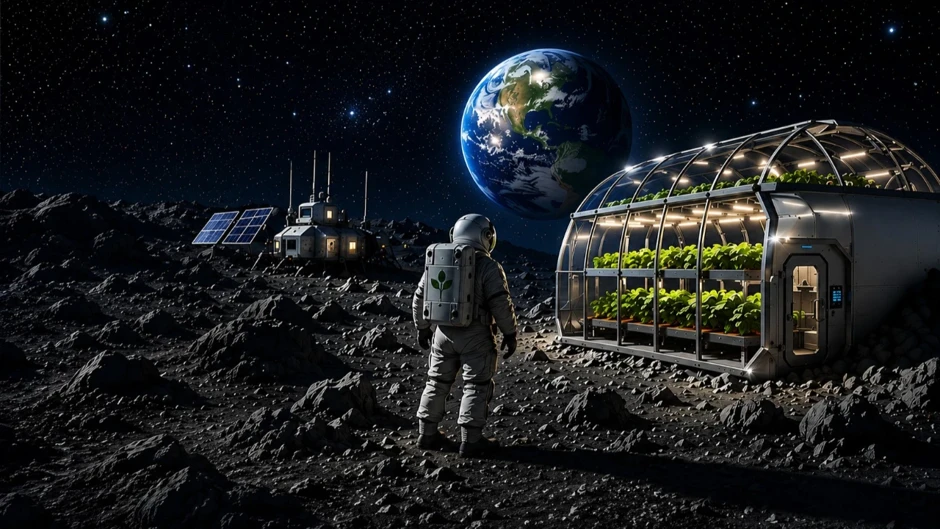
When we think about space missions, it is easy to get caught up in the heavy rockets and the cutting-edge robotics. But for long-term survival, the foundation is incredibly basic: food.
However, as Prof. Dr. Levent Kandiller from Yaşar University pointed out during the symposium, simply filling astronauts’ stomachs is not enough. If we are going to establish a permanent lunar colony, or use the Moon as a staging ground for deeper Mars colonization, our agricultural systems have to be the ultimate multi-taskers.
A sustainable lunar outpost relies on three critical, interconnected pillars:
- Nutritional Sustenance: Growing high-yield, nutrient-dense crops to keep crews healthy without relying on endless supply drops from Earth.
- Oxygen Generation: Utilizing the natural process of photosynthesis so these plants can act as biological life-support systems, constantly recycling the air.
- Waste Management: Creating a closed-loop ecosystem where human and biological waste is safely converted back into fertilizer for the next crop cycle.
Setting up this delicate three-way balance is the key. Without it, a permanent base is essentially a ticking clock.
The Extremophyte: A Turkish Plant Destined for the Stars

This is the part of the research that genuinely blew my mind. When you look at the lunar surface, you aren’t dealing with rich, dark potting soil. You are dealing with lunar regolith—a harsh, jagged, nutrient-poor, and heavily irradiated dust. How do you grow anything in that?
You look for the toughest plants on Earth.
Enter the “Extremophyte” experiment, a massive milestone in Turkey’s first manned space mission. Led by Prof. Dr. İsmail Türkan and his team, they zeroed in on a plant called Schrenkiella parvula.
- Where does it come from? It grows naturally around the incredibly harsh, highly saline environment of Lake Tuz (Tuz Gölü) in Turkey.
- Why does it matter? This plant thrives where almost nothing else can. It is genetically wired to withstand extreme salt stress and severe drought.
By sending Schrenkiella parvula to the International Space Station (ISS), scientists are testing its adaptation skills in a microgravity environment. Because it already possesses the genetic armor to survive Earth’s harshest soils, it is currently one of the absolute strongest candidates to conquer the unforgiving lunar dirt. I find it beautifully poetic that a tiny, resilient plant from a salt lake could be the very thing that helps us colonize the stars.
Recreating the Moon on Earth

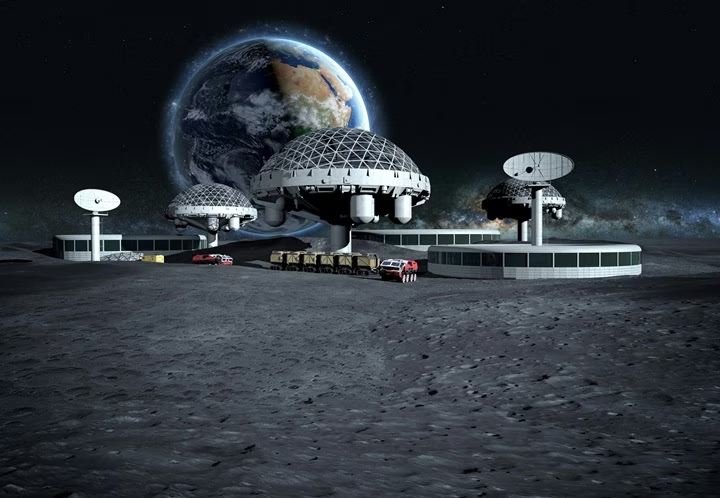
Of course, to test these theories on a larger scale before launching millions of dollars worth of seeds into orbit, we need to bring the Moon to us.
During the symposium, Prof. Dr. Cengiz Toklu from Istanbul Aydın University shared some fascinating technical groundwork. Using the exact geological data recovered from the historic Apollo missions, his team successfully manufactured an exact replica of lunar soil (a simulant) right here on Earth. This means we can run countless agricultural simulations without having to wait for the next lunar lander to return with samples.
The Global Effort: Uniting for a Multi-Planetary Future
The effort to build a space ecosystem isn’t just a local project; it’s a global collaboration. Japanese researchers, including Prof. Dr. Hideyuki Takahashi and Prof. Dr. Atsushi Higashitani, presented their own groundbreaking experiments at the event. They are looking closely at the intersection of plant growth and animal welfare in space, ensuring that as our artificial ecosystems grow more complex, they remain stable and supportive of all life forms.
It is clear that the Moon is no longer just a destination; it is a testing ground. Every seed we manage to sprout in that simulated regolith, every breath of oxygen we can generate from an extremophyte, brings us one massive step closer to building a self-sustaining city on Mars.
I don’t know about you, but seeing humanity unite to solve these incredible biological puzzles makes me incredibly optimistic about our future among the stars.
If you had the chance to live on a newly established lunar base, knowing that your entire survival depended on a delicate, closed-loop greenhouse system… would you take the risk?
You Might Also Like;
- Ask YouTube: The End of Traditional Video Search
- The Biggest Google Search Evolution in 25 Years
- Google’s Universal Cart Will Change How You Shop Forever
-
-
-

-
-

-
-
-

-
-

-
-

