
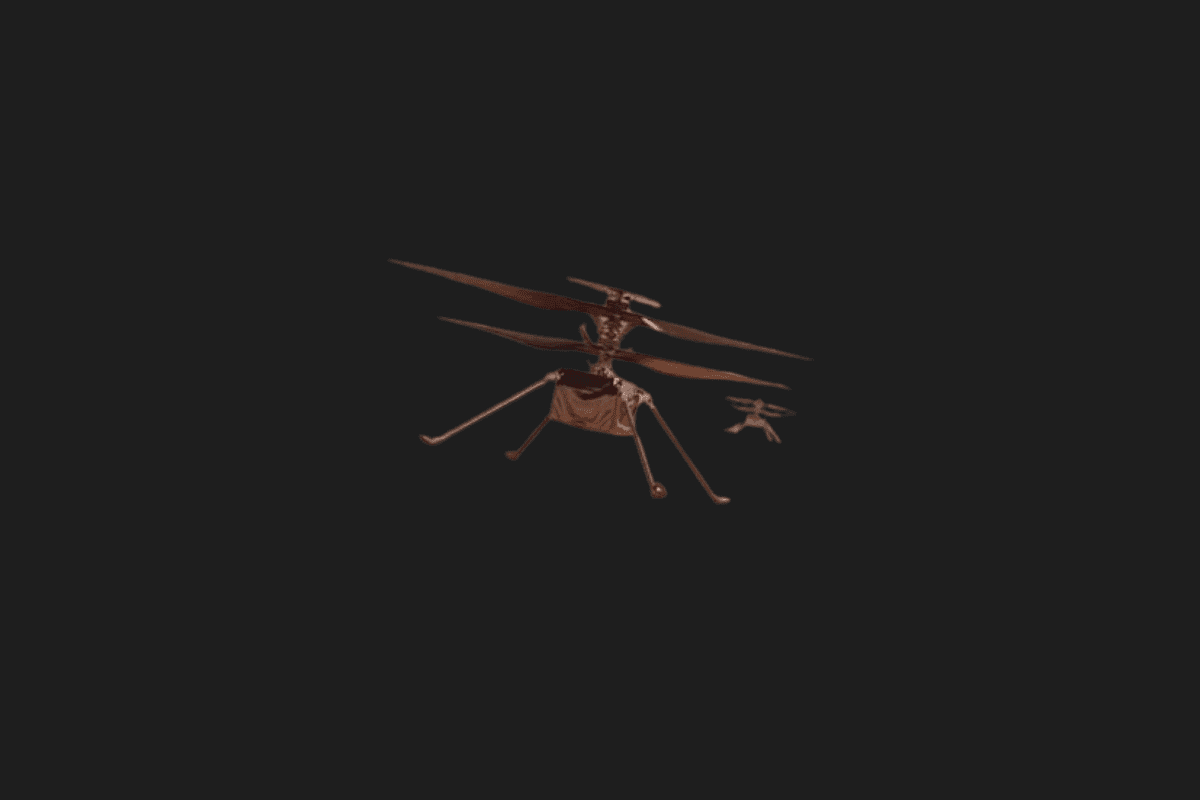
I still remember exactly where I was when I watched that first, grainy video of NASA’s Ingenuity helicopter taking flight. Seeing a human-made machine achieve controlled, powered flight on another planet—an atmosphere millions of miles away—was a moment that gave me absolute goosebumps. It felt like watching the Wright brothers, but on a cosmic scale.
However, as much as I loved our little Martian pioneer, Ingenuity was just a proof of concept. It proved we could fly. Now, I’ve been looking into the latest data coming out of NASA‘s Jet Propulsion Laboratory (JPL), and things are getting incredibly serious. We aren’t just hopping anymore; we are tearing through the aerodynamic limits.
NASA is currently testing their next generation of Mars helicopters under the Skyfall project, and they have successfully pushed their rotor systems past the speed of sound. Let’s dive deep into why breaking Mach 1 on Mars is an absolute game-changer for the future of space exploration.
From a Humble Hop to Supersonic Ambitions

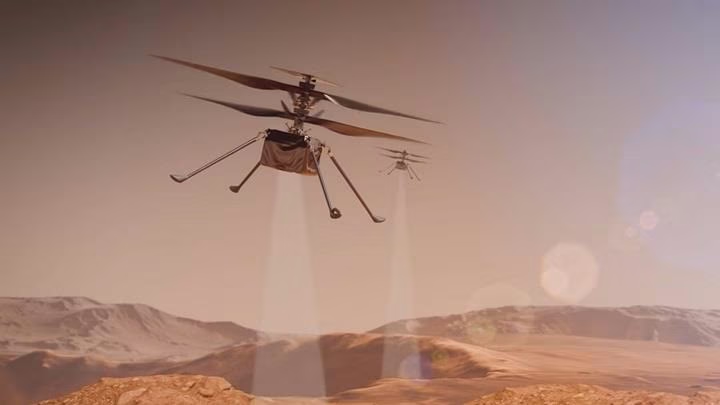
To understand why this new development is so massive, we have to look back at Ingenuity. That little drone was a masterpiece, but it had strict safety limits. Because the Martian atmosphere is roughly 1% as dense as Earth’s, flying there is like trying to fly a helicopter at 100,000 feet above Earth. There is barely any air for the blades to push against.
To keep Ingenuity from tearing itself apart, its foam rotors were capped at a maximum of 2,700 revolutions per minute (rpm).
But here is the reality I realized while researching this: if you want to explore Mars seriously, you need to carry heavy scientific equipment. You can’t just carry a lightweight camera. You need ground-penetrating radar, heavy batteries, and advanced sensors to scout for future human colonization. And to carry heavy gear in a thin atmosphere, 2,700 rpm simply isn’t going to cut it. You need much, much faster blades.
The Bizarre Science of Sound on the Red Planet
This is where the physics gets incredibly weird and fascinating.
If you try to spin helicopter blades too fast, the tips of the blades will eventually break the speed of sound. On Earth, this creates massive shockwaves, intense turbulence, and can literally destroy the rotor. But the “speed of sound” is not a fixed number—it changes depending on what the sound is traveling through.
- Earth: At sea level, the speed of sound (Mach 1) is about 1,223 km/h.
- Mars: Because the Martian atmosphere is incredibly thin and mostly made up of carbon dioxide, sound travels much slower. Mach 1 on Mars is only about 869 km/h.
This means that a helicopter on Mars will hit the sound barrier much sooner, and at lower RPMs, than it would on Earth. Engineering a physical rotor that can survive breaking the sound barrier in a carbon dioxide atmosphere is a monumental task.
Shattering the Barrier: The JPL Tests

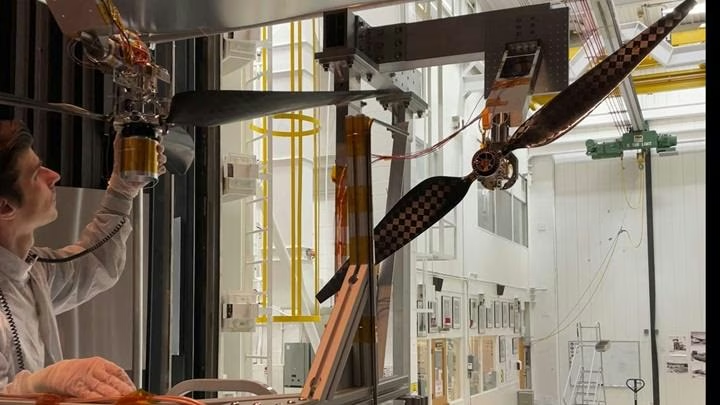
So, how did they do it? NASA partnered with AeroVironment and utilized a massive, specialized space simulation chamber at JPL. They essentially created a piece of Mars right here on Earth, pumping in the exact atmospheric pressure and gas composition of the Red Planet.
When they spun up the newly designed, next-generation carbon-fiber rotors, the results were mind-blowing:
- The RPM Jump: Engineers successfully pushed the new rotors up to an astonishing 3,750 rpm.
- Hitting the Limit: At this speed, the blade tips reached Mach 0.98—just shy of the sound barrier.
- Breaking Through: By integrating an additional fan into the simulation system to mimic aerodynamic crosswinds, the rotor tip speeds peaked at Mach 1.08.
They did it. They sustained supersonic rotor speeds in Martian conditions without the blades shattering into a million pieces. As someone who breathes technology and space exploration, reading these test logs feels like watching science fiction become hard reality.
Why Does Supersonic Speed Matter? The 30% Rule

You might be asking, “Ugu, this is cool science, but what does a supersonic helicopter actually do for us on Mars?”
It all comes down to payload capacity. Pushing the aerodynamic envelope this far means these next-generation helicopters can generate significantly more lift. According to NASA, this breakthrough will allow future Mars drones to carry 30% more weight compared to current systems.
Here is what that extra 30% buys us:
- Heavy-Duty Science: Instead of just taking photos, these drones can carry complex scientific instruments. We are talking about deep-scanning lasers and spectrometers.
- Sub-Surface Mapping: They can carry sensors that don’t just look at the rocks, but look under the surface, scanning for ice, caves, or geological anomalies.
- Bigger Batteries: More lift means you can carry a heavier power source, allowing for longer flights, greater range, and survival through the brutally cold Martian nights.
Project Skyfall: A Fleet of Martian Drones
All of this incredible engineering is leading up to one specific mission: Project Skyfall.
NASA is currently targeting December 2028 for the launch of the Skyfall mission. But the most exciting part? They aren’t just sending a replacement for Ingenuity. The current plan is to send three advanced helicopters in a single mission.
Imagine a coordinated swarm of high-speed drones flying in formation across the Valles Marineris canyon. They will be mapping the terrain in high-definition 3D, analyzing the weather, and scouting safe landing zones and resource deposits for the human colonists that will eventually follow. It completely shifts our approach to planetary exploration. The days of solely relying on slow-moving wheeled rovers are coming to an end. The future of Mars exploration is airborne.
I truly believe we are witnessing the foundation of a permanent, flying infrastructure on another planet.
What about you, Spartans? If you could grab a joystick and pilot one of these supersonic Skyfall drones for just five minutes on Mars, what crater, canyon, or mountain would you fly to first? Let me know in the comments below!
You Might Also Like;
- Google Unveils Pics: The Canva Killer Built Directly into Workspace
- Turning Your Real Neighborhood Into a Video Game
- Android Halo: Tracking AI Agents in Real Time
-
-
-
-
-

-

-

-
-
-

-
-

