
After another exhausting shift at the bank today, I finally got home, brewed a massive pot of coffee, and sat down at my desk to look at the stars—well, at least the digital ones on my screen. You all know how obsessed I am with the future of humanity, space exploration, and the inevitable colonization of Mars. But tonight, while researching the latest developments in deep space missions, I stumbled upon a story that genuinely gave me chills.
We always talk about the rockets, the thrusters, and the orbital mechanics of getting to Mars. But what about the human mind? Right now, as you read this, the most critical phase of our journey to the Red Planet is silently unfolding not in space, but inside a small, windowless laboratory in Texas.
NASA has locked four volunteers inside a 158-square-meter box to see if they can survive the psychological torment of a Mars mission. And things are getting intense. Let’s dive deep into the CHAPEA project and explore what it takes to survive the ultimate test of human endurance.
What is the CHAPEA Project?

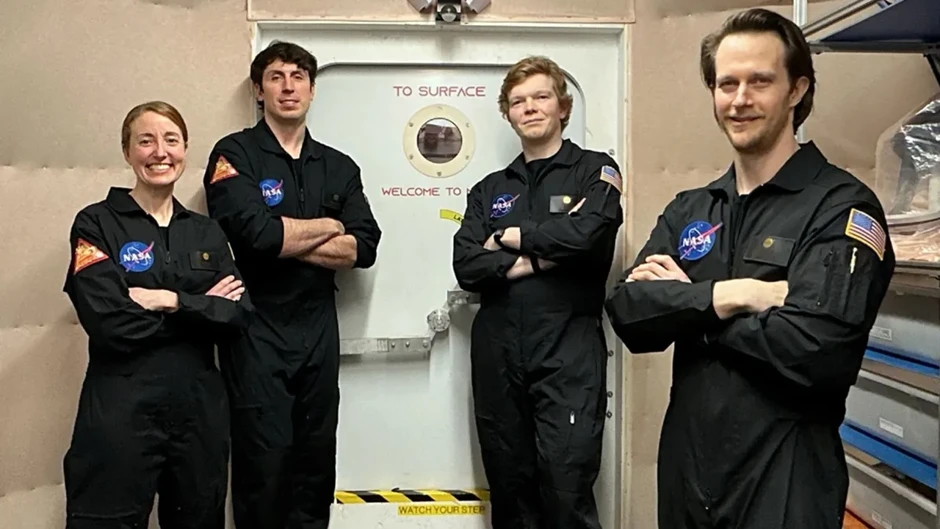
If we are going to send humans millions of miles away to a barren, irradiated wasteland, we need to know exactly what happens to their bodies and minds when things go wrong. That is exactly why NASA accelerated its CHAPEA (Crew Health and Performance Exploration Analog) project.
Built inside the Johnson Space Center, this isn’t just a regular building. It is a highly specialized, 158-square-meter habitat created entirely using advanced 3D printing technology. Why 3D printing? Because when we eventually land on Mars, we won’t be carrying bricks and cement from Earth. We will use autonomous robots to 3D print our bases using local Martian soil (regolith). This Texas facility is a direct prototype of that future architecture.
Four volunteers stepped into this modern-day isolation chamber back on October 19, 2025. They left behind the comfort of the modern world, their families, their smartphones, and the feeling of fresh air. They have already surpassed the 200-day mark, pushing the absolute limits of their physical and mental endurance.
But right now, they are facing their biggest challenge yet.
The Sound of Absolute Silence
When I was reviewing the mission logs, one specific detail completely blew my mind. The biggest threat to this crew isn’t a lack of food, water, or oxygen. It is the absolute, crushing silence.
Because of planetary orbits, there are periods when Mars passes directly behind the Sun from Earth’s perspective—an event known as a solar conjunction. During this time, the Sun’s highly charged corona heavily disrupts radio signals, making communication impossible.
To make this simulation brutally realistic, NASA has plunged the CHAPEA crew into a 15-day total communication blackout.
- No Mission Control: They cannot ask for help, advice, or technical support.
- No Earth Connection: No messages from family, no news updates, absolutely zero contact with the outside world.
- Total Autonomy: If a life-support system fails (simulated, of course), they have to figure out how to fix it themselves using only the manuals and tools they have on hand.
Even under normal Martian conditions, a simple “Hello” takes about 20 minutes to reach Earth, and the reply takes another 20 minutes. Imagine facing a critical fire or medical emergency and having to wait 40 minutes just to hear someone say, “We read you.” Now, imagine not getting a reply at all for over two weeks. That is the psychological pressure cooker these four individuals are living in right now.
Deep Space Medicine: The Great Unknown

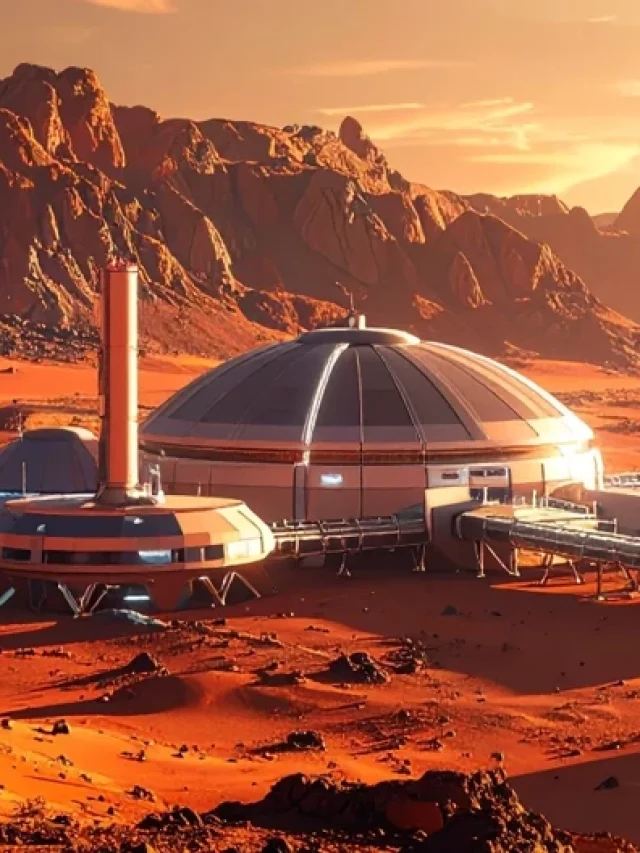
As someone who spends his nights analyzing the future of transhumanism and our biological limits, the medical aspect of this mission is what fascinates me the most. We have a lot of data from the International Space Station (ISS), but the ISS is practically in our backyard. If an astronaut gets seriously sick on the ISS, we can have them back on Earth in a matter of hours in an emergency. On Mars, you are entirely on your own.
The crew—Commander Ross Elder, Medical Officer Ellen Ellis, Science Officer Matthew Montgomery, and Flight Engineer James Spicer—are acting as pioneers for deep space medicine.
They are juggling multiple roles every single day:
- Tending to hydroponic gardens to grow their own food (a massive psychological boost).
- Conducting complex robotic operations and habitat maintenance.
- Monitoring their own biometrics to track cognitive decline and stress levels.
Flight Engineer Spicer mentioned that their core motivation is simply contributing to NASA’s deep space goals. But Science Officer Montgomery raised a point that I completely agree with: extreme restriction breeds extreme creativity. When equipment breaks and you don’t have spare parts, you have to invent a solution. Every failure inside that Texas box is worth its weight in gold because it prevents a fatal disaster on the actual Martian surface.
Why Earth Orbit Just Isn’t Enough
Experts are finally admitting a hard truth: our experience in Earth orbit is insufficient for establishing a permanent Martian colony.
The gaps in “space medicine” become terrifyingly obvious when dealing with closed-loop, self-sustaining ecosystems. We still don’t have clear answers to some critical questions:
- How do highly intelligent, trained professionals react to prolonged, inescapable confinement with the same three people?
- How much does chronic stress degrade cognitive performance and decision-making skills?
- What happens to the human immune system when it is isolated from Earth’s diverse biome for years?
The health data extracted from this tiny 158-square-meter habitat won’t just pave the way for Mars. It will be the foundational blueprint for the sustainable lunar bases we plan to build during the upcoming Artemis missions.
My Take: The Human Element of the Cosmos
Whenever I write about our push to the stars on Metaverse Planet, I am reminded that technology is only half the battle. We can build the biggest rockets, the smartest AI agents, and the most advanced quantum sensors. But at the end of the day, there is a fragile, emotional, carbon-based human sitting inside that tin can.
We are not machines. We are social creatures who crave sunlight, the sound of wind, and the comfort of our loved ones. What the CHAPEA crew is doing right now is heroic. They are sacrificing their present reality so that humanity can have a future among the stars. And honestly, knowing that NASA plans to push the boundaries even further with a third CHAPEA marathon gives me immense hope.
The first person to walk on Mars might already be alive today, and they will owe their survival to four people who spent a year locked in a 3D-printed box in Texas.
I have to ask you guys: If NASA offered you a spot in the next CHAPEA mission—knowing you’d be completely cut off from the world, your family, and the internet for an entire year—would you have the mental toughness to accept it?
Let me know in the comments below. Let’s discuss!
You Might Also Like;
- Samsung Enters the Robotics Arms Race: Inside the New RX Unit
- The Danger of AI Confidence: Why We Are More Wrong Than Ever
- The Hidden Threat Above Us: Are We Facing a Nuclear Arms Race in Space?
-
-
-
-
-
-

-
-

-
-
-
-
