Usually, when we talk about science fiction here, we are breaking down the hopeful physics of Interstellar, the philosophical depths of AI in The Matrix, or how real-world tech like SpaceX and humanoid robots are catching up to our wildest dreams. Sci-fi is often the genre of hope. It promises us that no matter how hard things get, human ingenuity will carry us to the stars.
But what happens when the equation breaks?
What happens when our drive to discover pushes us into spaces we were never meant to enter? Sometimes, science fiction isn’t about saving the world; it is about watching it unravel. I recently went down a rabbit hole re-watching some of the darkest corners of the genre, and let me tell you, Spartans, these aren’t the kind of movies you put on with a bowl of popcorn on a Tuesday night.
These films take familiar concepts—space travel, biological experiments, alternate dimensions—and twist them into something deeply uncomfortable. When the credits roll on these, you don’t feel inspired. You feel a lingering sense of dread.
If you are brave enough, here is my detailed breakdown of 5 deeply disturbing sci-fi movies that you should absolutely not watch alone.
1. Annihilation: When Reality Forgets Its Own Code

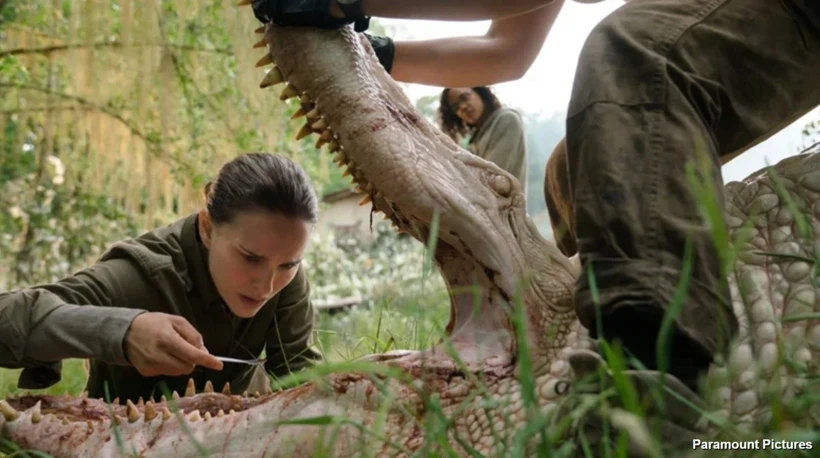
Directed by Alex Garland, Annihilation takes the concept of an alien invasion and completely rewrites the rules. Instead of flying saucers and laser beams, we get “The Shimmer”—a strange, expanding, iridescent electromagnetic field that has formed around a meteor crash site.
When a team of scientists, led by a biologist played by Natalie Portman, enters the zone, they realize this isn’t an enemy they can just shoot.
Why It Messes With Your Head
As someone who spends hours analyzing generative AI and how algorithms rewrite themselves, watching nature “glitch” inside The Shimmer was pure psychological terror.
- Biological Refraction: The Shimmer acts like a prism, but instead of refracting light, it refracts DNA. Plant life, animal life, and human biology start merging in grotesque, beautiful, and terrifying ways.
- The Loss of Self: The true horror isn’t jump scares; it is the slow realization that the characters are losing their minds and their physical identities. They are dissolving into the environment.
- That Bear Scene: If you have seen it, you know exactly what I am talking about. It is one of the most chilling creature designs and sound design choices in modern cinema.
The ending offers absolutely no comfort or clear answers. It leaves you staring at the screen, wondering what it actually means to be human when your very cells can be rewritten by an alien algorithm.
2. The Fly: A Masterclass in Biological Decay

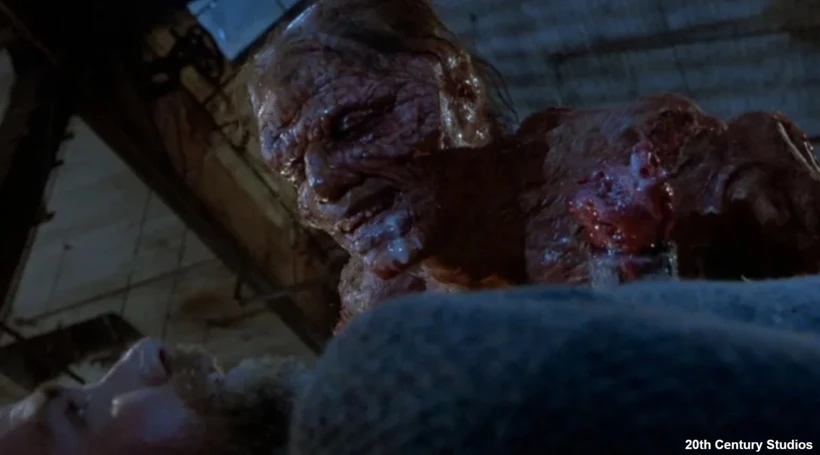
When we talk about teleportation in tech circles, we think of the ultimate convenience—instantaneous travel. But back in 1986, director David Cronenberg looked at that concept and asked a horrifying question: What if the machine makes a mistake?
Jeff Goldblum plays Seth Brundle, a brilliant, eccentric scientist who successfully builds a set of “telepods.” But during a drunken test run on himself, a simple housefly slips into the pod with him. The computer gets confused and splices their genetics together at a molecular level.
The Tragedy Behind the Terror
- A Slow, Agonizing Transformation: This isn’t a superhero origin story. Brundle doesn’t just get fly powers. His body slowly, violently rejects its own humanity. Skin peels, teeth fall out, and his behavior becomes erratic and insect-like.
- The Heartbreak of the Observer: The heaviest part of this movie isn’t just the practical effects—which are still disgustingly incredible today—but watching the tragedy through the eyes of his lover, played by Geena Davis.
- Science Without Safety Nets: It is the ultimate cautionary tale about pushing beta technology to production before it is ready. Brundle’s hubris costs him his humanity, and the descent is agonizing to watch.
3. The Mist: The Monsters Inside the Box

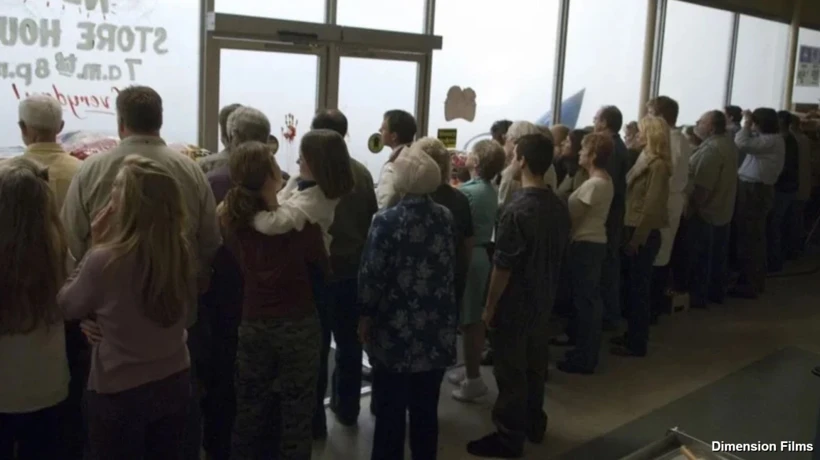
Stephen King adaptations are hit or miss, but Frank Darabont’s take on The Mist is a suffocating masterpiece of cosmic horror. A small town is suddenly swallowed by an impossibly thick fog. Inside the fog? Massive, Lovecraftian creatures that will shred you to pieces if you step outside.
A group of locals, including our protagonist played by Thomas Jane, barricade themselves inside a supermarket. But the real threat isn’t just what is banging on the glass.
The Breakdown of Society
- The Pressure Cooker Effect: I always say that technology and civilization are fragile constructs. This movie proves it. Within days, the terrified people inside the supermarket form cults, turn on each other, and completely abandon reason.
- Religious Extremism vs. Rationality: Watching the mob mentality take over is deeply uncomfortable because it feels incredibly realistic. Put terrified people in a box, give them a scapegoat, and they will become worse than the alien bugs outside.
- The Most Brutal Ending in Cinema: I won’t spoil it if you haven’t seen it, but The Mist features an ending so dark, so completely devoid of hope, that even Stephen King admitted it was better than the ending he originally wrote in his book. It will ruin your week.
4. Event Horizon: We Dug Too Deep

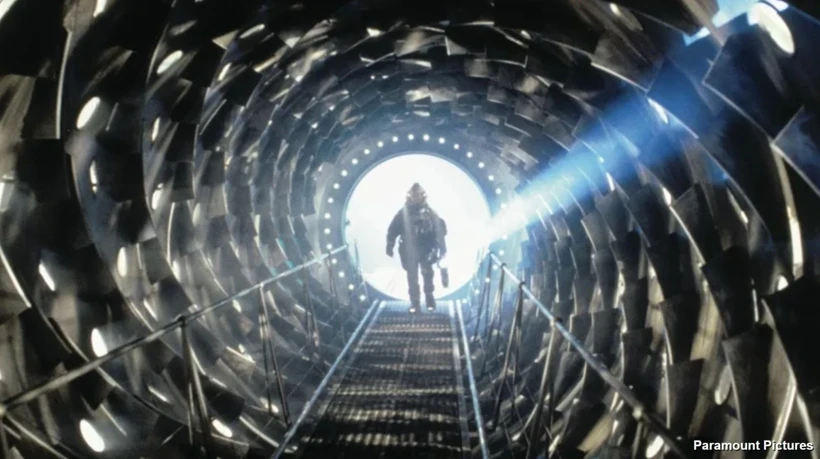
We spend a lot of time on this platform talking about the future of deep space exploration, Mars colonization, and the engines that will take us there. But Event Horizon explores the terrifying idea of building an engine that takes us somewhere we were never supposed to see.
A rescue crew is sent to investigate the Event Horizon, a ship that disappeared years ago after testing an experimental gravity drive designed to fold space-time. The ship has returned, but it brought something back with it.
Pure Deep Space Dread
- Science Meets the Supernatural: Laurence Fishburne and Sam Neill lead a cast that slowly realizes they aren’t dealing with a simple mechanical failure. The ship’s experimental drive essentially punched a hole into a dimension of pure chaos and suffering.
- The Isolation of Space: There is no backup coming. They are lightyears from Earth, trapped inside a gothic, spiked, bleeding haunted house in the middle of a vacuum.
- The Videos: The recovered data logs from the original crew are some of the most genuinely shocking, visceral flashes of horror ever put in a mainstream sci-fi film.
It completely flips the optimistic Star Trek narrative of “boldly going where no man has gone before” into “we never should have left home.”
5. Under the Skin: The Cold Alien Gaze

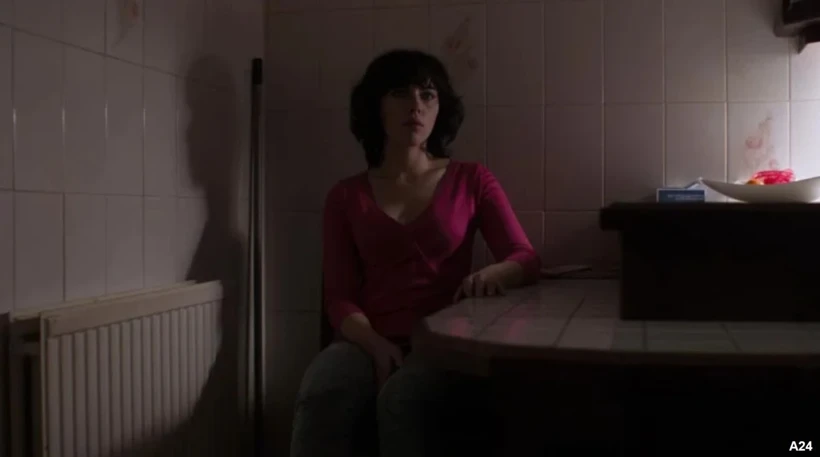
Jonathan Glazer’s Under the Skin is fundamentally different from every other movie on this list. It is quiet, methodical, and icy cold. Scarlett Johansson plays an extraterrestrial entity disguised as a beautiful human woman, driving a van around Scotland to pick up lonely, unsuspecting men.
There are no massive spaceships or laser battles. Instead, the horror comes from the complete detachment of the protagonist.
A Masterpiece of Unease
- Hidden Camera Realism: Many of the scenes where Johansson interacts with men on the street were filmed with hidden cameras using non-actors. This grounds the bizarre, alien narrative in a gritty, uncomfortable reality.
- The Void: When she lures men back to her lair, they don’t get violently attacked. They step into a surreal, black, liquid void where they are slowly, silently harvested. It is visually mesmerizing and deeply sickening.
- Processing Humanity: As someone fascinated by how artificial intelligence tries to mimic human emotion, watching this alien struggle to understand human vulnerability, empathy, and physical form was fascinating.
The movie refuses to hold your hand. It offers almost zero dialogue or exposition, forcing you to simply observe this predatory alien logic at work.
Final Thoughts
These films don’t follow the classic “hero defeats the monster” blueprint. They exist to remind us that the universe is vast, uncaring, and full of variables we cannot control. They ask the ultimate question: As our science and technology rapidly advance, what pieces of our humanity are we risking in the process?
And honestly, most of the time, these movies don’t offer an answer. They just leave you sitting in the dark, staring at the screen, dealing with the silence.
Now, I turn it over to you, Spartans: Have you watched any of the films on this list, and if so, which one messed with your head the most? Or is there another dark sci-fi movie that you think belongs on this list? Drop your thoughts in the comments below, let’s debate!
You Might Also Like;
- The Hybrid Robot Revolution: Unitree’s AS2-W Blurs the Line Between Industry and the Battlefield
- AI Diaries: Weekly AI News and Updates (July 28, 2026)
- Inside the Freelander 8: The Ultimate Luxury Tech Cabin Revealed
-
-

-
-
-
-

-
-

-
-

-
-