
We have all watched those eerie, high-concept sci-fi movies where human consciousness blurs seamlessly into digital lines of code. For decades, the boundary between biological intent and silicon execution remained firmly locked inside Hollywood screenplays and high-budget academic labs.
Then overnight, that boundary collapsed.
In Neuralink’s landmark human trial, a patient equipped with a brain-computer interface (BCI) didn’t just execute a basic, proof-of-concept command like moving a cursor or playing a slow game of digital chess. They began navigating the web with breathtaking precision—achieving millisecond latency and setting a new benchmark for how biological neurons communicate with digital architecture.
As someone who tracks emerging technology every single day, I find this moment both profound and deeply unsettling. We are no longer discussing a distant theoretical framework. We are witnessing the first tangible iterations of a hybrid biological-digital ecosystem.
Beyond the Medical Breakthrough: The Signal Acceleration Curve


The media frequently frames Neuralink’s progress as a purely medical miracle, and for good reason. Restoring agency, mobility, and communication to individuals living with severe paralysis or neurological impairment is a revolutionary clinical achievement.
However, if we look closely at the underlying technical dynamics, the implications stretch far beyond healthcare.
- 40% Signal Transfer Acceleration: Early benchmarks show a massive leap in data transfer rates compared to legacy non-invasive BCI systems.
- Direct Sub-Millisecond Neural Routing: Eliminating physical intermediaries (touchpads, mechanical switches, optical eye-trackers) enables direct interface with network protocols.
- Continuous Adaptive Calibration: Machine learning algorithms mapped to the array learn and adjust to individual neural firings in real-time.
[ Biological Cortex ]
         │ (Electrical Impulse)
         ▼
[ N1 Implant Array ] ──── (Wireless Data Stream) ────► [ Neural Decoder ]
                                                              │
                                                              ▼
                                                     [ Digital Endpoint ]
When you bypass muscle tissue and physical hardware entirely, the traditional bottleneck of human-computer interaction disappears. You are no longer “typing” or “clicking”; you are expressing intent directly into an operating system.
The Architectural Vulnerability: What Happens When the Chip Gets Hacked?

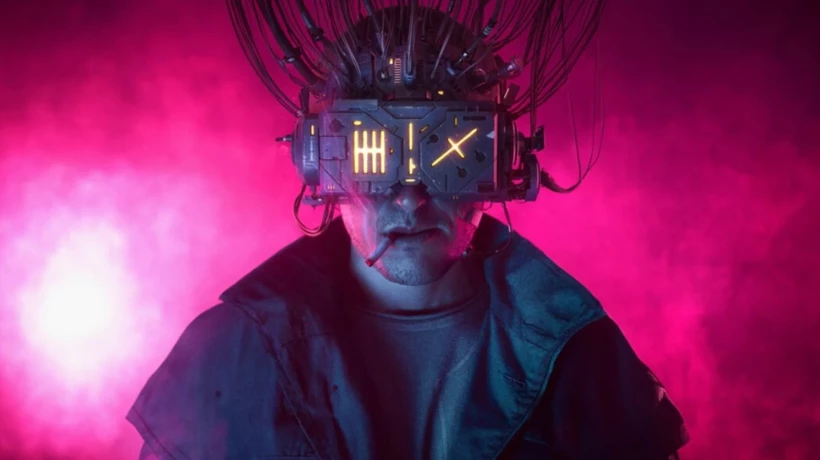
Here is where my mind immediately jumps from excitement to caution.
When an interface becomes two-way—or even deeply integrated into your motor and cognitive feedback loops—the attack surface expands exponentially. In classical cybersecurity, a breached server means leaked credentials or hijacked databases. But what happens when the endpoint isn’t a smartphone in your hand, but an array woven directly into your motor cortex?
The Hardware Security Dilemma: How do you verify the integrity of an over-the-air (OTA) firmware patch when the receiving device operates inside human brain tissue?
If an exploit compromises a high-bandwidth BCI, several critical scenarios emerge:
- Subtle Intent Manipulation: Software delays or subtle vector shifts that alter intended inputs before they hit the target device.
- Data Exfiltration at the Impulse Level: Tracking real-time cognitive responses, focus levels, and subconscious biological triggers.
- Firmware Integrity Loss: Physical risks associated with rogue signal bursts or power regulation issues on implant micro-controllers.
We are entering a realm where cyber-defense isn’t just about protecting your bank account or your personal data; it’s about safeguarding the absolute sanctity of your own thoughts and physical autonomy.
The Paradigm Shift: Evolution or Cyberpunk Reality?

I often wonder if we fully comprehend the psychological weight of this transition. For decades, we viewed the “Matrix” or “Cyberpunk” aesthetics as exaggerated warnings about hyper-connected futures. Today, those boundaries are eroding in real time.
Connecting human consciousness to a global network fundamentally redefines what it means to be online. When internet browsing, device interaction, and digital communication occur at the speed of thought, the friction between human cognition and synthetic software effectively drops to zero.
This transition brings immense possibilities, but it also demands an entirely new ethical, legal, and cryptographic framework. We cannot afford to build neural infrastructure first and figure out its security protocols later.
I’d love to know where you stand on this. If a secure, consumer-ready brain chip became widely available tomorrow, would you take the leap and get connected—or is direct neural integration a bridge too far for you? Let me know your thoughts in the comments below!
You Might Also Like;
- The New Era of Space Mechanics: Extending Satellite Lifespans
- AI Discovers Groundbreaking Non-Opioid Painkiller
- Mind Over Matter: What Neuralink’s First Human Trial Really Means for Our Future
-

-

-

-

-
-

-

-
-
-

-

-

