Imagine swallowing your doctor. Seriously, just take a glass of water, pop a little capsule into your mouth, and swallow.
When I first stumbled across this new medical technology developing in the US, I was completely shocked. I spend hours every single day analyzing the latest advancements in AI, robotics, and the metaverse, but sometimes, an innovation comes along that fundamentally changes how we interact with our own biology. This tiny robotic pill is exactly that. It entirely replaces the traditional, terrifying endoscopy tube, and I believe it is about to trigger a massive revolution in medical technology.
Let me walk you through exactly what this is, how it works, and why it is going to change hospital visits forever.
The End of the Terrifying Tube

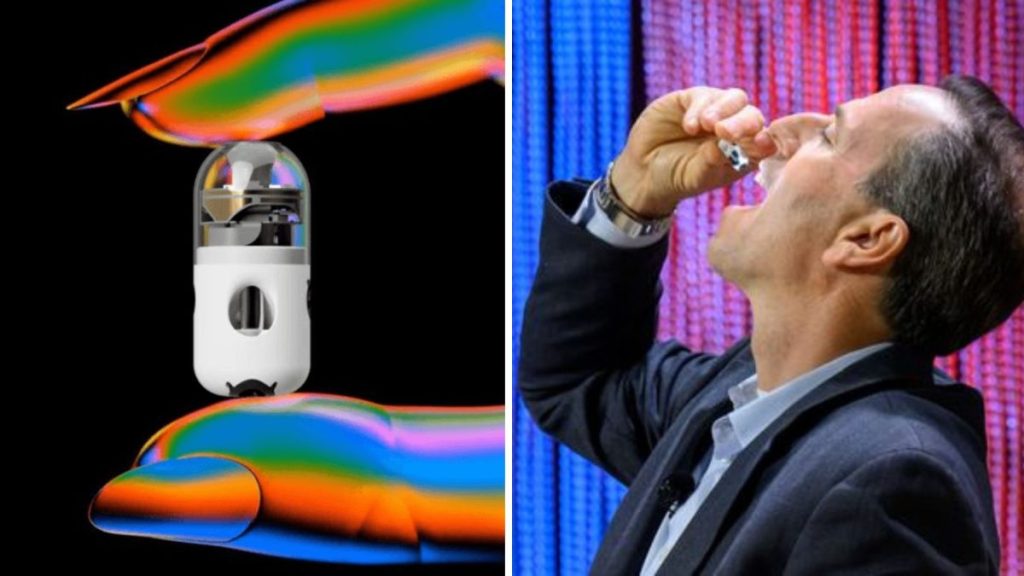
Let’s be brutally honest for a second. Nobody—and I mean absolutely nobody—enjoys getting an endoscopy. If you have ever had to go through it, or watched a family member prepare for one, you know the anxiety it brings. Fasting, hospital gowns, the smell of sterile clinical rooms, and the ultimate dread: a thick, uncomfortable tube being guided down your throat.
It usually requires sedation, which means losing a day of work, needing someone to drive you home, and dealing with that groggy, uncomfortable feeling for hours afterward.
But what if you could just bypass all of that?
This new medical breakthrough eliminates the physical trauma and the psychological barrier of internal check-ups. The concept is brilliantly simple: you swallow a smart, robotic capsule no larger than a standard vitamin. That’s it. No anesthesia, no hospital beds, no tubes. Just a glass of water and a glimpse into the future of healthcare.
How Does This Smart Pill Actually Work?

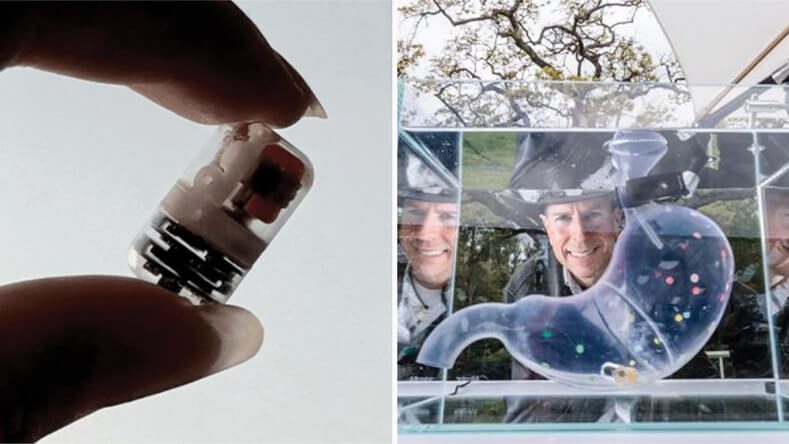
You might be wondering, “Okay, Ugu, I swallow the robot. What happens next?” This is where the engineering absolutely blows my mind. We aren’t just talking about a passive camera floating around; we are talking about a fully navigable, remote-controlled robot inside your stomach.
Here is how the magic happens:
- Remote Piloting: Once the pill reaches your stomach, the doctor doesn’t just wait and hope it captures good footage. Using an external magnetic control system that looks almost like a pair of video game joysticks, the doctor can physically pilot the pill in real-time. They can rotate it, move it up, down, and around to inspect every single inch of your stomach lining.
- High-Definition Live Stream: The pill is equipped with an ultra-high-definition micro-camera and a lighting system. It beams a 100% accurate, real-time video feed straight to a monitor. The doctor sees what the pill sees, instantly.
- Zero Pain, Zero Panic: Because the pill is so small and completely untethered, you don’t feel it moving around. You could literally be sitting in a chair, watching the monitor with your doctor, fully awake and having a normal conversation while a robot explores your digestive tract.
- The Natural Exit: Once the examination is complete, the doctor simply powers down the active navigation. The pill then joins the natural digestive process and eventually exits your body safely. You just flush it away.
Why I Believe This is a Medical Revolution

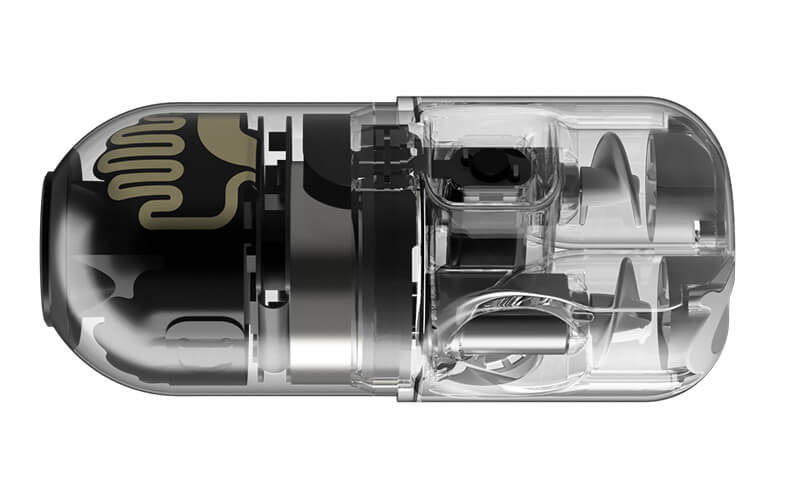
I look at a lot of technology on Metaverse Planet, and I always try to separate the “gimmicks” from the “game-changers.” This is undeniably a game-changer.
Why? Because friction kills prevention.
Millions of people around the world delay or completely avoid necessary stomach and intestinal screenings simply because they are terrified of the endoscopy tube. They ignore stomach pains, acid reflux, or early warning signs of ulcers and cancers because the diagnostic procedure is just too daunting.
By replacing an invasive, frightening procedure with a simple pill, we are dramatically lowering the barrier to entry for healthcare. If getting an endoscopy becomes as easy as swallowing a Tylenol, more people will get screened. Early detection rates will skyrocket. This tiny robot won’t just save time; it is going to save lives.
Furthermore, think about the infrastructure. Traditional endoscopies require dedicated rooms, specialized sanitation equipment, anesthesiologists, and recovery areas. This pill could potentially be administered in a standard clinic, freeing up vital hospital resources and driving down the cost of medical care.
The Next Step: From Observers to Healers

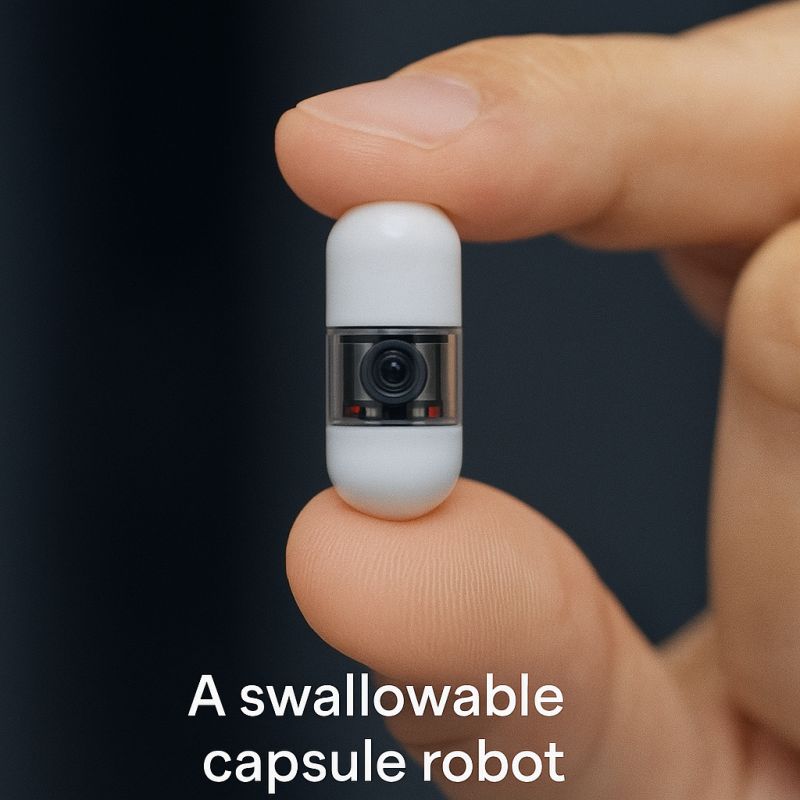
As I was digging into the research behind this, my mind immediately jumped to the next logical step. Right now, this pill is an observer. It acts as the eyes of the doctor. But what happens when we start combining this with the advanced AI and micro-robotics we are tracking today?
In the very near future, I expect these pills won’t just look around.
- Targeted Biopsies: What if the pill spots an irregularity and deploys a microscopic tool to take a tissue sample on the spot?
- Precision Medicine: What if it carries a payload of medicine, navigating directly to a bleeding ulcer and applying a highly concentrated dose exactly where it is needed, bypassing the rest of the body?
- AI Diagnostics: We will soon see AI analyzing the live feed faster than the human eye, instantly highlighting microscopic anomalies that a doctor might miss.
We are standing on the edge of an era where nanobots and smart pills will handle internal medicine, turning complex surgeries into outpatient procedures.
The Choice is Yours
Technology is moving so incredibly fast, and the lines between science fiction and everyday reality are blurring. We are moving away from brute-force medicine and entering an era of smart, minimally invasive, and highly precise healthcare.
I know it sounds a bit strange to say “I swallowed a robot today,” but when you weigh the alternatives, it feels like a massive leap forward for humanity.
So, I have to ask you: If you had to get your stomach checked tomorrow, would you choose the old, painful, terrifying tube, or would you swallow this futuristic smart robot?
Let me know your thoughts in the comments below! Are we ready to trust remote-controlled robots inside our bodies?
You Might Also Like;
- Swallowing the Doctor: How a Remote-Controlled Robotic Pill is Replacing Endoscopy
- Are We Living in a Simulation? Quantum Physics and The Matrix
- Extracting Memories After Death: Sci-Fi Dream or Imminent Reality?
-

-
-

-

-

-

-

-

-
-
-

-