

As humanity prepares for an ambitious decade of space exploration and commercialization, several cutting-edge technologies are poised to transform how we travel, work, and live beyond Earth. The 2030s promise breakthroughs that were once pure science fiction. Below are the Top 5 Futuristic Space Technologies to watch in the coming decade:
1. Advanced Nuclear Propulsion Systems


While chemical rockets have driven space travel for decades, nuclear propulsion is set to redefine interplanetary journeys in the 2030s.
- Nuclear Thermal Propulsion (NTP): NTP engines heat liquid hydrogen via a nuclear reactor core, achieving exhaust velocities roughly double those of conventional chemical rockets. Missions to Mars that today take six to eight months could see transit times cut in half—reducing crew radiation exposure and logistical complexity.
- Nuclear Electric Propulsion (NEP): By converting nuclear-generated heat into electricity, NEP systems power high-efficiency ion or Hall-effect thrusters. Though thrust levels are lower than NTP, NEP’s exceptional fuel efficiency makes it ideal for cargo transport and deep-space probes. NASA’s recent demonstration of small-scale nuclear reactors (e.g., the Kilopower project) paves the way for full-scale NEP installations aboard crewed interplanetary vessels by the late 2030s.
Why It Matters: Faster transit times, lower propellant mass, and the ability to carry larger payloads will enable sustained human presence on Mars, rapid sample-return missions, and exploration of the outer planets—endeavors that chemical propulsion alone cannot support.
2. In-Situ Resource Utilization (ISRU) and Orbital 3D Manufacturing

Transporting building materials and supplies from Earth is prohibitively expensive. The 2030s will see the rise of In-Situ Resource Utilization (ISRU)—harnessing local materials on the Moon, Mars, and asteroids to manufacture tools, habitats, and propellant.
- Lunar and Martian Water Extraction: Robotic drills and robotic ovens will extract water ice from lunar poles and Martian regolith. Electrolysis units then split water into hydrogen and oxygen—providing both breathable oxygen and rocket-grade propellant for return trips or refueling depots in cislunar space.
- Orbital 3D Printing Factories: Space-based additive manufacturing facilities will use feedstock derived from asteroid mining (e.g., metals like nickel, iron, and platinum-group elements) to print satellite components, structural beams, and even entire small spacecraft. By the mid-2030s, companies plan to deploy modular 3D-printing platforms in low Earth orbit (LEO) that fabricate replacement parts on demand, dramatically extending the lifespan of space assets and reducing launch costs.
Why It Matters: ISRU and 3D manufacturing reduce Earth-dependence, enabling sustainable outposts. Crewed lunar bases and Martian habitats can expand organically without waiting for resupply missions, accelerating settlement efforts.
3. Space-Based Solar Power (SBSP) Collectors

Generating reliable power on the Moon, Mars, or deep-space stations is challenging due to long lunar nights or dust storms on Mars. Space-Based Solar Power (SBSP) arrays—large solar farms in geostationary or cislunar orbit that beam energy to receivers on planetary surfaces—are expected to mature in the 2030s.
- Microwave or Laser Power Transmission: SBSP satellites capture sunlight using vast photovoltaic panels or concentrating mirrors. They then convert that energy into microwaves (2.45 GHz) or infrared laser beams directed at ground-based rectennas or photovoltaic receivers. Recent terrestrial tests of wireless power transmission suggest that, with incremental scaling, SBSP prototypes could begin operation by 2035.
- Modular Assembly in Orbit: Robotic “spider” assemblers will construct kilometer-scale solar arrays from lightweight, radiation-hardened materials. Advanced rendezvous and docking techniques—developed initially for large space telescopes—will be repurposed to join multiple SBSP modules into a single coherent power station.
Why It Matters: Continuous, renewable power delivered from orbit solves energy shortages for lunar colonies (where nights last 14 Earth days) and remote Martian habitats. SBSP also enables higher-power applications such as electromagnetic launch loops, electric-propulsion refueling hubs, and energy-intensive in-situ manufacturing.
4. Autonomous AI-Driven Space Robotics and Construction


As missions venture farther from Earth, real-time remote control becomes impractical. The 2030s will witness the deployment of AI-driven autonomous robots that build, maintain, and repair infrastructure without direct human oversight.
- Cognitive Construction Drones: Lightweight robotic drones equipped with advanced computer vision and machine-learning algorithms will autonomously assemble habitats made of in-situ manufactured components—stacking regolith-derived bricks, welding metal frames, and installing inflatable modules. By cross-referencing 3D habitat blueprints in onboard memory, these drones can adapt to unexpected terrain variations and coordinate in swarms to complete large construction tasks.
- Self-Healing Structural Systems: New composite materials embedded with microcapsules containing healing agents will pair with robotic maintenance units. When microcracks develop in pressure vessels or solar panel supports, the material’s microcapsules rupture, filling cracks with polymer resins. Nearby inspection drones detect stress fractures via ultrasonic or LiDAR scanning and administer targeted repairs—dramatically extending the longevity of space structures.
Why It Matters: Autonomous construction and maintenance reduce the number of crewed EVAs (spacewalks) required, minimizing astronaut risk. In deep-space habitats—where Earth-to-Mars communication delays exceed 20 minutes—the ability for robots to problem-solve independently is crucial for critical repairs and habitat expansion.
5. Quantum Communications and Deep-Space Networking
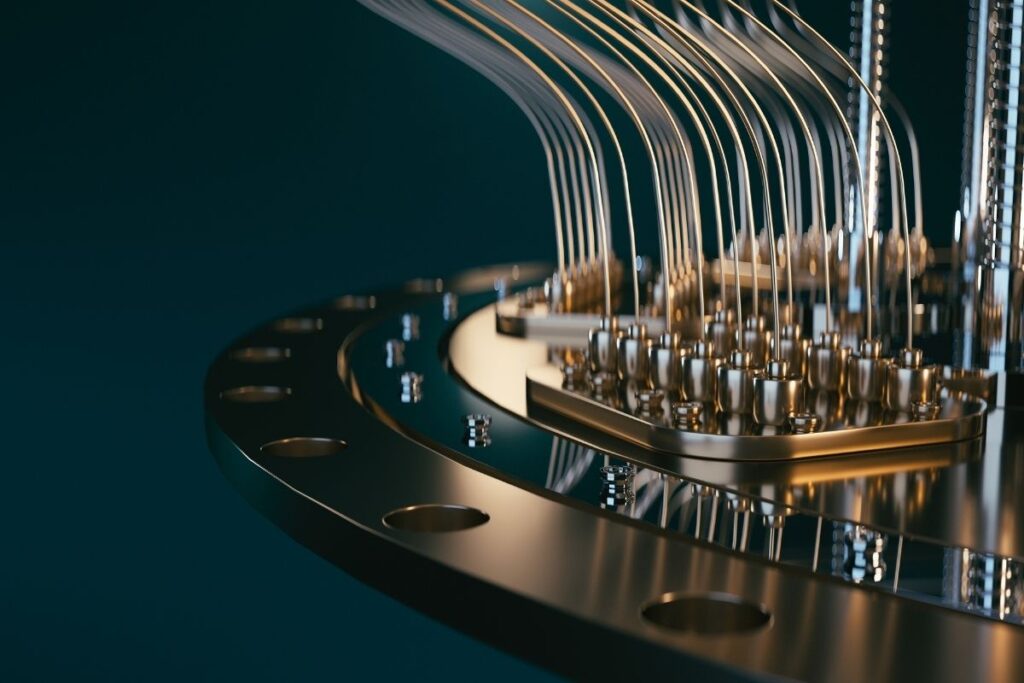
By the late 2030s, experimental quantum communication links—initially tested in low Earth orbit—are expected to mature into operational components of a deep-space quantum network.
- Entanglement-Based Telemetry and Control: Quantum key distribution (QKD) will offer unbreakable encryption between Earth, lunar gateways, and Martian orbiters. Crews operating on Mars or deep-space habitats can exchange command data and scientific results with Earth-based mission control, knowing that any interception attempt will be immediately detected.
- Quantum-Assisted Navigation and Synchronization: Entangled photon pairs exchanged between spacecraft and ground stations enable sub-nanosecond clock synchronization. Such precision timing supports interferometry-based navigation—allowing spacecraft to determine position relative to Mars or asteroid surface features with meter-level accuracy without relying solely on Earth’s Deep Space Network.
Why It Matters: As missions extend to Jupiter’s moons or deep-space telescopes venture to the heliopause, secure, low-latency communication becomes vital. Quantum networking ensures data integrity and precise timing, serving as the backbone for future autonomous fleets and distributed scientific instruments across the Solar System.
The 2030s are poised to usher in a golden age of space technology. From nuclear propulsion slashing Mars transit times to space-based solar power providing continuous energy, these five breakthroughs will reshape how we explore and inhabit the final frontier. By embracing in-situ manufacturing, autonomous robotics, and quantum communications, humanity will overcome the Earth-centric limitations of the past—setting the stage for a thriving, self-sustaining presence on the
-
-

-

-

-
-

-
-

-
-

-
-
