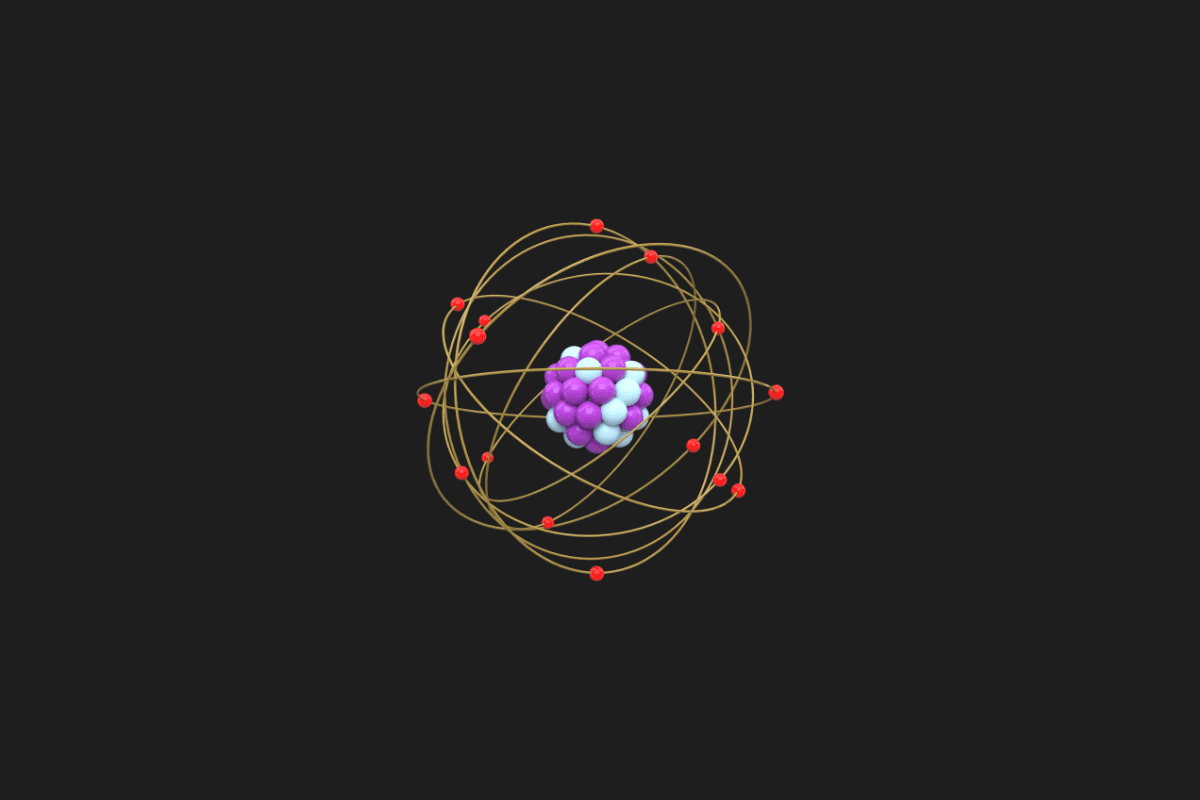
Quantum mechanics describes a micro‑world where a particle can be both “here” and “not here” at the same time. These multiple states (superpositions) look bizarre to us, yet they promise revolutionary advances in computing and communication.
Researchers have already designed creative protocols that exploit them; now the grand challenge is to bridge the gap between the atomic scale and real‑world devices by building working quantum computers linked through a global Quantum Internet.
1. The Magic of Quantum Entanglement

- Quantum Entanglement is a “non‑local” link formed when two particles interact and keep an invisible, instant bond—even when they sit at opposite ends of the universe.
- That bond enables science‑fiction‑like feats such as Quantum Teleportation, where the full quantum state of a particle can be re‑created elsewhere without moving the particle itself.
- MIT’s Seth Lloyd and collaborators envision distributing vast webs of entangled particles so that information can travel faster than any classical channel allows—paving the way for large‑scale, interconnected quantum computers.
2. Why We Need a Quantum Internet
- A worldwide Quantum Internet would let distant quantum computers share processed data, combine their power, and download specialized quantum software on demand.
- In cryptography, entanglement allows perfectly secure key exchange: any eavesdropper collapses the state and betrays their presence.
- Physicists could even “teleport” complex molecules for remote experiments, opening doors to chemistry, materials science, and—one day—biological teleportation studies.
3. Superdense Coding: Doubling Channel Capacity
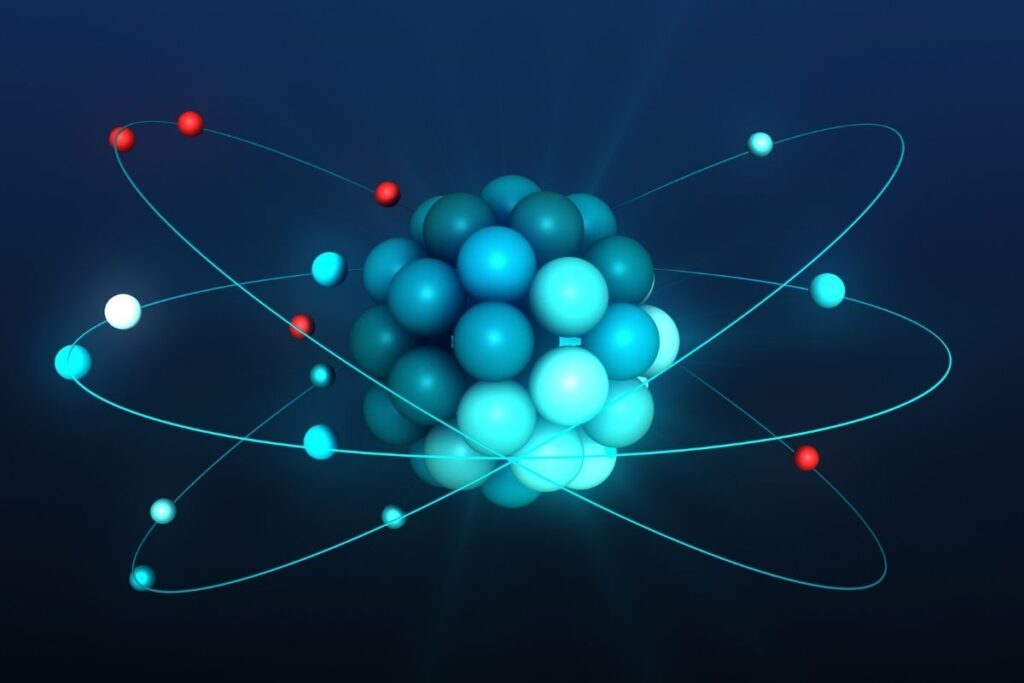
In 1992, Charles Bennett and Stephen Wiesner showed that a single entangled photon pair lets Alice send Bob two classical bits by transmitting one qubit—a technique called Superdense Coding. With larger entangled groups (triplets, quadruplets…), capacity could soar far beyond today’s Shannon limits, unleashing unprecedented data rates.
4. The Fragility Problem and Quantum Error Correction

The catch? Quantum states are exquisitely fragile—any stray glance, vibration, or electromagnetic field can erase their information. Early skeptics thought reliable transmission was impossible.
- In 1995 Peter Shor and Andrew Steane proposed the first Quantum Error Correction codes.
- Later, Isaac Chuang and Daniel Gottesman combined error correction with Quantum Teleportation, suggesting that future users could download “error‑correcting entangled photons” as a commercial resource to protect their data on the fly.
5. Hardware Blueprint: From Photons to Trapped Atoms

- Lloyd’s team proposes sending entangled photons through optical fiber to remote labs (call them Alice and Bob).
- Each lab holds laser‑cooled atoms in optical traps. When a photon lands, it transfers its state to the atom, leaving Alice’s and Bob’s atoms themselves entangled.
- Because neutral atoms ignore most external fields, they make stable quantum “memory cells” that can ferry information between quantum micro‑computers.
6. Building the First Three‑Node Quantum Network

All required components—entangled photon sources, low‑loss fiber links, and high‑fidelity atomic traps—already exist. Lloyd predicts:
- Six months to deploy a reliable entanglement source.
- Two years to transmit entanglement over distance.
- Three years to demonstrate a basic three‑node Quantum Internet.
7. Beyond the Lab: Global Impact

- Linking many 7‑qubit prototypes (like Los Alamos’s NMR device) via a web of entanglement could yield usable quantum processing power sooner than a single huge processor.
- Telecommunications infrastructure would shift from Claude Shannon’s classical paradigm to a hybrid quantum‑classical backbone—enabling encrypted video calls, lightning‑fast data centers, and cloud‑delivered quantum applications.
- Commercial “entanglement brokers” might sell on‑demand pairs or multiplexed quantum channels, monetizing secure quantum communication the way bandwidth is sold today.
Conclusion: The Road Ahead
Creating a Quantum Internet means rewriting every layer of information theory for the quantum age. Yet with error‑correcting codes, teleportation‑based software distribution, and robust atomic memories, the path is clearer than ever. As entanglement leaps from physics labs to telecom racks, we may soon stream data at superdense rates, break cryptographic barriers, and explore matter in ways once limited to science fiction—ushering in the true era of quantum communication.
You Might Also Like;
-
-

-
-
-
-

-
-

-
-

-

-