I’ve been tracking the incredible rise of artificial intelligence, but there’s a massive elephant in the room that we often ignore: where is all the electricity going to come from? AI data centers are incredibly power-hungry. I was researching this exact bottleneck recently, and I stumbled upon a new project out of the US that completely shifted my perspective on how we might actually solve this energy crisis.
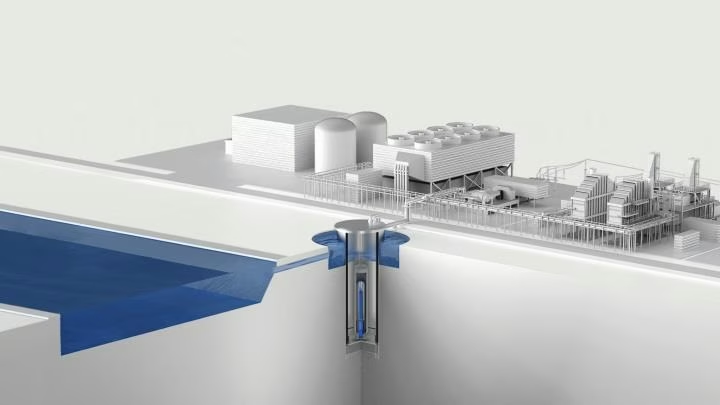
Blue Energy and GE Vernova just announced plans for a massive 2.5-gigawatt (GW) hybrid power plant in Texas. And it’s not just another standard energy farm; it’s a brilliant, pragmatic mix of natural gas turbines and Small Modular Reactors (SMRs).
Here is my breakdown of why this specific setup is a game-changer for the tech industry.
The Genius of the Phased Approach

Usually, when I hear the words “new nuclear plant,” I immediately think of endless red tape, ballooning budgets, and decades of construction delays. But this project is smart because it flips the traditional script. They aren’t waiting for the nuclear tech to be fully built before flipping the switch.
Instead, they are using a phased rollout to get power to nearby AI data centers as quickly as possible:
- The Quick Start (2030): The facility will first fire up two highly efficient GE Vernova 7HA.02 natural gas turbines. This will provide roughly 1 gigawatt of power just 48 months after the project begins. It’s a fast, reliable stopgap.
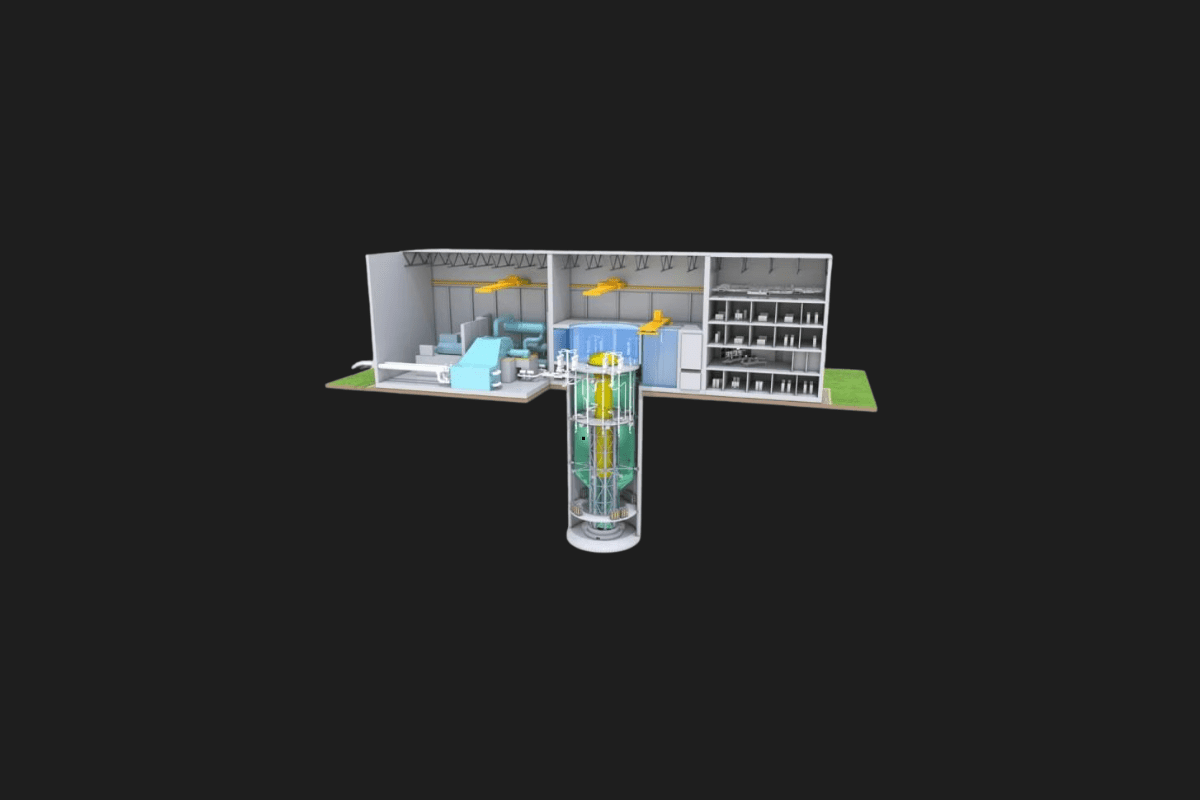
- The Nuclear Shift (2032): The real magic happens a couple of years later. The BWRX-300 small modular reactors (developed by GE Vernova Hitachi Nuclear Energy) will come online. Once these are operational, the SMRs will take over the heavy lifting, providing massive, uninterrupted base-load power.
By starting with natural gas, they solve the immediate energy shortage for AI infrastructure today, while setting up a robust nuclear backbone for tomorrow.
Building Like Legos: Why Modular Makes Sense

As I dug deeper into the logistics, one detail really stood out to me: the construction method.
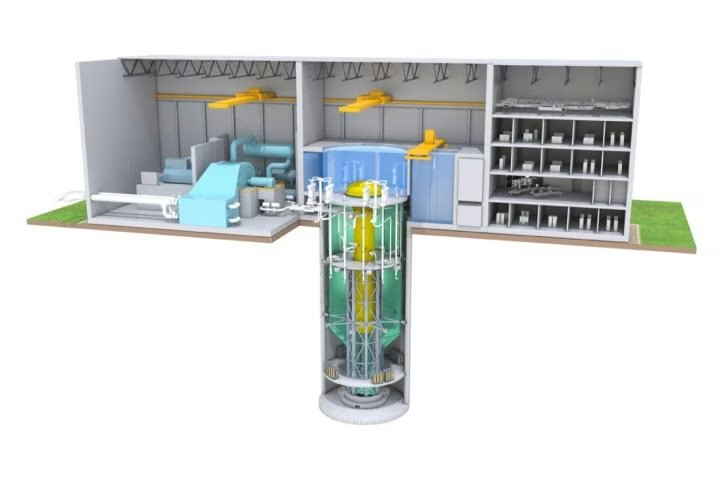
They aren’t building everything from scratch in the Texas dirt. The “modular” in SMR means that massive reactor components are manufactured off-site in factories and then transported to the location to be assembled. Think of it like snapping together high-tech Lego bricks. This approach drastically cuts down on the chaotic on-site construction variables that usually derail traditional nuclear projects. It brings the costs down and speeds up the entire timeline.
Final Thoughts
AI is hungry, and traditional grids just can’t keep up with the demand of massive server farms and advanced manufacturing. I honestly think this hybrid model—using natural gas as a fast bridge to a modular nuclear future—might just be the blueprint for the next decade of tech infrastructure.
But I’m really curious about your take on this. Do you think combining natural gas with small modular reactors is the right path to reliably fuel our AI future, or are we taking a risky shortcut? Let me know what you think!
You Might Also Like;
- The New Era of Space Mechanics: Extending Satellite Lifespans
- AI Discovers Groundbreaking Non-Opioid Painkiller
- Mind Over Matter: What Neuralink’s First Human Trial Really Means for Our Future
-

-

-

-

-

-

-

-

-

-

-

-