Welcome back, Spartans! I was up early parsing through the massive flood of announcements from Microsoft’s Build developer conference yesterday, and let me tell you, it was an absolute rollercoaster. While the event showcased a dizzying array of software updates and developer tools, there was one specific reveal that completely hijacked my attention.
Microsoft has officially introduced Scout, their brand-new, entirely revamped artificial intelligence personal assistant.
We all know the tech giant has been heavily pivoting towards AI over the last couple of years, but Scout feels like a massive leap forward. This isn’t just another standard chatbot or a simple search plugin. Microsoft is actively positioning Scout as their first true personal AI assistant, and the most exciting part? It is built on the highly anticipated OpenClaw architecture. Let’s break down exactly what this means and why it actually matters for our daily digital routines.
The Dawn of a True Personal Assistant


If you have been following my deep dives into generative AI, you know I am inherently skeptical of the term “assistant.” For too long, tech companies have slapped the “AI assistant” label on glorified voice command tools that struggle to remember a conversation from five minutes ago.
When I watched the Scout demonstration, it became clear that Microsoft is trying to fix that exact problem.
- System-Wide Integration: Scout isn’t confined to a single browser tab. It is designed to live inside your operating system, anticipating needs rather than just reacting to direct prompts.
- Deep Contextual Memory: The promise here is that Scout will remember your workflows, your writing style, and your preferences across different applications without needing constant manual reminders.
- Proactive Problem Solving: Instead of just summarizing a document, Scout is engineered to connect the dots between your emails, your calendar, and your drafting tools to actually do the work.
Under the Hood: The Power of OpenClaw
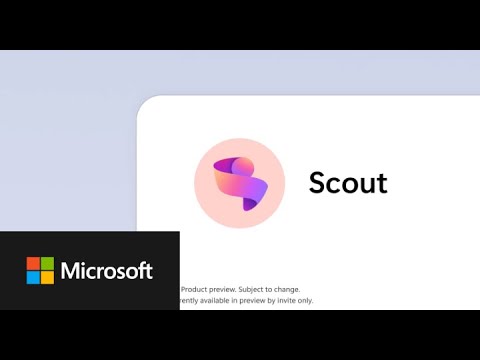
The real star of the show isn’t just the user interface; it’s the engine running underneath. Building Scout on the OpenClaw framework is a fascinating strategic move by Microsoft.
Why OpenClaw Changes the Game
Up until now, we’ve seen a lot of reliance on massive, generalized language models. While they are great at writing poetry or generating code snippets, they can be incredibly resource-heavy and sometimes lack the precision needed for a hyper-personalized, secure assistant.
By leveraging OpenClaw, Scout benefits from a more agile, highly optimized framework. Here is what that translates to for us:
- Lower Latency: Nobody wants to wait 15 seconds for their assistant to organize an inbox. OpenClaw’s architecture allows Scout to process complex, multi-step reasoning tasks locally and rapidly.
- Enhanced Security: A true personal assistant needs access to your private data to be useful. OpenClaw provides advanced, sandboxed environments ensuring that your personal workflows don’t end up in a public training dataset.
- Superior Agentic Capabilities: This is the buzzword of the year, but it matters. OpenClaw enables Scout to act as an “agent”—meaning it can interact with other software, click buttons, and execute sequences on its own, rather than just generating text for you to copy and paste.
How Will Scout Fit Into Our Daily Lives?
I spend a massive portion of my day jumping between content management systems, editing tools, and data analytics dashboards. The idea of having an assistant that genuinely understands the context of what I am trying to build, rather than just waiting for a specific command, is incredibly appealing.
Imagine waking up, and Scout has already analyzed the overnight tech news, drafted a preliminary outline for your daily tasks, and flagged the three emails that actually require your immediate attention—all while learning how you like that information formatted.
Microsoft is clearly aiming to make Scout the central hub of our digital lives. However, execution is everything. The transition from a polished stage demo at Build 2026 to a flawless everyday tool on millions of varying PC setups is going to be the ultimate test. I’ll be watching very closely to see if Scout can truly replace our fragmented workflows.
The era of typing queries into a box is ending. We are moving into an era of delegating tasks to digital colleagues.
So, I have to ask you: Are you ready to give an AI assistant deep, system-level access to your computer to organize your life, or do the privacy implications still make you hesitant to adopt something like Scout? Drop your thoughts in the comments below, let’s discuss!
You Might Also Like;
- Google Unveils Pics: The Canva Killer Built Directly into Workspace
- Turning Your Real Neighborhood Into a Video Game
- Android Halo: Tracking AI Agents in Real Time
-

-

-
-

-
-

-

-

-

-
-

-