
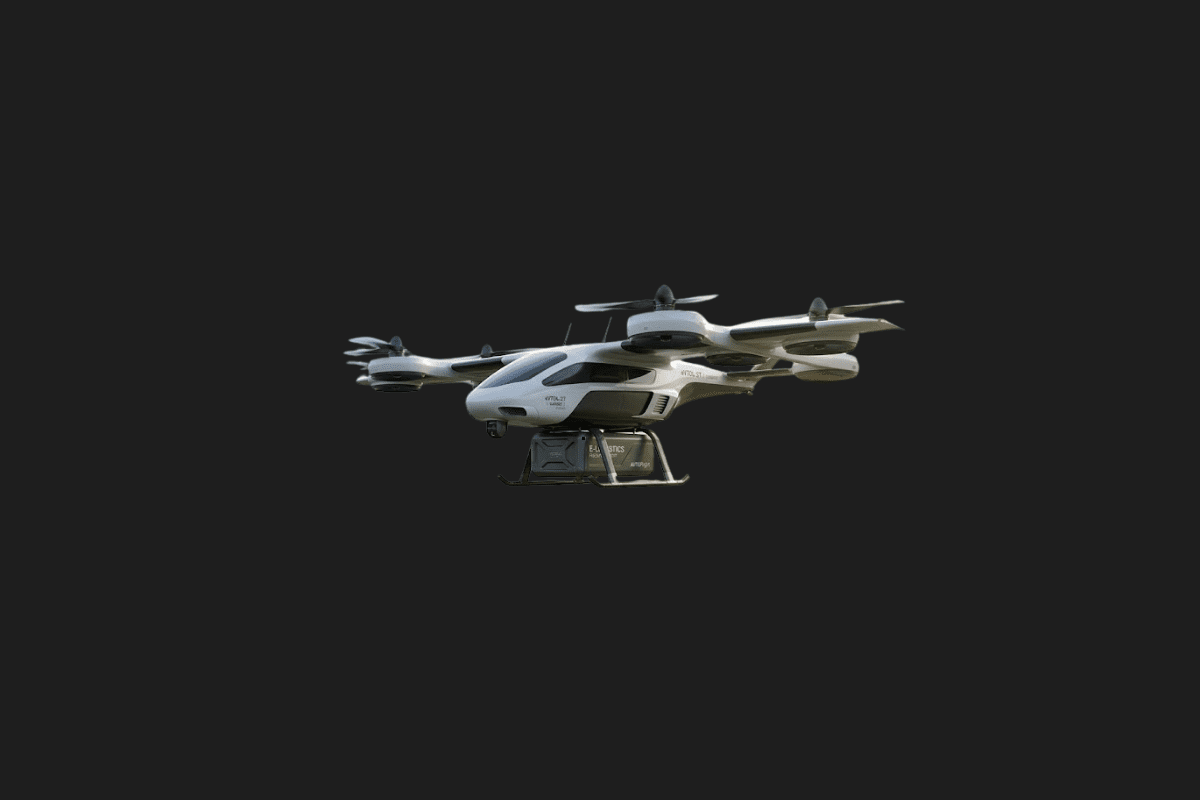
I remember the early days of drone delivery promises—mostly concepts of tiny quadcopters dropping off a pizza or a single paperback book. But when I stumbled upon the recent logistics trial out of China’s Guizhou province, I realized the future has arrived much faster, and much heavier, than most of us anticipated. We aren’t talking about a small package anymore; we are talking about a 2-ton autonomous aircraft casually bypassing treacherous mountain roads to deliver fresh spring tea.
As someone who constantly monitors the pulse of emerging technologies, I was genuinely blown away by how seamlessly this operation integrated cutting-edge aviation with traditional high-speed rail. Let me break down exactly what happened, why I think it’s a massive turning point for global supply chains, and what it means for the future of logistics.
The 37-Minute Mountain Crossing

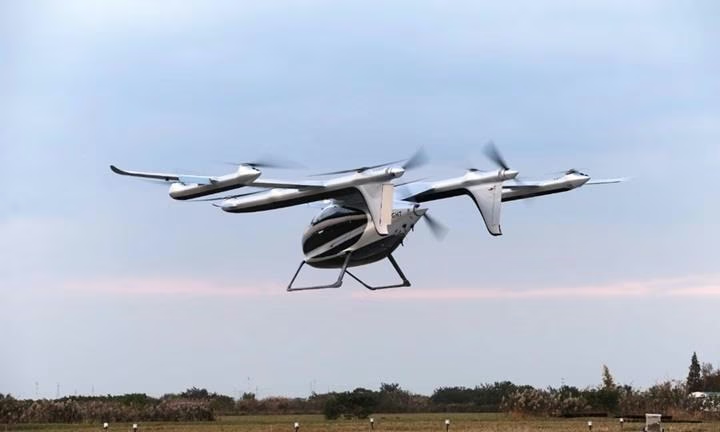
If you’ve ever looked at the geography of Guizhou, you know it’s famously rugged. The mountainous terrain makes traditional road transport incredibly tedious and time-consuming. This is the exact bottleneck that AutoFlight, an eVTOL (electric vertical takeoff and landing) developer, decided to tackle.
They deployed their CarryAll (V2000CG) unmanned cargo aircraft to transport fresh spring tea between the cities of Anshun and Guiyang. The distance? About 120 kilometers.
Here is the part that really caught my attention: the entirely autonomous flight took just 37 minutes. If you were to drive that same route navigating the winding mountain roads, it would easily take hours. In the context of time-sensitive agricultural products, cutting hours down to minutes isn’t just a convenience; it is a complete game changer for the value of the product itself.
Beyond the Sky: The “eVTOL + High-Speed Rail” Combo

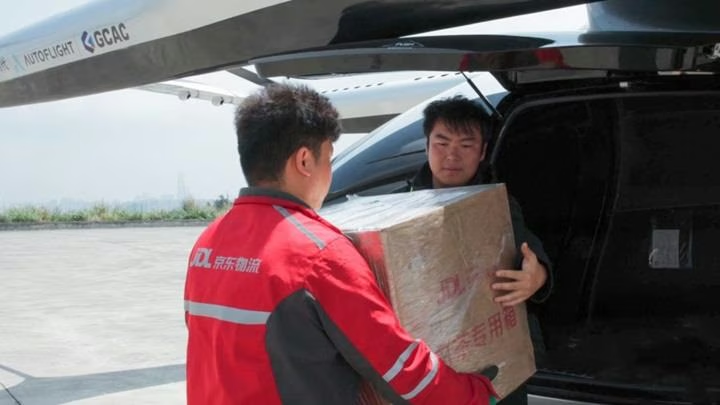
I think the real magic here isn’t just the flying vehicle; it’s the ecosystem it plugs into. The eVTOL didn’t just drop the tea off and call it a day.
Once the fresh tea arrived in Guiyang, it was immediately transferred to China’s massive high-speed rail network. From there, it traveled another 2,000 kilometers directly to Shanghai. Because of this “eVTOL + High-Speed Rail” multimodal integration, the fresh agricultural products reached the end consumer within 24 hours of being harvested.
When I think about the logistics required for temperature and time-sensitive goods, this is revolutionary. With delicate products like fresh spring tea, every hour lost in transit means a degradation in aroma, flavor, and ultimately, commercial value. By slashing the initial first-mile delivery time from the remote mountains to the urban transport hub, the overall quality of the product is preserved beautifully.
Meet the Beast: AutoFlight CarryAll (V2000CG) Specs
I always like to dig into the hardware, and the CarryAll does not disappoint. It’s purpose-built for heavy-duty logistics operations. Here are the specs that make it stand out:
- Maximum Payload: 400 kilograms (This is massive for a commercial unmanned eVTOL)
- Flight Range: 200 kilometers on a single charge
- Cruising Speed: Approximately 180 km/h
- Zero Emissions: Completely electric, aligning with global sustainability goals
- Low Noise Profile: Significantly quieter than traditional helicopters
- True VTOL: Vertical takeoff and landing means absolutely no runway is required
The fact that it requires no runway is, in my opinion, its strongest asset. It allows for infrastructure-light operations in remote agricultural regions where building an airstrip is economically and geographically impossible.
Why Triple Certification is the Real Headline
It’s easy to get lost in the cool specs, but as I dug deeper into the V2000CG, I found the most crucial piece of the puzzle: regulation.
This specific aircraft is one of the very first eVTOLs to receive a type certificate, production certificate, and airworthiness certificate from Chinese aviation authorities.
Why does this matter? Because it proves this isn’t just a flashy prototype or an experimental PR stunt. This triple certification indicates that the technology has officially matured from the lab and is completely ready for real-world, commercial applications at scale.
What This Means for Global Supply Chains
When I look at this successful trial, I don’t just see tea being moved in China. I see a blueprint for the rest of the world.
Imagine applying this to medical supplies in rural parts of Africa, moving freshly caught seafood from coastal villages directly to inland metropolitan hubs, or ensuring critical industrial spare parts reach offshore rigs without dispatching a heavy, fuel-guzzling helicopter.
We are stepping into an era where geographical isolation will no longer dictate economic potential. Local farmers in difficult-to-reach areas can now compete in premium markets simply because an autonomous drone can bridge the gap between their farm and the nearest high-speed transit node in minutes.
The technology is here, it’s certified, and it’s already flying 400-kilogram payloads over mountains. It makes me wonder how quickly traditional trucking and short-haul cargo flights will need to adapt before they are completely outpaced by fleets of autonomous eVTOLs.
What are your thoughts on this? Would you feel comfortable knowing the skies above your city are filled with 2-ton autonomous cargo drones, or do you think the regulatory hurdles in other countries will slow this revolution down? Let me know in the comments!
You Might Also Like;
- Microsoft Copilot Drops the Flashy Colors for a Serious New Look
- The Four-Armed Helios Robot is Rewriting the Rules of Space Exploration
- Apple Glass Leaks Reveal the Master Plan to Dethrone Meta Ray-Ban
-

-

-

-

-

-

-
-
-

-

-
-

