With global warming and a growing population, the strain on our water resources is increasing every year. The United Nations warns that the world has entered a period of “global water bankruptcy,” with nearly four billion people facing severe water scarcity for at least one month a year. Traditional solutions—like desalination, groundwater drilling, and standard atmospheric water generators—often require massive energy consumption or introduce new environmental risks.
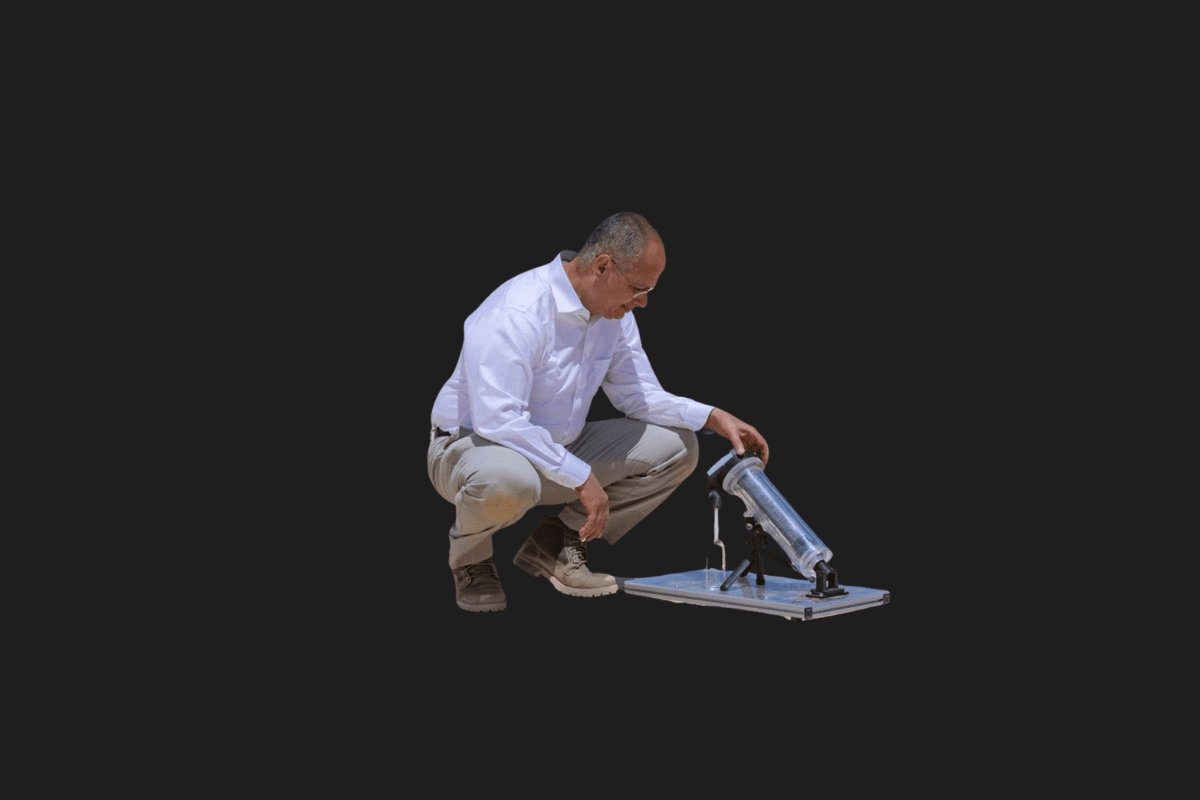
However, a groundbreaking development has emerged from chemist Omar Yaghi. The Nobel Laureate aims to change the equation with a revolutionary technology capable of producing drinking water from airborne moisture without utilizing electricity.
How the Technology Works


Conducting his research at the University of California, Berkeley, Yaghi was awarded the Nobel Prize for his pioneering work on Metal-Organic Frameworks (MOFs).
- The Science: MOFs are highly porous, molecularly designed crystalline structures. These materials can selectively capture water molecules from the air, even at extremely low humidity levels.
- The System: Housed in a structure roughly the size of a 6-meter container, the system absorbs water molecules from the surrounding air and converts them into potable water.
- Energy Efficiency: The entirely “off-grid” version utilizes ambient heat to function, meaning it requires zero external electricity to operate.
Thriving in the Desert


One of the most remarkable aspects of this technology is its ability to operate efficiently even when relative humidity drops below 20%—a critical threshold for desert climates.
During tests conducted in California’s Death Valley, the system yielded outputs nearly equivalent to distilled water quality. While grid-connected (on-grid) models can produce between 2,000 to 4,000 liters of water daily, the electricity-free off-grid version boasts a capacity of up to 1,000 liters per day.
Unlike traditional atmospheric water generators that rely on cooling air to condense moisture (much like an air conditioner, demanding high electricity and humidity), Yaghi’s system directly captures water molecules using MOFs and releases them using ambient heat.
A Personal Mission and Environmental Impact


For Yaghi, this project is deeply personal. Growing up in a large Palestinian refugee family in Jordan, he recalled in his Nobel speech how his childhood home lacked both running water and electricity, relying on state water deliveries once every week or two. This profound early experience drove his lifelong quest for a sustainable solution to water access.
Furthermore, this system stands out as a far more eco-friendly alternative to desalination plants. Desalination not only consumes vast amounts of energy but also harms marine ecosystems by discharging dense, salty wastewater back into the ocean. Atmospheric water harvesting utilizes existing ambient moisture and produces zero salty waste.
Commercialization and Data Center Integration
Atoco, the company founded by Yaghi, plans to begin taking commercial orders in the second half of 2026.
Their target markets extend beyond regions suffering from water scarcity; they are also focusing on massive water consumers like data centers. According to the proposed model, the immense waste heat generated by data centers could be repurposed as the energy source for the water production process.
Omar Yaghi’s vision is bold: to produce water from the air, anywhere in the world, at any time of year, regardless of humidity, and with a zero-carbon footprint. If this technology scales as promised, it could go down in history as the most radical and effective solution to global water scarcity yet.
You Might Also Like;
- Samsung Enters the Robotics Arms Race: Inside the New RX Unit
- The Danger of AI Confidence: Why We Are More Wrong Than Ever
- The Hidden Threat Above Us: Are We Facing a Nuclear Arms Race in Space?
-

-

-

-

-

-

-

-

-

-

-

-