Spartans, I have been analyzing Google I/O events for years, but I have to confess: it has been a long time since a simple user interface update genuinely stopped me in my tracks. With over 900 million of us knocking on Gemini’s door every single month, Google has finally realized that the old, static “chat log” format just isn’t cutting it anymore.
Think about it. You ask an AI a complex question, and it throws a massive, monotonous wall of text right back at you. We spend half our time trying to extract the actual useful data from those dense paragraphs. Well, with the introduction of their brand new “Neural Expressive” design language, Google is tackling this exact problem head-on. When I first saw the leaks, I assumed it was just a fresh coat of paint. But digging into the architecture, it is clear this is a fundamental shift in how we experience artificial intelligence.
Let’s break down why this update is going to completely change our daily digital workflows.
What is Neural Expressive and Why Does It Matter?

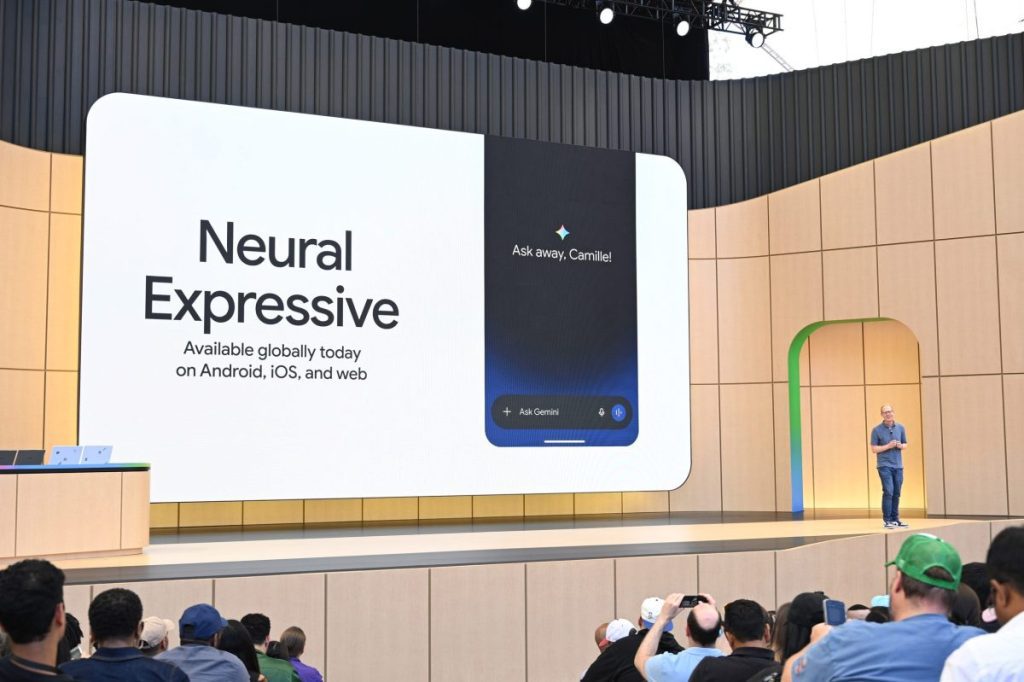
Neural Expressive isn’t just a cosmetic makeover; it is a living, breathing visual language that redefines how AI communicates with you. Google has rebuilt the Gemini interface from the ground up, transforming a rigid software tool into something that feels incredibly organic.
As someone who spends hours staring at web layouts and content structures, here is what instantly caught my eye:
- The Death of the Text Wall: Instead of generic paragraphs, Gemini now acts like a highly skilled magazine editor. It dynamically generates custom layouts based on your specific query. Crucial data points are bolded and pulled to the top, while interactive timelines, embedded videos, and dynamic charts are seamlessly woven into the response.
- Tactile Interaction: The new UI is packed with fluid animations, vibrant gradient colors, and haptic feedback. When Gemini is processing a complex prompt, the top of your screen pulses with those familiar Gemini colors, making the AI feel much more responsive and “alive.”
- Frictionless Gemini Live: Tired of typing? You can now instantly transition into a voice conversation without resetting the interface or digging through menus. The jump from text to voice, and back again, is completely seamless.
If you process information visually like I do, having data presented through tailored infographics and rich media rather than raw text is going to be a massive time-saver.
From Passive Assistant to Proactive “Agent”

The visual overhaul is beautiful, but the underlying engine is what truly matters. Google is officially pivoting Gemini from a passive chatbot that waits for your commands into an agentic AI that actively works in the background.
For anyone juggling a packed schedule—trust me, between my morning editorial duties and daytime banking routines, I need all the help I can get—these two features are going to be game-changers:
- Daily Brief: Imagine waking up to an AI that has already scanned your Gmail, Calendar, and Tasks overnight. It doesn’t just list your schedule; it curates a personalized, interactive dashboard highlighting the urgent emails you missed and the exact focus areas you need to tackle that day.
- Gemini Spark (Your 24/7 Agent): This is the feature that absolutely blew my mind. You can assign this background agent ongoing tasks. For example, you can tell it to monitor your credit card statements for hidden subscription fees and alert you monthly, or have it automatically summarize all emails coming from a specific client. It does the heavy digital lifting while you focus on the actual work.
Gemini Omni: Rewriting Content Creation
For the creators in our community, there is another massive drop: Gemini Omni. This updated model is designed to seamlessly process and generate text, audio, images, and video simultaneously.
The most staggering demo showed the ability to create a custom AI avatar that looks and sounds exactly like you, directly integrated into a generated video. We are officially entering an era where producing cinematic, effects-heavy video content is as easy as having a conversation with your phone.
The Verdict on the “New” Gemini
I am honestly surprised by this pivot. Usually, tech giants use these keynotes to brag about synthetic benchmark scores and raw computing power. This time, Google poured massive resources into making the AI feel readable, warm, and human.
Of course, this massive wave of simplification will have its critics. While it looks like a visual feast, compressing advanced tools into a minimalist, floating interface might frustrate power users who want all their granular controls immediately visible. But looking at the bigger picture, interacting with artificial intelligence has never felt this smooth or intuitive.
Now, I want to hear from you, Spartans. Are you a fan of this dynamic, magazine-style “Neural Expressive” layout, or do you prefer the old-school, straightforward text logs when you are working with AI? Drop your thoughts in the comments below—let’s debate the future of this interface!
You Might Also Like;
- Ask YouTube: The End of Traditional Video Search
- The Biggest Google Search Evolution in 25 Years
- Google’s Universal Cart Will Change How You Shop Forever
-

-
-

-

-

-
-
-

-

-
-

-