Metaverse Festivals: The Future of Entertainment is Here (and What’s Next)



The concept of the metaverse has rapidly moved from science fiction to a tangible reality, particularly in the realm of entertainment. While still in its nascent stages, metaverse festivals are already offering unique, immersive experiences that transcend the limitations of physical space. These virtual gatherings are not just a temporary substitute for in-person events; they represent a fundamental shift in how we might consume and interact with entertainment in the future.
Current Landscape: Metaverse Festivals in the USA

The United States has been a significant early adopter and innovator in the metaverse festival space, largely driven by the burgeoning popularity of platforms like Roblox, Decentraland, The Sandbox, and Fortnite. These platforms, alongside dedicated virtual reality (VR) spaces, have hosted a variety of events that hint at the immense potential of this new frontier.
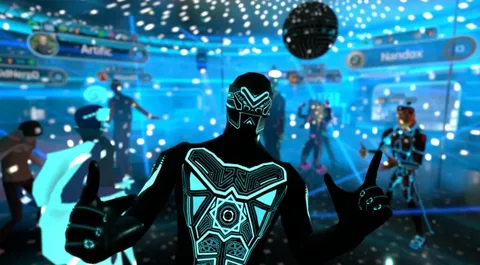
One of the most notable examples comes from the music industry. Artists such as Travis Scott in Fortnite, Ariana Grande in Fortnite’s “Rift Tour,” and Lil Nas X on Roblox have held groundbreaking virtual concerts that attracted millions of attendees globally. These weren’t just simple streams; they were interactive experiences featuring custom avatars, unique visual effects, and dynamic environments that responded to the music. The sheer scale and engagement demonstrated the viability of these virtual arenas.
Beyond music, platforms like Decentraland and The Sandbox have hosted their own variations of festivals. Decentraland’s Metaverse Festival in 2021 featured a diverse lineup of musical acts, art installations, and panel discussions, all within its blockchain-powered virtual world. Attendees could explore, socialize, and even purchase virtual wearables and NFTs. Similarly, The Sandbox has seen brand activations and mini-festivals, often tied to specific NFT collections or gaming experiences, where users can participate in quests, build their own content, and interact with celebrities or brands.
These early examples in the USA highlight several key trends:
- Massive Scalability: Virtual events can host audiences far beyond the capacity of any physical venue.
- Global Accessibility: Attendees can join from anywhere in the world, breaking down geographical barriers.
- Enhanced Interactivity: Beyond just watching, participants can often engage with the environment, other users, and even the performers in novel ways.
- New Revenue Streams: NFTs, virtual merchandise, and sponsored activations offer fresh economic models for creators and platforms.
The Future: What Events Could Emerge in the Metaverse?

The current state of metaverse festivals is just the tip of the iceberg. As technology evolves and user adoption grows, we can expect to see an explosion of innovative events that leverage the unique capabilities of virtual worlds.

1. Hyper-Realistic Concerts and Immersive Performances
Imagine attending a concert where the artist’s avatar isn’t just a digital representation but a hyper-realistic hologram performing on a stage that changes with every song, transporting you from a neon-lit cityscape to an alien planet. Future metaverse concerts could incorporate sensory feedback systems, allowing users to “feel” vibrations or even experience subtle scent cues synchronized with the performance. Collaborations between multiple artists from different physical locations could seamlessly perform together on a single virtual stage, creating truly unprecedented lineups.
2. Interactive Storytelling Festivals
Beyond traditional performances, the metaverse could host festivals built around interactive narratives or experiential art. Attendees might become active participants in a sprawling virtual story, solving puzzles, making choices that affect the plot, and interacting with AI-driven characters. Imagine a virtual film festival where you step into the movie scene, or a theater festival where you choose your perspective and even influence the actors’ dialogue.
3. Educational and Skill-Based Conventions
The metaverse offers a prime environment for educational festivals and skill-building conventions. Instead of passive lectures, imagine attending a virtual science fair where you can conduct experiments in a simulated lab, or a coding convention where you collaborate on projects in real-time with developers from around the globe. Workshops could offer hands-on experiences with virtual tools, making learning more engaging and accessible.
4. Decentralized Community Gatherings
As DAO (Decentralized Autonomous Organization) structures become more prevalent, we could see festivals entirely organized and governed by their communities. These community-driven festivals might emerge from specific NFT projects, gaming guilds, or even online forums, fostering a strong sense of belonging and shared ownership. Every aspect, from content curation to moderation, could be decided by the participants themselves.
5. Hybrid Events Integrating Physical and Virtual Elements
The future isn’t necessarily about replacing physical events but augmenting them. We could see hybrid festivals where a physical event has a parallel, equally rich metaverse counterpart. Attendees who can’t be there in person could still experience the ambiance, interact with others, and access exclusive content in the virtual space. Conversely, elements from the metaverse might be projected into physical venues, blurring the lines between the two realities.
Challenges and Opportunities
While the potential is vast, challenges remain. Technical scalability, ensuring stable performance for millions of concurrent users, is crucial. Interoperability between different metaverse platforms will be key to creating a truly expansive virtual world. Furthermore, addressing issues of digital identity, data privacy, and moderation in these persistent virtual spaces will be paramount for widespread adoption.
Despite these hurdles, the rise of metaverse festivals signals a thrilling new chapter in entertainment and social interaction. They offer boundless creativity, unprecedented accessibility, and novel ways to connect. As the technology matures, these virtual gatherings will undoubtedly redefine what it means to attend an event, offering experiences limited only by our collective imagination.
You Might Also Like;