Lenovo’s Rollable Laptop and the Future of Shape-Shifting Tech


Let’s be honest for a second. Look at the laptop sitting on your desk right now. It is likely a rigid rectangle that opens and closes like a clam. Boring, right? The laptop form factor hasn’t fundamentally changed in two decades.
But as we gear up for CES 2026, Lenovo is telling us: “Enough with the rectangles.”
I have been following the rumors about the ThinkPad Rollable XD Concept, and if the leaks are true, we are about to see hardware that behaves more like a living organism than a machine. It doesn’t just fold; it grows.
Here is why this “shape-shifting” tech is the most exciting thing happening to PCs.
From 13 to 16 Inches: The Magic Trick
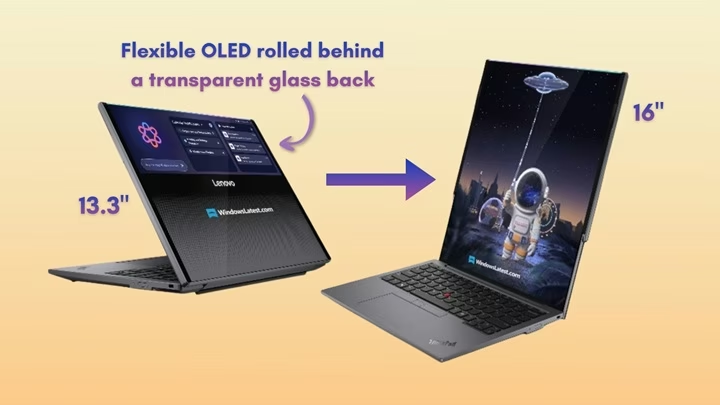
The core promise of the Rollable XD is simple yet revolutionary. In its standard mode, it looks like a compact 13.3-inch laptop—perfect for a coffee shop table or an economy class tray table.
But when you need to get serious work done (coding, writing long articles, or editing vertical video), the screen mechanically extends upwards, transforming into a massive 16-inch vertical workspace.

- Why does this matter? Because we scroll vertically. The web is vertical. Code is vertical. This isn’t just a gimmick; it’s an adaptation to how we actually use digital content today.
The “Glass” Risk: Bravery or Madness?
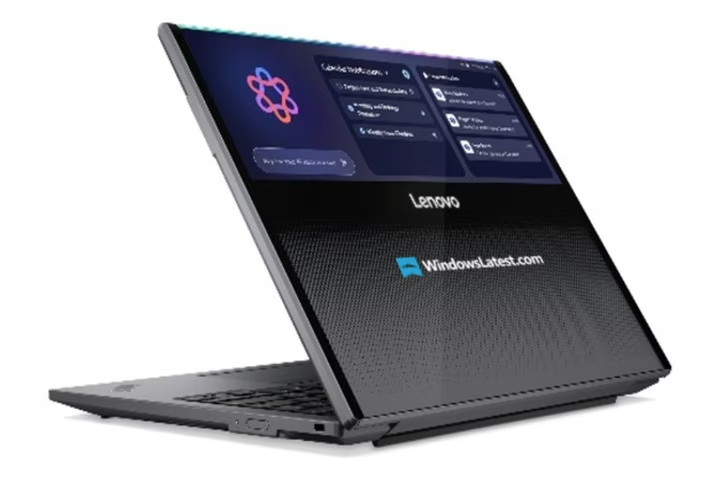
Here is the part that made me raise an eyebrow. Unlike previous prototypes where the extra screen rolled up inside the keyboard deck, Lenovo is doing something radical.
The screen rolls behind the device.
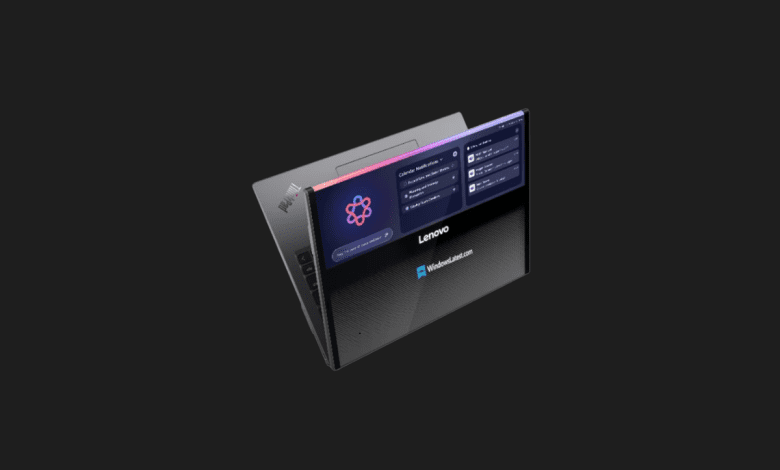
The chassis is made of transparent glass, and when the screen retracts, it wraps around the back, visible through the glass. It sounds like something straight out of Minority Report.
- The Concern: My first thought was, “What if I drop it?” An exposed screen sounds like a nightmare for clumsy people like me.
- The Solution: Lenovo is reportedly partnering with Corning to use Gorilla Glass Victus 2, which can bend 180 degrees. They claim it’s durable. I’ll believe it when I test it, but the ambition is undeniable.
“Contextual” Computing
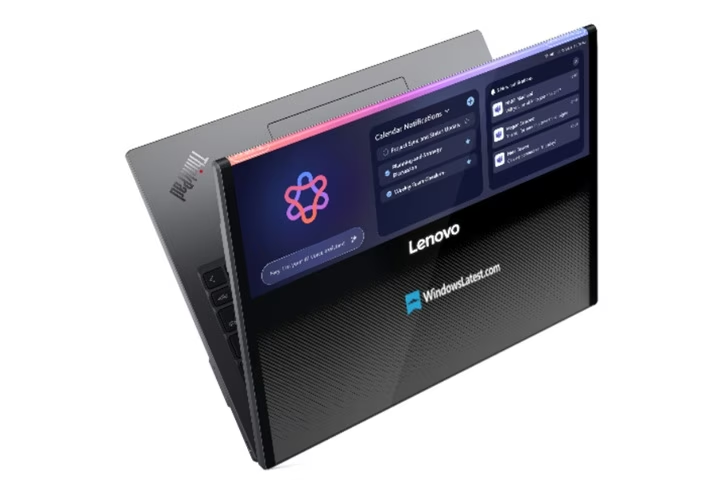
Why show the screen on the back? It’s not just for show. Lenovo calls this a “contextual smart device.”
Imagine closing your laptop, but the glass back still glows with notifications, your next meeting time, or a live translation of a conversation happening around you. It turns the “off” state of a computer into an “ambient” state. It’s always helpful, even when it’s closed.
Ugu’s Take: Is This The Future?
I have seen a lot of “concept” devices vanish into history (remember Google Glass?). But I have a feeling “Rollables” are different.
Foldable phones (like the Z Fold) taught us that screens don’t have to be rigid. But folding leaves a crease. Rolling is seamless.
This Lenovo concept represents a shift from “Static Hardware” to “Fluid Hardware.” In 2026, I don’t want to buy a 13-inch laptop OR a 16-inch laptop. I want a device that adapts to me.
If Lenovo can solve the durability anxiety, this isn’t just a new laptop. It’s the blueprint for the 2030s.
What about you? Would you trust a laptop with a screen that wraps around the outside, or would you be too afraid to put it in your backpack?
You Might Also Like;