I just spent hours digging through the massive, 400-page Stanford AI Index report. Honestly, it is incredibly easy to get lost in the daily noise of tech news, but this report is pure, unfiltered data. It strips away the marketing hype and shows us exactly what is happening behind the scenes.
Instead of a dry summary, I broke down the 12 most fascinating, shocking, and sometimes hilarious trends from the report. Here is what I found and what it actually means for us.
1. The US is Still the Undisputed King of AI Models

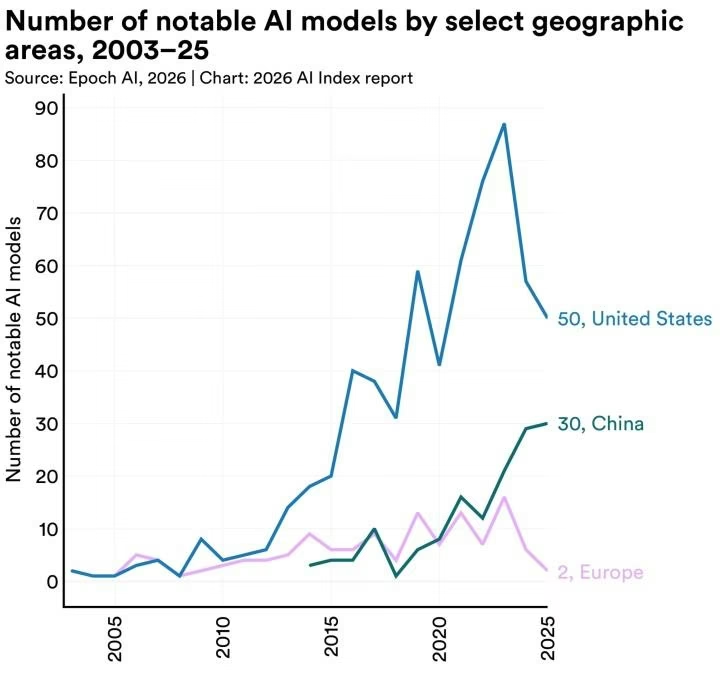
When I look at the software side of things, the United States is holding its ground firmly. US-based organizations released 50 “notable” AI models recently. Despite global competition, Silicon Valley and American tech hubs are still the primary engines driving foundational AI research and model generation.
2. The Industry Has Swallowed Academia

This is a stat that genuinely worries me. Back in 2015, the private sector produced less than half of top-tier models. Today? Over 90% of significant AI models come from massive, profit-driven corporations. Only a measly 7 models came from academia or government sources. We have officially handed the keys to the future over to private companies.
3. China is Quietly Building a Robotic Army

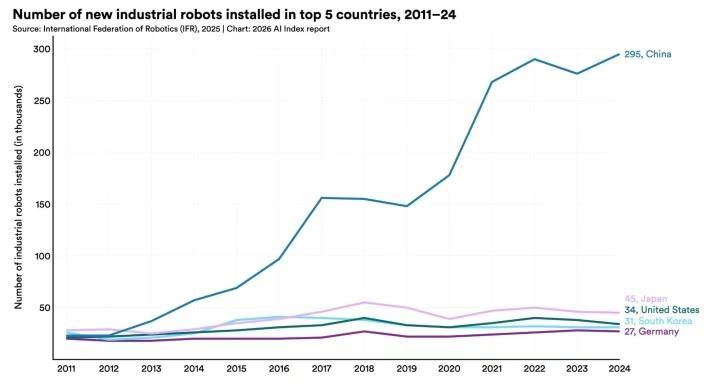
While the US is obsessed with chatbots, China is automating physical reality. The data shows China installed a staggering 295,000 industrial robots in a single year, compared to just 34,200 in the US. Software is amazing, but China is building the physical workforce of the future, and I think we are heavily underestimating how crucial that is.
4. Our Need for Compute Power is Spiraling Out of Control

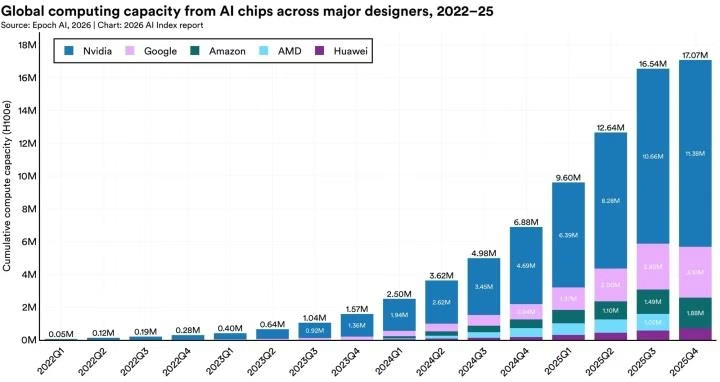
The AI boom isn’t running on magic; it’s running on raw hardware. The global compute power dedicated to AI has grown by 30 times since 2021. And sitting on the throne of this empire is Nvidia, holding over 60% of the world’s AI compute capacity. They aren’t just selling the pickaxes for the gold rush; they own the entire mountain.
5. The Hidden, Massive Carbon Footprint

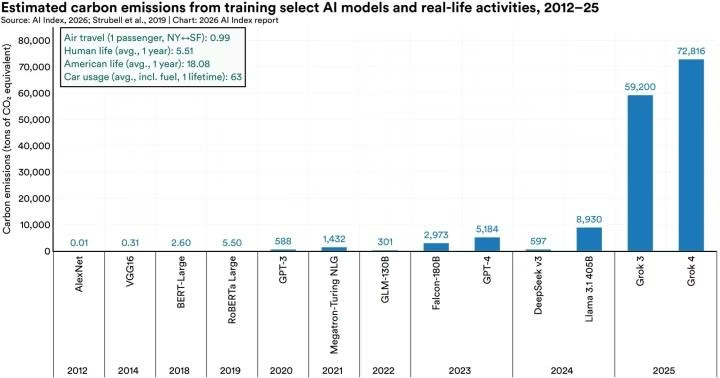
Here is the part that made my stomach drop: the environmental cost. Training next-gen models like xAI’s Grok 4 can produce over 72,000 tons of carbon emissions (with some independent estimates doubling that). Even just asking an AI a question burns energy. For example, DeepSeek V3 consumes about 23 watts per query, compared to Claude’s 5 watts. Is generating a meme worth that kind of footprint?
6. Benchmark Boundaries are Being Smashed Daily
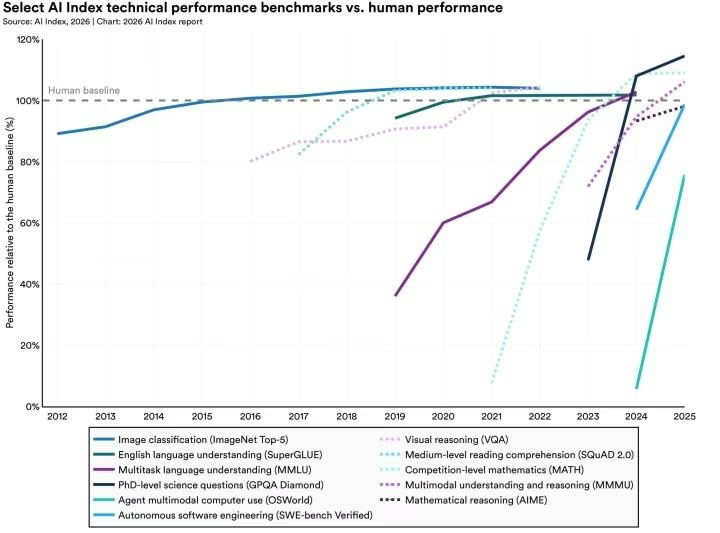
AI models are getting terrifyingly smart. In the brutally difficult “Humanity’s Last Exam,” the best model just a year ago scored an embarrassing 8.8%. Now? Models like Anthropic’s Claude Opus 4.6 and Google’s Gemini 3.1 Pro are scoring over 50%. They are writing complex software and passing PhD-level logic tests with ease.
7. Medicine is Becoming the Real AI Success Story
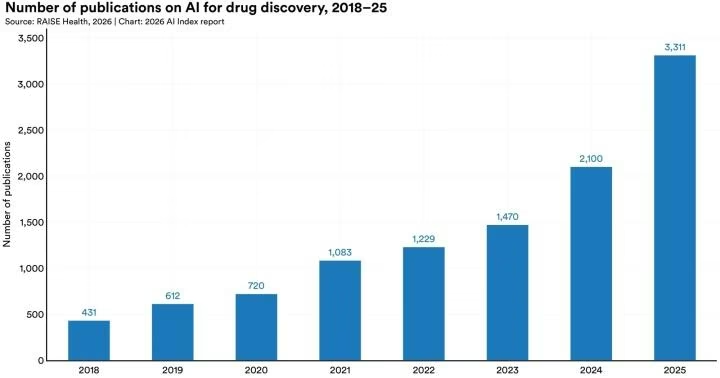
This is the trend I am actively rooting for. Academic papers on AI in drug discovery have doubled, and multimodal biomedical AI research is up 2.7x. These systems are analyzing medical images alongside patient histories to find connections human doctors might miss. If AI helps us cure major diseases, this entire tech boom will be worth it.
8. The Hilarious Truth: AI Still Can’t Read an Analog Clock
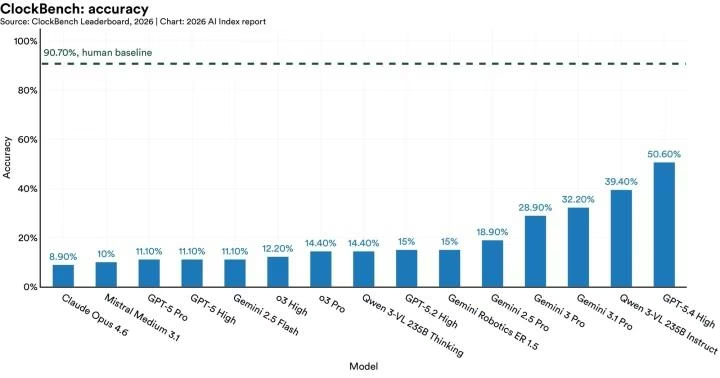
Despite passing PhD exams, AI has absurd blind spots. In the ClockBench test, the smartest multimodal models were asked to read an analog wall clock. OpenAI’s GPT-5.4 got the highest score, and it was only 50.6% (basically a coin toss). Claude Opus 4.6 scored a miserable 8.9%. It is a humbling reminder that AI doesn’t “think” like we do.
9. Investment is Smashing Through Historic Records
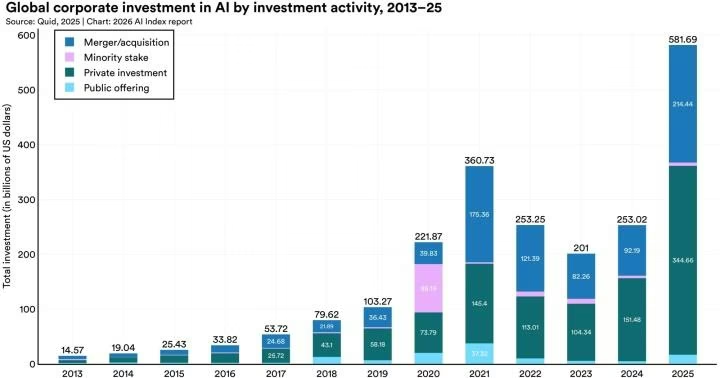
If you want to know where the future is heading, follow the money. Total global AI investment shattered records, surpassing $581 billion, which is more than double the previous year. Analysts are already projecting it to hit $700 billion soon. The financial world is betting everything on this technology.
10. Developers are Fully Embracing the AI Era

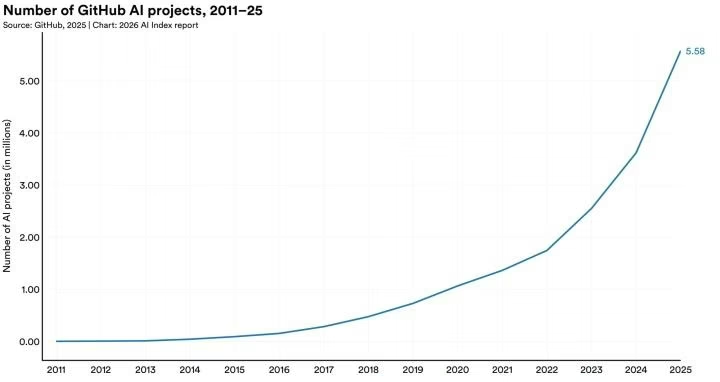
On GitHub, there are now 5.58 million AI-related projects. This is a 23.7% jump from last year alone. And importantly, I noticed the report emphasizes these aren’t just low-quality, AI-generated spam repositories. Real, human developers are deeply integrating AI tools into their daily coding workflows.
11. The Academic Boom is Real

Even though the industry owns the big models, universities are still churning out massive amounts of research. Computer science publications related to AI have skyrocketed from 102,000 to 258,000 over the last decade. Machine learning, computer vision, and generative AI are the main engines behind this academic explosion.
12. Jobs and Public Trust are Shifting

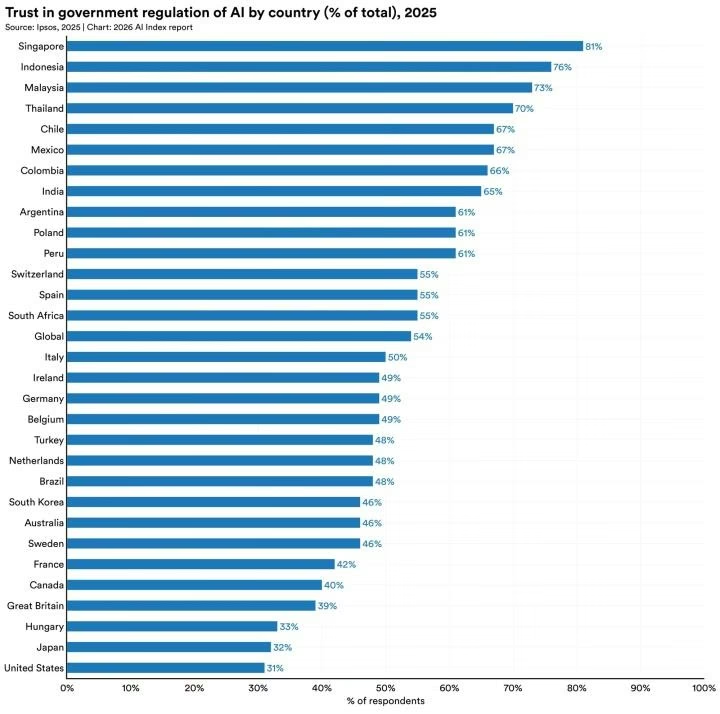
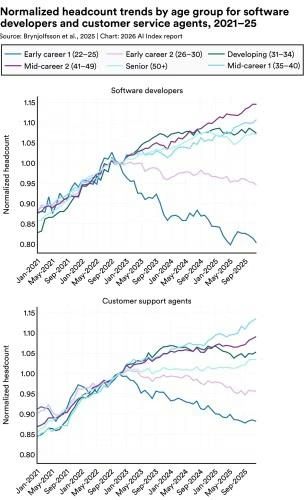
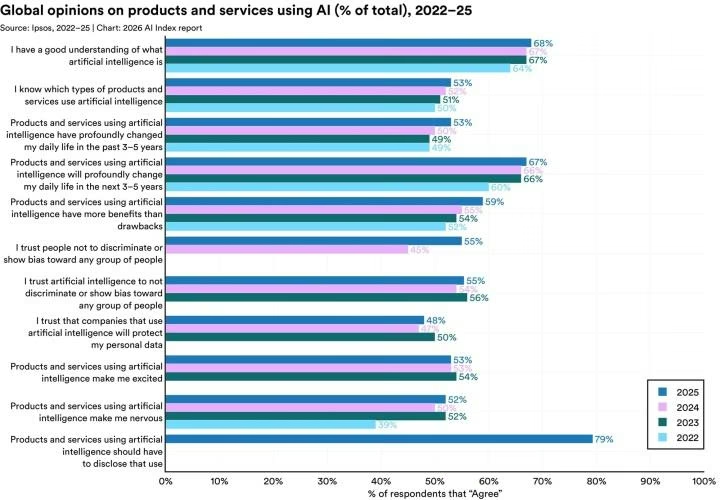
The impact on the workforce is incredibly complex. We are seeing a drop in entry-level coding and customer support jobs, but mid-to-senior roles are holding steady. As for public opinion, 59% of people now believe the benefits of AI outweigh the harms, but we still don’t trust our regulators. In the US, only 31% of people trust the government to regulate AI properly.
Looking at all these charts, it is crystal clear that we are no longer waiting for the AI revolution—we are living right in the middle of it. I’m incredibly excited about the medical breakthroughs, but the centralization of power and the environmental costs definitely make me nervous.
When you look at these 12 trends, what stands out to you the most? Are you hyped about the future, or are the massive carbon footprints and shifting job markets keeping you up at night? Let me know in the comments!
You Might Also Like;
- The New Era of Space Mechanics: Extending Satellite Lifespans
- AI Discovers Groundbreaking Non-Opioid Painkiller
- Mind Over Matter: What Neuralink’s First Human Trial Really Means for Our Future
-

-

-

-

-
-

-
-

-
-

-
-