Trump Halts Five Offshore Wind Projects in the US: Cause is Radar Interference



The Trump administration announced that it has halted five major offshore wind energy projects under construction along the US East Coast, citing the Pentagon’s national security concerns.
Federal officials stated that the Department of the Interior, together with the Department of Defense and other agencies, will assess the risks these projects may pose and take steps to mitigate potential threats. The suspension covers some of the country’s largest offshore wind investments. All of these projects currently hold federal lease rights and are in various stages of construction.
The halted projects include Vineyard Wind in Massachusetts, Revolution Wind in Rhode Island and Connecticut, Coastal Virginia Offshore Wind in Virginia, and Sunrise Wind and Empire Wind in New York state.
Officials did not share a clear timeline on how long the suspension will last. It was stated that risk mitigation options will be evaluated following the reviews, and new decisions will be made accordingly.
Concerns Regarding Radar Systems
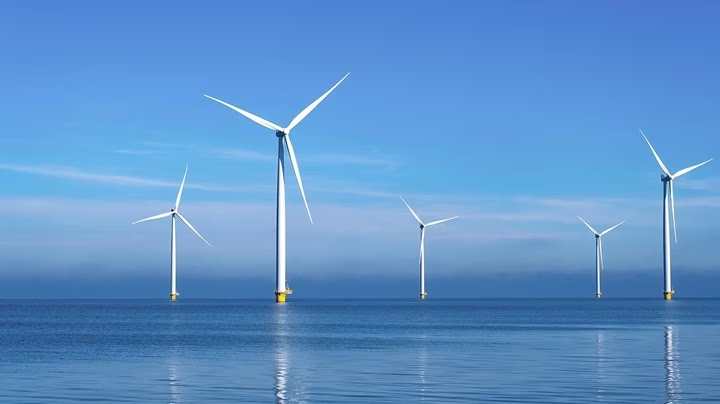
Federal agencies have long been examining the effects of offshore wind turbines on radar systems. In explaining the decision, the Department of the Interior cited unclassified official reports published on this subject. According to the Department, rotating turbine blades and reflective tower structures can cause interference, referred to as “noise” in radar signals. This situation can make it difficult to detect real moving targets and can also cause false targets to appear around wind farms.
Defense officials worry that such interference could disrupt coastal surveillance activities, especially in areas near densely populated coastal regions. Although the administration linked these risks to evolving adversary technologies, it did not name a specific country or threat element.


Trump Opposes Offshore Wind Projects
This announcement came approximately two weeks after a federal court rejected Trump’s attempt to halt wind energy projects nationwide. Massachusetts District Court Judge Patti Saris vacated Trump’s January 20 executive order blocking wind projects. The judge described the decision as “arbitrary and unlawful.” With this ruling, leasing and permitting authorities for wind projects on federal lands and waters were reinstated.
Trump has long opposed offshore wind energy. He argues that these projects threaten national security, wildlife, and coastal views. The Trump administration prioritizes fossil fuel production instead. While the recent suspension decision does not impose a nationwide ban, it has created new uncertainty in the offshore wind sector by targeting specific projects.
You Might Also Like;