The Truth About Electric Car Radiation: Are We Driving Giant Microwaves?



I spend a massive chunk of my day looking at the future. Whether I am deep-diving into the mechanics of the latest humanoid robots, mapping out digital narratives, or just planning my next quiet camping escape into nature, I am constantly evaluating how new tech fits into our daily lives. Lately, a specific question has been popping up a lot in the EV community, and it’s one that honestly made me pause and dig deeper: Are electric cars exposing us to dangerous levels of radiation?
It is a fair question. When you think about it, you are essentially strapping yourself to a massive, high-voltage battery pack and riding it down the highway at 120 km/h. It’s easy to see why the fear of turning into a silent, rolling human antenna has kept some people hesitant about making the switch from traditional gas guzzlers.
But I hate operating on rumors, so I looked into the hard data. Fortunately, a massive new study has just dropped, and I want to break down exactly what it means for us. Spoiler alert: you don’t need to wear a tinfoil hat behind the wheel.
The Myth of the “Human Antenna”

There is a lot of misinformation out there about electrosmog—the electromagnetic fields (EMF) generated by electronic devices. The internet is filled with wild theories that the massive battery packs in EVs act as hidden radiation chambers, quietly messing with our cells, our nervous systems, and even our heart pacemakers.
I understand the anxiety. We are surrounded by screens, Wi-Fi routers, and smart devices. Adding a 5,000-pound electronic vehicle to the mix feels like it could be the tipping point. However, the German Federal Office for Radiation Protection decided to put this exact fear to the test, commissioning the renowned automobile club ADAC to run a comprehensive, no-nonsense investigation.
Inside the ADAC Testing Laboratory: Real-World Scenarios

I love a good, rigorous scientific test, and ADAC did not hold back. They didn’t just park an EV in a sterile lab and wave a wand over it. They wanted to know what happens to your body during a real, chaotic daily commute.


Here is how they set up the battlefield:
- The Fleet: They brought in eleven different electric vehicles, a handful of hybrids, and—as a control group—one traditional internal combustion engine (ICE) car.
- The Passenger: They wired up a specialized test dummy with ten highly sensitive probes.
- The Variables: The dummy was moved through multiple seating positions while the cars were subjected to hard acceleration, aggressive regenerative braking, and various charging states.
They were looking for one specific thing: Do the electromagnetic spikes ever come dangerously close to the thresholds deemed risky by medical scientists?
What Happens When You Hit the Gas?

When I first read the report, I immediately looked for the acceleration data. When you slam your foot down on the pedal of an EV, a massive surge of energy is instantly transferred from the battery to the electric motors.
The ADAC engineers confirmed that, yes, during hard acceleration, sudden braking, or when major electrical components engage, there are indeed short-term spikes in the magnetic field strength. But before you panic, context is everything.
These spikes are completely normal for any machine relying on high-voltage circuits. The crucial takeaway is the actual number: the electrical fields and current densities that would actually manifest inside a human body under these conditions remained far below the recommended safety limits.
The Numbers Don’t Lie: Safe for Your Cells

One of the most reassuring details from the study was where the radiation was concentrated.
If you are worried about your brain or your vital organs, you can breathe easy. The absolute highest electromagnetic readings were not found near the head or the chest. They were located down in the footwell. This makes perfect sense technologically, as that is where the main power cables and electric drive units are often routed.
In the cabin itself—where your head, torso, and sensitive medical devices like pacemakers sit—the activity was virtually non-existent. There is absolutely nothing happening in that cabin that is going to fry your nerves or alter your cellular structure.
The Plot Twist: The Real Culprit is Hiding in Plain Sight

This is the part of the study that genuinely made me laugh out loud. If you are terrified of the electromagnetic fields in an electric car, you might want to look at a feature you probably use every single winter.
The heated seats.
The researchers found that the absolute strongest electromagnetic readings didn’t come from the giant battery pack or the electric motors. They came from the heated seats. And the kicker? This wasn’t just in the electric and hybrid models. The highest readings of the entire test were produced by the heated seats in the single, traditional gas-powered car they tested!
Even then, the values measured from the seat heaters were still nowhere near dangerous levels. But it goes to show how our perception of “new tech danger” often makes us completely ignore the legacy technology we’ve been sitting on for decades.
What About the Charging Station?
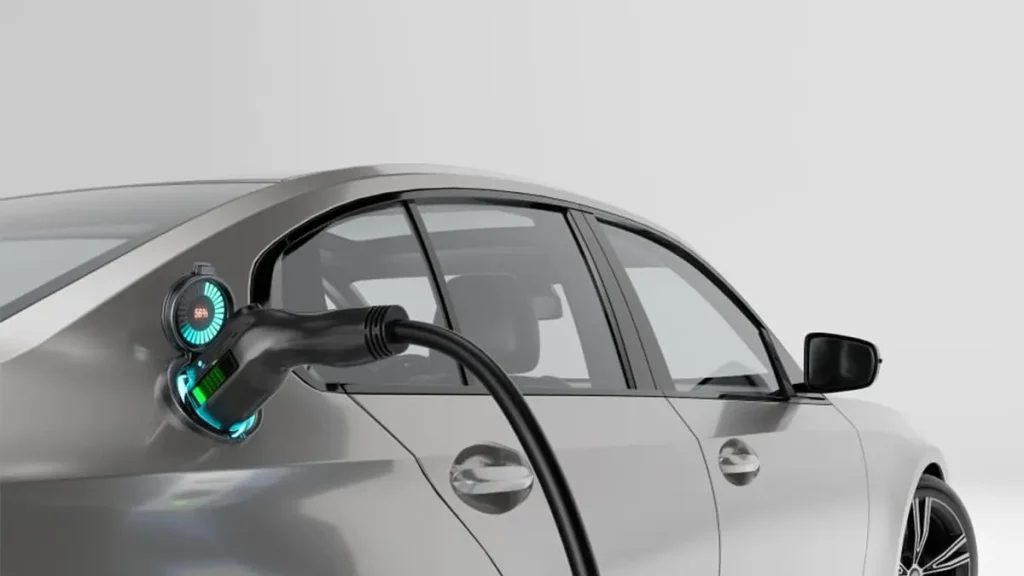
Of course, driving is only half the EV experience. What happens when you plug the car into the grid?
I know some folks get nervous standing near their car while it’s hooked up to a high-voltage supercharger. The ADAC team tested both AC (slow charging) and DC (fast charging) setups.
Here is what they found:
- AC Charging: When the session kicks off, there are slightly stronger readings around the charging plug itself. However, these levels are still well within the universally accepted safe zones.
- DC Fast Charging: Here is the counter-intuitive part. Even though DC fast chargers pump a massive amount of power into the vehicle in a very short time, they actually produced weaker electromagnetic fields than the slower AC chargers.
Whether you are charging in your garage overnight or juicing up at a highway station, the radiation levels are negligible.
Final Thoughts: Science Over Fiction
It is incredibly easy to let the fear of the unknown dictate our choices, especially when the internet is an echo chamber of worst-case scenarios. But as someone who constantly looks at the data behind the tech we use, this ADAC study is a massive sigh of relief.
The transition to electric mobility brings a lot of valid challenges—infrastructure, battery recycling, range anxiety—but exposing ourselves to dangerous radiation simply isn’t one of them. The science is in, and it’s clear: you are not turning into a human antenna. You are just driving a very quiet, very efficient computer on wheels.
I’m curious, Spartans—did the fear of “electrosmog” ever make you hesitate about buying an EV, or do you think these kinds of myths are just spread by people resisting the shift to new technology? Drop your thoughts below; I read every single one!
You Might Also Like;