The Ultimate Speed Limit: Why Light Cannot Break the Universe’s Code


I remember sitting in the theater watching Interstellar for the first time, completely mesmerized by the way it bent the rules of reality. Time dilation, black holes, the sheer scale of the cosmos—it really messes with your head. But whenever I dive deep into the mechanics of our universe, there is one concept that absolutely fascinates me more than anything else: the speed of light.
We are taught in school that light travels at approximately 300,000 kilometers per second. It is the absolute speed limit of the universe. But have you ever stopped to wonder why? Why 300,000 km/s? Why not a million? Why isn’t it infinite?
If you think light is just stuck at an arbitrary cosmic speed limit, prepare to have your mind blown. I’ve been researching the intricate physics behind this, and the truth is far stranger than sci-fi. Today, we are breaking down the fabric of reality itself.
The Photon’s Perspective: A Life Without Time
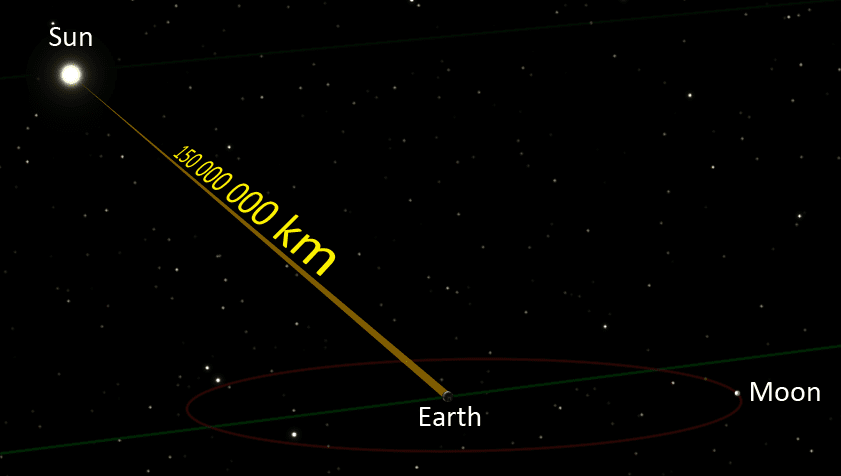
When I first wrapped my head around this concept, I actually had to step away from my screen and just stare at the wall for a minute. We always talk about how long it takes for light to travel. It takes about eight minutes for light from the Sun to reach Earth. It takes 2.5 million years for light from the Andromeda galaxy to hit our telescopes.
But here is the wild part: that is only from our perspective.
According to Einstein’s theory of relativity, as you move faster through space, you move slower through time. This is a trade-off embedded in the very code of our universe.


- At walking speed, time ticks normally.
- At 99% the speed of light, time slows down to a crawl.
- At exactly the speed of light, time completely stops.
For a photon, time and speed do not even exist. From the moment a photon is born in the fiery core of a distant star to the exact moment it crashes into your retina as you look up at the night sky, absolutely zero time has passed for that photon. It doesn’t matter if it traveled for 10 billion years from our point of view; to the photon, reaching Earth from a distant galaxy is a totally instant event.
It Isn’t Light’s Fault: The Fabric of Reality

A huge misconception I used to have is that the speed of light is somehow a limitation of the light particle itself. I used to think, “Maybe photons are just lightweight, but they still have some mass holding them back.”
That is entirely wrong. Photons have zero resting mass. The famous speed of 299,792,458 meters per second is not a weakness of the photon; it is the strict, unbreakable speed limit of our universe’s space-time fabric.
Think of it this way: the speed of light is actually the speed of causality. It is the maximum speed at which any piece of information, any force, or any cause-and-effect event can ripple through the universe.
- If the Sun magically vanished right now, we wouldn’t just keep seeing its light for 8 minutes—Earth would also continue to orbit empty space for 8 minutes.
- Gravity travels at the exact same speed as light.
The universe has a refresh rate, a maximum processing speed for reality to update itself. Nothing can happen faster than causality allows, otherwise, the universe would break its own logical sequence. Effects could happen before their causes, and reality would shatter.
Can We Cheat the System? Tachyons and Warp Drives
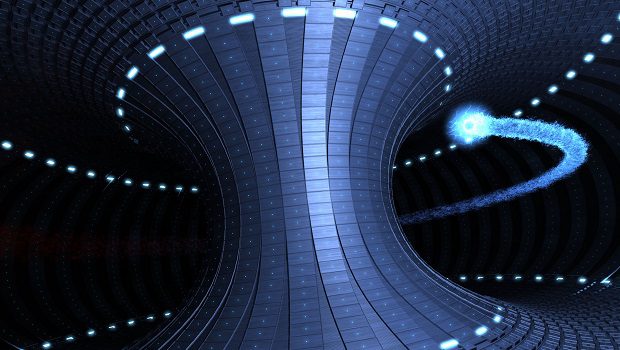
Of course, human curiosity never settles for “it’s impossible.” If I were a theoretical physicist, I’d be looking for loopholes, too. And science actually has a few fascinating ideas about how we might one day outsmart the universe’s speed limit.
1. The Alcubierre Warp Drive Instead of pushing a ship faster through space—which is illegal under cosmic law—what if we bent the space around the ship? The concept of a warp drive involves compressing the space in front of a spacecraft and expanding the space behind it. You aren’t moving faster than light; you are taking a shortcut by folding the fabric of reality itself. It’s like moving a surfer on a wave. The universe’s speed limit only applies to objects moving through space, not to space itself expanding or contracting.
2. The Tachyon Hypothesis Then there are Tachyons. These are purely hypothetical particles that theoretically always move faster than light. Just as we require infinite energy to accelerate to the speed of light, a Tachyon would require infinite energy to slow down to the speed of light. They live in a bizarre mirror-universe of physics where time flows backward. While we haven’t found any evidence they exist, the math doesn’t explicitly forbid them, which I find incredibly exciting.
The Simulation Theory Connection
Whenever I think about this hard limit on the speed of reality, my mind inevitably drifts toward Simulation Theory. We talk about the Metaverse a lot here, building virtual worlds with their own physical laws.
If you build a video game, you have to set a maximum render distance and a maximum processing speed. If a character moves too fast, the game engine crashes because the hardware can’t render the environment quickly enough.
Could the speed of light just be the clock speed of the universe’s processor? Is 299,792,458 m/s simply the maximum rate at which the “servers” running our reality can compute cause and effect? It’s a chilling thought, but comparing cosmic physics to computer science makes the speed of light feel less like a random natural phenomenon and more like a hard-coded limitation to prevent a system crash.
What if the Multiverse is Real?
This brings me to my favorite “what if.” If the speed of light is just a programmed constant of our specific space-time fabric, what happens if we step outside of it?
If the multiverse theory is real, the cosmic rules might be entirely different in a parallel universe.
- Imagine a universe where the speed of light is only 100 kilometers per hour. Relativity would be a daily experience. Driving down the highway would cause your clock to tick slower than a pedestrian’s.
- Imagine a universe where the speed limit is infinite, meaning causality happens instantly everywhere all at once.
The fact that our universe landed on this specific number, finely tuned to allow stars to burn, planets to form, and life to evolve, is nothing short of a miracle.
Final Thoughts
The more I research the cosmos, the more I realize that the speed of light isn’t a barrier keeping us trapped; it is the glue holding reality together. Without this strict limit, cause and effect would lose all meaning, and the universe as we know it would descend into utter chaos. It is the ultimate rule of the game we are all playing.
But the universe is vast, and our understanding of it is just beginning.
I’m curious to hear your perspective on this. If we ever discover parallel universes, do you think they will have entirely different laws of physics, or is the speed of causality a universal constant across all realities? Let me know what you think in the comments below!
Stay curious,
Ugu
You Might Also Like;