The Most Terrifying Incidents Aboard the International Space Station


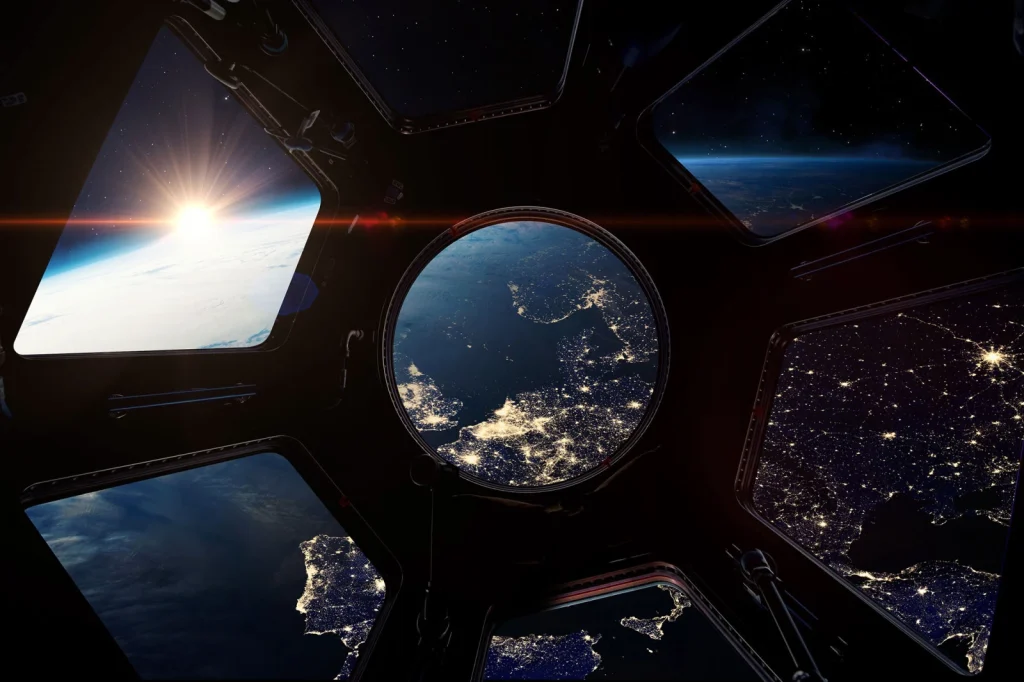
For over two decades, the International Space Station (ISS), humanity’s orbiting home, has managed to continue its mission without a single fatality. However, behind this record are countless moments when disaster was narrowly averted. Here are the most unforgettable of those moments…
Serving as humanity’s permanent home in Earth’s orbit for over twenty years, the International Space Station (ISS) is not just a laboratory but also a symbol of global collaboration and engineering genius. This multi-billion dollar colossal structure also holds the record for continuous human presence. But the most striking achievement is that not a single astronaut has lost their life during this entire period.
This extraordinary success is a testament to the station’s safety systems and the competence of the crew working under the most challenging conditions. Survival in space is never a routine job. Over the years, the ISS has faced countless technical malfunctions, the threat of dangerous space debris, and sudden emergencies. Any of these incidents could have easily escalated into a disaster, and each one served as a harsh reminder of how narrowly space travel proceeds along a line of safety.
The Near-Drowning in a Helmet: The Luca Parmitano Incident
One of the most terrifying moments in ISS history occurred on July 16, 2013, during a spacewalk by Italian astronaut Luca Parmitano. During a routine task, Parmitano realized that his helmet was starting to fill with water. The wetness he first felt on the back of his neck quickly covered his ears, then his eyes, and finally blocked his nose. In the absolute vacuum of space, Parmitano faced the unimaginable threat of drowning inside his own life support unit.
The problem was caused by a malfunction in a system that managed the cooling water; the water, which should have remained in a closed circuit, leaked into the helmet. In zero gravity, the growing water droplets clung to his face, almost completely blocking his vision and cutting off his communication.
The astronaut, maintaining his composure, managed to crawl back to the airlock almost blind and was guided inside by his colleagues on the station. NASA described this event as one of the most critical close calls in the station’s history.
The Russian Module’s Uncontrolled Spin: Moments of Panic on the Station
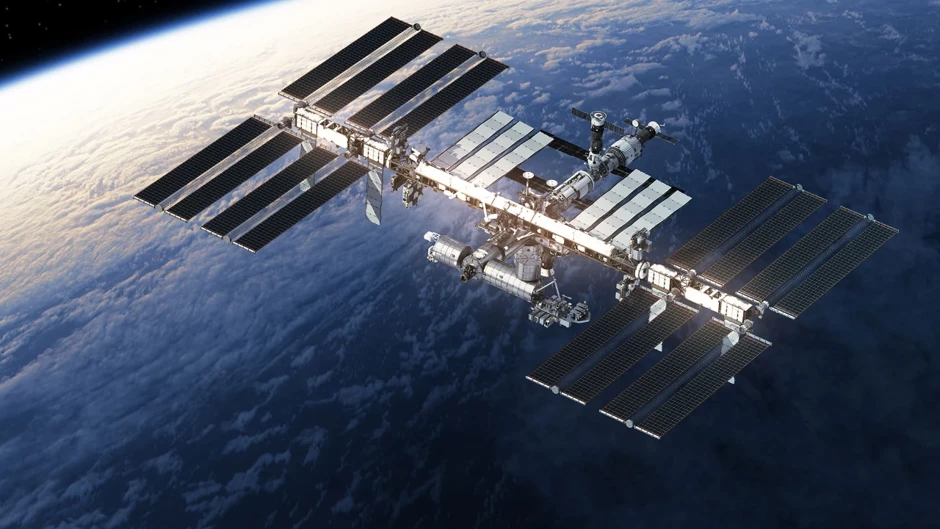
One of the most expensive and dangerous near-disasters the ISS has faced occurred in 2021, hours after the Nauka science module docked with the station. Following what appeared to be a successful docking, Nauka’s thrusters began firing uncontrollably due to a software error.
This unexpected force caused the entire station to lose its orientation, rotating approximately one and a half turns, or 540 degrees. While the correct alignment of the solar panels is vital for power generation and communication, this loss of control seriously threatened the station’s structural integrity. Ground control teams on Earth struggled to regain balance by using the thrusters of other vehicles. Fortunately, the station stabilized once Nauka ran out of fuel. This incident highlighted how even the simplest additions can turn into a major risk of catastrophe.
Rescue Capsule Leak and Launch Abort

On December 14, 2022, a coolant leak was detected in the Soyuz MS-22 spacecraft docked at the station. A tiny 0.8-millimeter hole, believed to be caused by a micrometeoroid strike, disabled the capsule’s cooling system. This not only raised the internal temperature of the capsule to dangerous levels but also rendered the emergency return vehicle for the three American and Russian crew members unusable.
To resolve the issue, a new Soyuz capsule (MS-23) had to be launched unmanned.
The Silent Threat: A Small Hole and Pressure Loss
In August 2018, a much quieter and more insidious danger emerged. The station’s cabin pressure began to drop slowly but steadily. Investigation revealed a tiny 2-millimeter hole in the orbital module of the docked Soyuz MS-09 capsule. In the long run, this small hole could have caused all the air inside the station to escape into the vacuum of space. The crew initially covered the hole with simple Kapton tape, then reinforced it with epoxy and gauze, successfully stopping the leak. The exact cause of the hole—whether a manufacturing defect, a collision, or something else—is still not fully known.
All these events demonstrate that the ISS is not just a place for scientific study but also a place where human intelligence, composure, and engineering knowledge are constantly tested. The fact that there have been no fatalities so far may be an extraordinary success story; however, every incident reminds us how narrowly safety in space is maintained.
You Might Also Like;
- We Selected 10 Series Similar to Stranger Things for Those Who Love It
- Where and How is Silver Used in Electric Vehicles?
- Hyundai Unveils Its Multi-Purpose Wheeled Robot
Follow us on TWITTER (X) and be instantly informed about the latest developments…