

Hey Spartans, Ugu here. It’s well past midnight, and after another long shift at the bank, I finally got to sit down at my computer, grab a coffee, and dive into my favorite topic in the world: the future.
When you spend as much time as I do researching AI agents and quantum computing for this site, you start to realize something funny. A lot of the “mind-blowing” tech we see today isn’t actually a new idea. When I was rewatching some classic 1980s sci-fi movies recently, it hit me hard. Those directors weren’t just telling stories; they were practically writing the blueprints for modern tech companies.
Back in the 80s, the idea of a watch that made phone calls or a machine that cleaned your house while you slept felt like pure fantasy. Today? It’s just a regular Tuesday.
Let’s take a look at the wild 80s sci-fi concepts that managed to escape the silver screen and become our reality. Some of them totally missed the mark, but others actually ended up being better than the movies predicted.
The Dream of Self-Lacing Shoes is Alive (But Expensive)
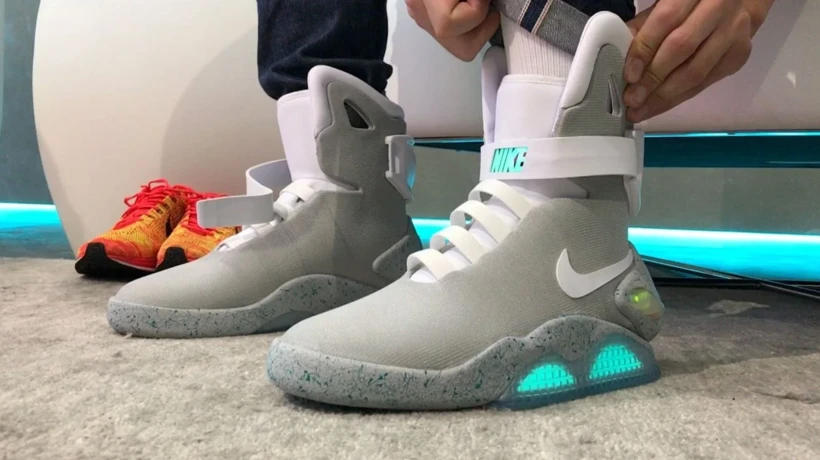
If you grew up watching Back to the Future Part II (1989), you definitely wanted to be Marty McFly. When he stepped into the future and his shoes automatically tightened around his feet, it blew our collective minds. For decades, it felt like an impossible piece of movie magic.
But engineers are nerds too, and they didn’t forget.


- The Nike MAG Reality: In 2016, Nike actually pulled it off. They released a limited edition of the MAG sneaker with functional “power laces.” Sensors in the heel detected your foot, and hidden motors pulled the laces tight. They even gave the very first working pair to Michael J. Fox.
- The Consumer Attempt: Nike tried to bring this to the masses with the HyperAdapt 1.0 and later the Adapt BB basketball shoes.
My Take: While the technology is absolutely real and works surprisingly well, it never became the standard we expected. High manufacturing costs, the need to literally charge your shoes, and occasional software glitches kept this as a niche luxury item rather than a daily essential. We got the tech, but it just wasn’t practical enough for everyday life.
The Hoverboard Heartbreak
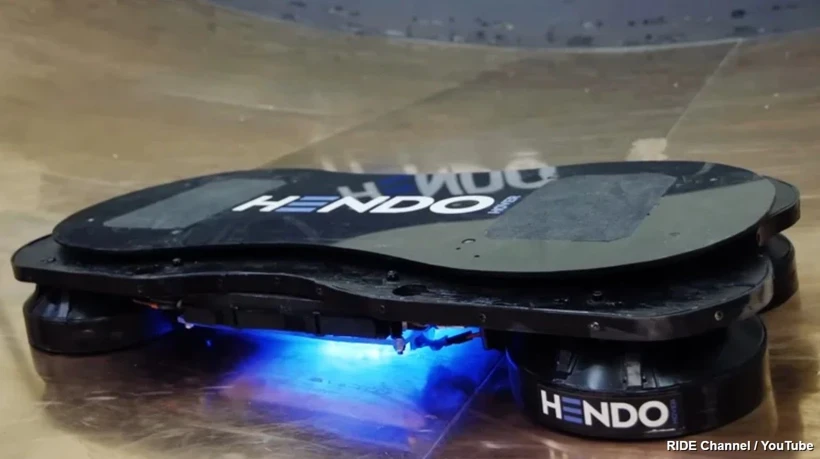
This is the one that hurts. Also stemming from Back to the Future Part II, the hoverboard is arguably the most coveted fictional gadget in cinema history.
In the mid-2010s, we got incredibly close.
- The Hendo Hoverboard (2014): This project proved that you could actually levitate a board using massive magnetic fields.
- The Lexus Project: The luxury car brand built an insanely cool, liquid-nitrogen-cooled hoverboard that actually floated and could be ridden by professional skaters.
The Catch: There is a massive, frustrating “but” here. These real-world hoverboards require a specialized magnetic surface (like a copper-lined skatepark) to repel against. You can’t just take them out on the asphalt sidewalk. So, while the physics are real, the freedom of jumping on a floating board to outrun your neighborhood bully remains purely fictional.
Smartwatches: Where Reality Beat the Fiction

Usually, real-world tech is a bit clunkier than the movie version. But when it comes to wearables, we actually surpassed the 80s vision by a mile.
If you watch the 1983 James Bond film Octopussy, you’ll see Bond using a Seiko TV Watch. At the time, the idea of watching a screen on your wrist was incredible. But the reality of that prop was hilarious: it required a massive receiver pack in your pocket and a thick cable running up your sleeve to function.
Look at our wrists today.
- The Modern Reality: We have the Apple Watch, the Samsung Galaxy Watch, and dozens of others.
When I finish a 14-hour grind between my day job at the bank and editing videos for the channel late at night, my smartwatch isn’t just showing me a blurry TV signal. It’s tracking my heart rate variability, monitoring my deep sleep cycles, taking my ECG, and letting me pay for my coffee without opening my wallet. The 80s aimed high, but modern engineers aimed higher.
Robot Vacuums: The Quiet Revolution

Let’s talk about Runaway (1984). It’s a Tom Selleck movie that heavily featured the concept of household robots. While the film focused more on what happens when these robots malfunction and turn dangerous, the underlying concept was incredibly accurate: machines specifically designed to take over domestic chores.
Fast forward to today, and the killer robots are nowhere to be seen, but the domestic helpers are everywhere.
- The Roomba Era: Robot vacuums have quietly infiltrated millions of homes.
- Advanced Navigation: They use advanced LiDAR (light detection and ranging) to map our floor plans, avoid leaving streaks, and even empty their own dustbins.
My Take: They might not look like the humanoid droids of the 80s, but they do exactly what sci-fi promised. They gave us our time back. Honestly, knowing my floors are getting cleaned while I’m stuck in traffic on my way home is one of the most underrated pieces of futuristic tech we have.
Final Thoughts
The 1980s directors didn’t get the timeline perfectly right, and sometimes they overestimated the laws of physics. But the overall trajectory? They nailed it. The “impossible” gadgets we obsessed over on VHS tapes are now sitting in our living rooms or strapped to our bodies.
It makes me wonder what the sci-fi movies of today are getting right about the 2060s.
I want to hear from you, Spartans. If you could pull one piece of technology from any sci-fi movie and make it an affordable, everyday reality right now, what would it be? Drop your answers in the comments—I read every single one!
You Might Also Like;