Unitree Humanoid Robots to Handle Baggage at Tokyo Airport


Recent advancements in artificial intelligence and robotics are accelerating the development of humanoid robots, bringing them out of the lab and into real-world applications. One of the most capable and accessible models available today, the Unitree G1 developed by Chinese firm Unitree Robotics, is officially stepping into the field.
While it might not be the absolute most advanced model on the market, its relatively low cost makes it highly practical for real-world deployment. The latest example comes from Japan: Japan Airlines has launched a new pilot program at Tokyo’s Haneda Airport—one of the country’s busiest hubs—to deploy these humanoid robots directly on the tarmac.
Humanoids Teaming Up with Ground Crews
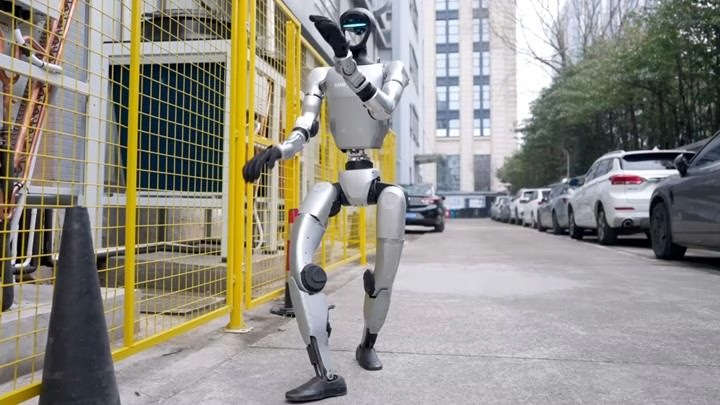
Starting next month, Unitree G1 robots will work alongside human ground handling teams to assist with baggage and cargo operations. The pilot project is slated to run until 2028, with the potential to become a permanent operational standard if successful.
The primary driving force behind this initiative is Japan’s shrinking workforce. Faced with one of the world’s oldest populations and a rapidly growing influx of tourists, the country is grappling with significant labor shortages, particularly in physically demanding aviation roles.
In recent operational demonstrations, the G1 was seen carefully pushing cargo onto a conveyor belt next to a Japan Airlines aircraft before signaling a human worker with a hand gesture. This simple yet crucial interaction highlights how seamless human-robot coordination can function in a live, fast-paced environment. Japan Airlines officials note that assigning repetitive and physically strenuous tasks to robots will alleviate the heavy burden on human employees. However, they emphasize that critical responsibilities, especially safety oversight, will remain strictly under human control.
The project will initially involve a detailed analysis of ground operations, followed by extensive performance evaluations of the robots through both digital simulations and real-world testing.
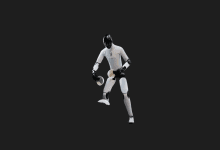
Unitree G1 Specifications and Capabilities
Despite its compact design, the Unitree G1 packs impressive hardware suited for industrial assistance:
- Dimensions: Stands roughly 1.32 meters tall and weighs just 35 kilograms.
- Agility: Features 23 degrees of freedom, allowing for highly balanced and coordinated movement.
- Sensors: Equipped with 3D LiDAR, a depth camera, and voice command systems for spatial awareness and team interaction.
- Performance: Powered by a 9000 mAh battery that provides around two hours of continuous operation, with a top speed of 7.2 km/h.
These technical specifications enable the G1 to successfully execute physical labor while safely navigating around heavy machinery and human personnel.
The Secret: From Simulation to Reality
A major reason the G1 is ready for immediate deployment is Unitree’s sophisticated training methodology. Before handling real luggage, the robot’s capabilities are extensively honed in advanced virtual environments like the Nvidia Isaac Simulator.
During this phase, a digital twin of the robot is created. Human movements are captured via motion tracking and transferred to the 3D model, where reinforcement learning techniques optimize the actions. Finally, using a method called “Sim2Real,” these learned behaviors and physics adjustments are directly transferred to the physical robot’s brain. This rigorous pipeline ensures that the Unitree G1 operates with maximum stability and reliability when faced with the unpredictable variables of the real world.
You Might Also Like;