
Nvidia has launched a new era with AI training in space. Starcloud’s orbital GPU experiment could reshape the future of data centers. Here are the details:
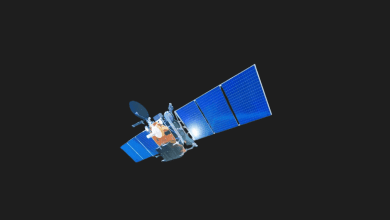
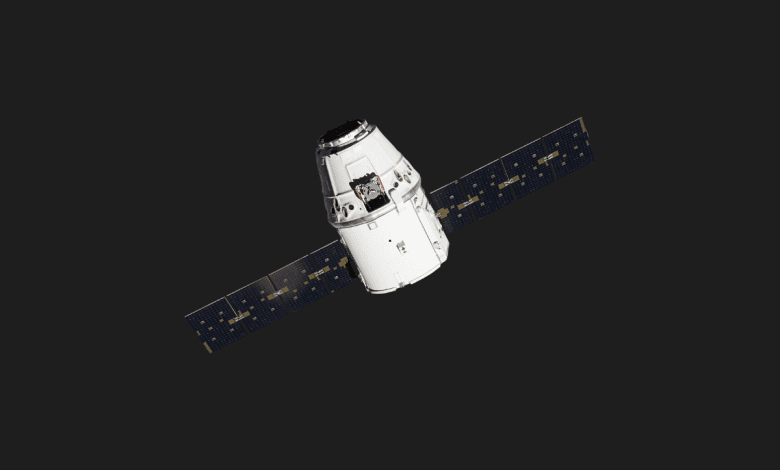
Nvidia attracted attention in the tech world by achieving a significant first in the field of AI training in space. The Starcloud initiative, supported by Nvidia, successfully ran and trained an artificial intelligence model in space by sending a high-performance Nvidia GPU into Earth’s orbit.
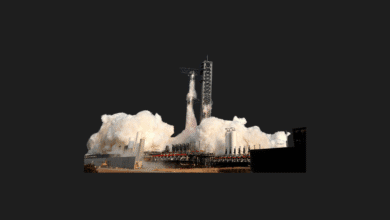
What Does the Orbital GPU Experiment Mean? Launched by a SpaceX rocket, the Nvidia GPU was activated in orbit and ran Google’s open-source large language model, Gemma. This test is recorded as the first instance of a modern AI chip being used in real-time in space. The company also demonstrated that AI training in space is concretely possible by developing a small-scale language model trained on all of Shakespeare’s works. The texts generated by the model were notable for using language close to classic Shakespearean English.
According to Starcloud CEO Philip Johnston, this experiment proves the concept is technically sound. Johnston emphasizes that almost every operation performed in data centers on Earth can also be carried out in space, and the main motivation is to overcome energy constraints. Nvidia’s approach to AI training in space could offer significant advantages, especially regarding cooling and energy costs. The constant and abundant availability of solar energy in space holds the potential to reduce operational costs in the long term.
However, the challenges of operating a data center in space are not to be underestimated. While facilities on Earth can be cooled with air and water, dissipating heat in the space environment requires much more complex engineering solutions. Starcloud plans to overcome this problem with massive panels based on passive radiative cooling principles. The company’s goal is to establish a 5-gigawatt orbital data center powered entirely by solar energy, with a cooling surface larger than six square kilometers.
According to technical reports, such orbital data centers can be rapidly scaled thanks to their modular structures. It will also offer expansion opportunities without land, permit, and infrastructure constraints on Earth. Nvidia’s vision for AI training in space is seen not just as a technology demonstration, but as a long-term infrastructure strategy. However, issues such as the effect of radiation on electronic components, the risk of collision with space debris, fuel required to stay in orbit, and data security remain among the main problems to be solved.


Starcloud is not the only company interested in this field. Google aims to move its own tensor processing units (TPUs) to orbit with an initiative called Project Suncatcher. Names like OpenAI, Amazon founder Jeff Bezos, Google CEO Sundar Pichai, and Elon Musk are also openly discussing the idea of space-based data centers. This indicates that Nvidia’s move for AI training in space is part of a broader transformation in the industry.
You Might Also Like;