
Hey Spartans, it’s Ugu. It’s well past midnight here, and after a long shift at the bank, I finally got to sit down at my editing desk to dig into the latest space updates. Honestly, this piece of news woke me right up. We talk a lot about the distant future of space exploration on this channel—from Mars colonization to theoretical Dyson Spheres—but today, we are looking at something that is happening right now.
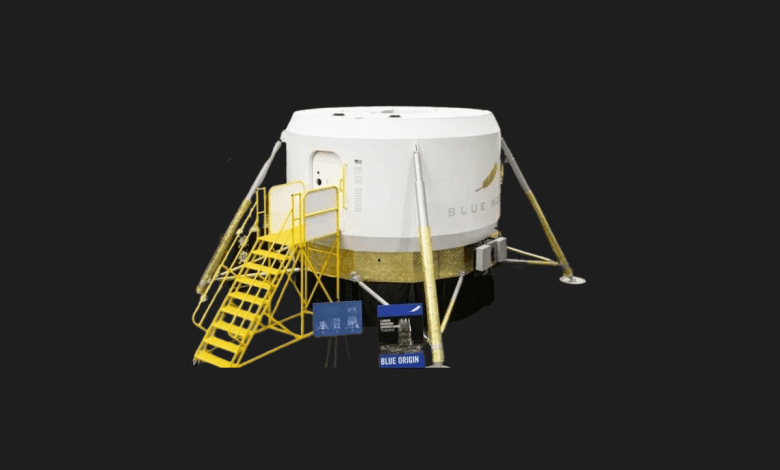
NASA has officially shifted gears from the drawing board to physical execution. The space agency just announced that they are initiating the astronaut training process for Blue Origin’s Mark 2 crewed lunar lander.
We aren’t just looking at CGI renders anymore. Real humans are stepping into full-scale prototypes, and the Artemis program is suddenly feeling incredibly tangible. Let’s break down exactly what this means for the future of lunar exploration, and why this specific training phase is a make-or-break moment for our return to the Moon.
Stepping Into the Mark 2: More Than Just a Metal Box
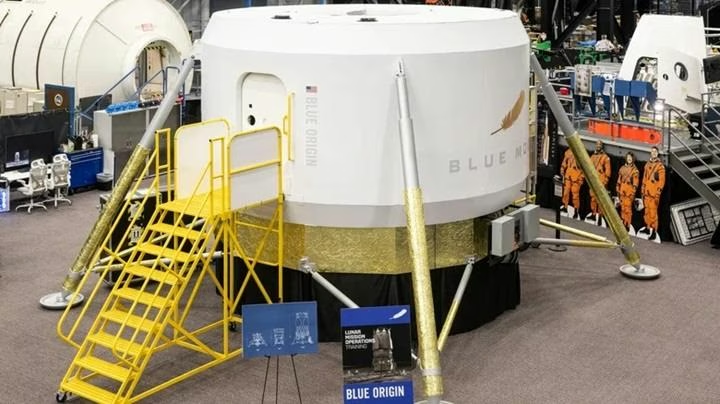
When I was researching the details of this prototype, the scale of what Blue Origin is building genuinely surprised me. Right now, at NASA’s Johnson Space Center in Texas, astronauts are working with a full-scale mockup of the Mark 2’s crew cabin.
Here is the wild part: this training prototype is about 4.5 meters (15 feet) tall, and that is just the living and working quarters. When the final, fully assembled Blue Origin lunar lander is ready for launch, it will tower at an incredible 16 meters (over 52 feet).
But why start with just the cabin? Because in space, ergonomics dictate survival. NASA isn’t testing the engines here; they are testing the human-machine interface. This phase of training is rigorously evaluating:

- Spacesuit Mobility: Can astronauts comfortably operate control panels, reach emergency switches, and move around the cabin while wearing bulky, pressurized next-generation spacesuits?
- Living Quarters: How manageable is the physical space for a crew that has to endure days of high-stress operations?
- Emergency Procedures: In the event of a catastrophic system failure, how quickly can the crew physically react and evacuate or seal the cabin?
It’s easy to build a massive rocket, but building a functional, safe, and intuitive environment for fragile human bodies is an entirely different engineering nightmare.
The Digital Leap: This Isn’t Apollo’s Moon Landing

One of the things I always try to remind people when comparing Artemis to the legendary Apollo missions is the sheer complexity of modern avionics. During the Apollo era, astronauts were essentially flying highly advanced analog machines. Today, the Mark 2 is a flying data center.
The joint tests conducted by NASA and Blue Origin are heavily focused on simulating mission control center communications and digital systems management.
When humans return to the lunar surface, they won’t just be planting a flag and grabbing some rocks. They are going to be managing complex, long-term operational systems. The astronauts will act as on-site system administrators, monitoring life support, automated docking procedures, and real-time data streaming back to Earth. This training goes far beyond classic flight simulation; it is a deep dive into human factors engineering and operational endurance.
The Silent Hero: Unmanned MK1 Vacuum Testing
While the spotlight is naturally on the manned Mark 2, there is another unsung hero in Blue Origin’s development pipeline that caught my eye: the unmanned cargo lander, known as Endurance (or MK1).
While astronauts are pushing buttons in Texas, the MK1 is being subjected to absolute torture in NASA’s thermal vacuum chambers.
I cannot stress enough how brutal the lunar environment is. The Moon doesn’t have an atmosphere to regulate temperatures. Depending on where you are and if the sun is shining, temperatures can swing wildly by hundreds of degrees.
- Why Vacuum Testing Matters: You can write flawless software, but if the extreme cold freezes your battery cells, or the raw solar radiation fries your circuit boards, the mission is over.
- The Ultimate Validation: In the aerospace sector, thermal vacuum testing is considered the final boss before flight hardware is approved. It proves whether a machine can actually survive the violent realities of the cosmos.
The Artemis Timeline: The Countdown to 2028
So, when do we actually get to see this massive 16-meter beast touch down on the lunar dust?
NASA’s current timeline is incredibly aggressive. The Artemis III mission is currently targeted for 2027, with the ultimate goal of achieving a crewed lunar landing by 2028.
Between now and then, there is a massive checklist to complete. We are going to see critical low-Earth orbit docking tests involving the Orion spacecraft, Blue Origin’s landers, and SpaceX’s hardware. It is a highly choreographed orbital ballet, and there is zero room for error.
Personally, looking at the sheer volume of testing still required—from thermal validation to human interface tweaks—I wouldn’t be shocked if that 2028 date slips a little bit. Space is hard, and safety has to come first. But seeing physical cabins built and astronauts running drills makes me incredibly optimistic. We are the generation that gets to watch humanity become a multi-planetary species, and that thought alone makes these late-night writing sessions totally worth it.
What do you guys think, Spartans? Are we actually going to see boots on the Moon by 2028, or do you think the complexities of these massive new landers will push the timeline back into the 2030s? Drop your thoughts in the comments below, let’s get a discussion going!
You Might Also Like;