What is Quantum Navigation? The Future of Wayfinding from Deep Space Missions to Autonomous Vehicles
The Global Positioning System (GPS) has become an inseparable part of our lives, revolutionizing navigation and location-finding. We rely on GPS for everything from our smartphones to aircraft flight paths, ship logistics, and our daily car commutes. However, this technology has significant weaknesses, including its reliance on signals, vulnerability to signal interruptions, spoofing, and its inability to work in environments where signals can’t reach, such as deep space. This is where a new technology called quantum navigation emerges as the future of independent and ultra-precise navigation.

As the name suggests, quantum navigation uses the basic principles of quantum mechanics to determine a vehicle’s position, speed, and direction. While conventional navigation systems rely on classical physics, such as electromagnetic waves (GPS signals) or mechanical gyroscopes, quantum navigation uses the unique behavior of atoms.
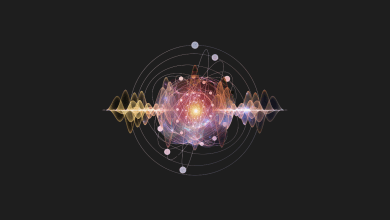
At the heart of this technology is atom interferometry—the creation of interference patterns with atoms. In its simplest form, a quantum navigation device follows these steps:
- Cooling Atoms: Atoms inside the device (typically alkali metals like rubidium) are cooled to temperatures near absolute zero using lasers. This extreme cooling slows down the atoms and reveals their quantum wave properties.
- Wave-Particle Duality: The cooled atoms now behave as both particles and waves. These atomic waves are guided by lasers and forced to follow two different paths.
- Creating Interference: After a short time, the atomic waves are brought back together, creating interference patterns. These patterns are extremely sensitive to even the slightest changes in the paths the atoms have taken.
- Precise Measurement: The movement of a vehicle (acceleration or rotation) affects the paths of these atomic waves. This effect instantly creates a change in the interference pattern. The device can measure this change to calculate even the smallest shifts in the vehicle’s position and direction with incredible precision.
Because this system operates entirely on its own without needing an external signal (like a GPS satellite), it’s considered a subfield of “inertial navigation.” However, it is far more sensitive than classical inertial navigation systems and has a much lower error accumulation over time.

Quantum navigation is a strategic technology being developed to overcome the limitations of modern navigation systems:
- Signal Independence: Its biggest advantage is the ability to work flawlessly in environments where GPS signals can’t reach or are intentionally blocked, such as in space, underwater, in tunnels, or in conflict zones.
- Resilience and Security: Because it doesn’t work with signals, it is completely immune to GPS spoofing or jamming. This makes it invaluable for military and strategic applications.
- Ultra-Precision: It offers much higher precision than classical systems. This feature is ideal for applications where accurate positioning is critical, such as autonomous vehicles, drones, and robotic systems.
- Deep Space Exploration: As we move further away from Earth’s orbit, GPS and similar systems become unusable. Quantum navigation can provide a self-sufficient navigation solution for missions to the Moon, Mars, and other planets, making deep space exploration possible.
Current Status and the Future

While quantum navigation is still an emerging technology, major progress is being made. Many countries, especially the U.S., China, and the U.K., are investing billions of dollars in this field.


- Space Tests: Spaceplanes like the X-37B are testing quantum navigation sensors in space to explore their potential.
- Commercial Applications: Companies like Boeing and AOSense have tested quantum inertial sensors on passenger planes, completing long flights without relying on GPS.
- Size and Cost: Currently, quantum navigation devices are generally large and expensive. However, research is focused on making these sensors smaller, lighter, and more affordable. In the future, they are expected to be integrated into a wide range of devices, from smartphones to unmanned aerial vehicles.
In short, quantum navigation is the future of navigation technology. It will not only transform military and space applications but will also usher in a new era for smart cities, autonomous transportation systems, and all robotic infrastructures.
You Might Also Like;
- Mars is Not a Planet. It’s a Graveyard. (The Great Filter Warning)
- Is GTA 6 Proof We’re Living in a Simulation?
- The End of Chatbots: Why 2026 is the Year of AI Agents (And What It Means for Your Job)
Follow us on TWITTER (X) and be instantly informed about the latest developments…