IBM Just Solved One of Quantum Computing’s Biggest Nightmares

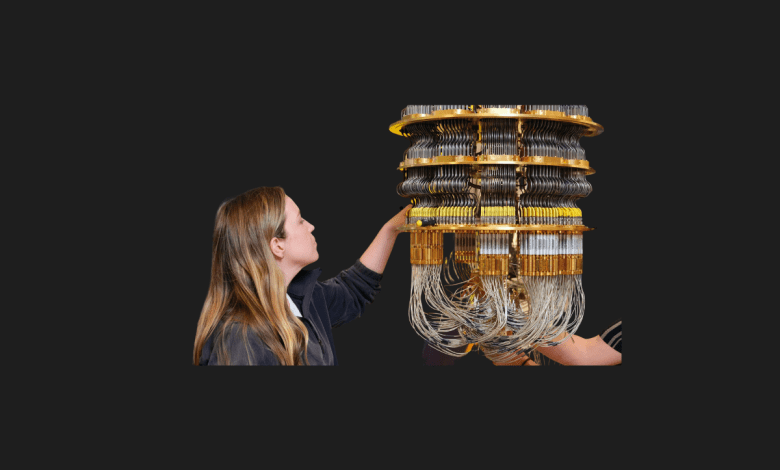

Whenever I dive into the latest updates on quantum computing, I usually find myself equally amazed and skeptical. Sure, these machines can theoretically process information millions of times faster than our best supercomputers, but there has always been a massive elephant in the room: trust. If a quantum computer solves a problem so incredibly complex that a regular computer can’t even comprehend it, how do we actually know the answer is right?
Well, while I was reviewing the latest research notes this morning, I came across a massive breakthrough. IBM and researchers from the University of Chicago have just cracked this exact problem. They didn’t just run a mind-bendingly complex calculation; they managed to prove its accuracy.
The “Trust Issue” in Quantum Mechanics

To understand why this is such a monumental deal, we have to talk about how quantum computers fail. Unlike the laptop or phone you are using right now, quantum bits (qubits) are incredibly sensitive. A slight shift in temperature, a tiny electromagnetic wave, or even cosmic radiation can cause a calculation error.
Up until now, verifying quantum results was a nightmare. The standard method was something called “random circuit sampling.” But as these circuits get more complex, checking the math with classical computers becomes literally impossible. It’s like trying to grade an advanced physics exam written in a language that hasn’t been invented yet.
How IBM and UChicago Rewrote the Rules
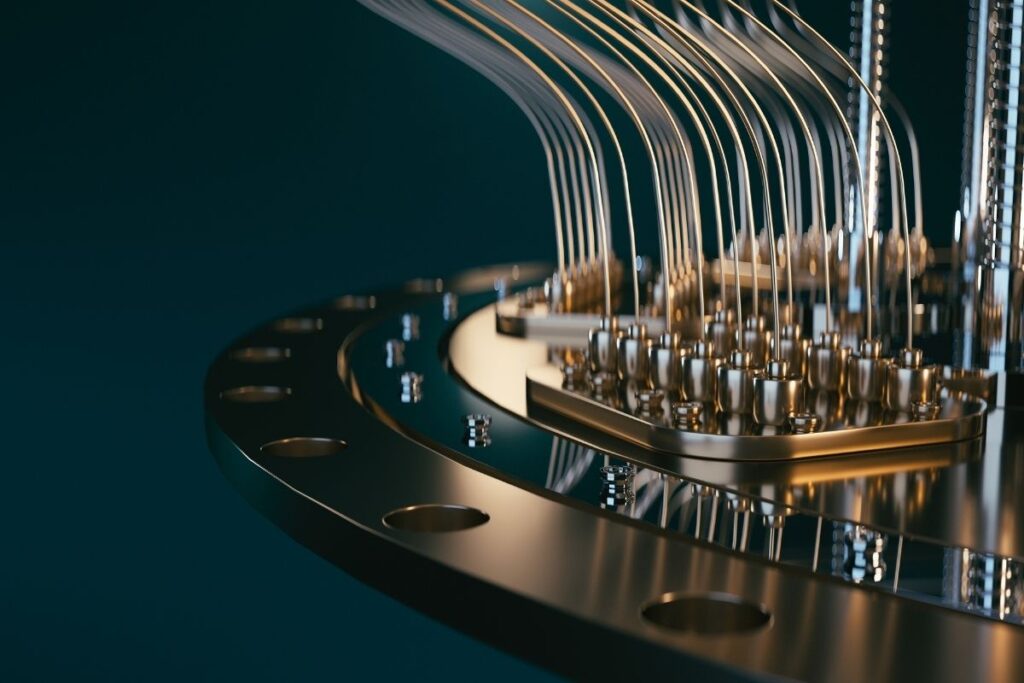
Here is where things get genuinely exciting. The research team managed to create a brand-new circuit design that maintains the extreme difficulty of the calculation while actively sniffing out and fixing errors during the process.
I dug into the numbers, and here is what you need to know:


- The 10x Error Reduction: By using error-corrected logical qubits instead of fragile physical qubits, the team dropped the logical error rate to ten times lower than the physical error rate. This proves that we can finally fix hardware mistakes using smart, systemic mechanisms.
- The 15-Minute Sprint: IBM’s quantum system blasted through this specific, highly complex calculation in about 15 minutes. To put that in perspective, trying to simulate this exact same process on today’s most advanced classical supercomputers is practically impossible.
- Complex, Yet Stable: The experiment utilized 70 logical qubits, running a staggering 2,415 logical two-qubit operations and 468 logical T-gates. The system maintained its high accuracy across thousands of operations without breaking a sweat.
Welcome to the Era of Quantum Supremacy

I don’t use the term “revolutionary” lightly, but the implications here are massive. Jay Gambetta, an IBM Fellow and the Director of IBM Research, boldly stated that we have officially entered the era of quantum supremacy. According to him, they have statistically proven that they can perform a calculation completely beyond the reach of classical computers—and do it with verified, high accuracy.
For me, this shift changes the entire landscape. We are moving away from treating quantum computers as fragile, experimental lab toys and pushing them toward real-world applications. As Soumik Ghosh, a PhD student at the University of Chicago, pointed out, being able to verify these results is the exact catalyst we need to speed up the practical use of quantum tech.
Imagine a near future where we can confidently use these machines to discover new pharmaceutical drugs, design revolutionary battery materials, or map out flawless logistical networks, knowing that the answers they spit out are mathematically sound.
Final Thoughts
I honestly think we will look back at this IBM experiment as the moment quantum computing truly grew up. It’s one thing to be fast; it’s an entirely different thing to be right.
But I want to pass the question over to you: With quantum computers now proving they can accurately solve problems beyond human or classical computer comprehension, what field—whether it’s medicine, AI, or space exploration—do you think will be transformed first? Let’s discuss it in the comments below!
You Might Also Like;