The $248K Flying Taxi is Real: Inside GAC’s Autonomous AirCab

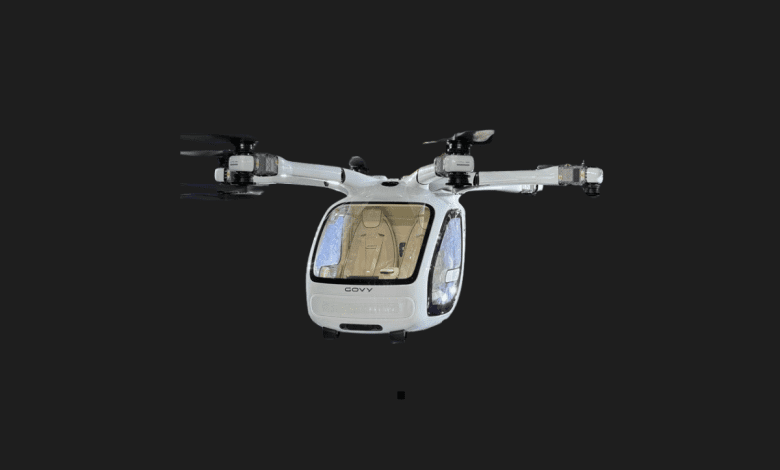

I’ve been tracking the “flying car” space for a while, and honestly, I’ve lost count of how many slick 3D renders and empty promises we’ve seen over the years. But while most companies are still trying to figure out their prototypes, China’s Guangzhou Automobile Group (GAC) just casually dropped a bombshell: their eVTOL (electric vertical takeoff and landing) aircraft is officially entering mass production.
They aren’t just testing the waters anymore; they are diving right in. Under their Govy brand, GAC is rolling out the AirCab, and it comes with a rather hefty price tag of $248,000.
Here is why this caught my attention and why I think it’s a massive step for the aerial mobility market.
Not Just Another Concept
What separates the AirCab from the graveyard of failed flying car startups is the fact that it’s actually ready for the real world. I was genuinely impressed to see that GAC has already cleared the hurdles of comprehensive crash testing and secured the necessary certifications for commercial operations.
They’ve even set up a dedicated production facility capable of churning out 100 of these aircraft a year.
The Tech Specs: Carbon Fiber and Level 4 Autonomy
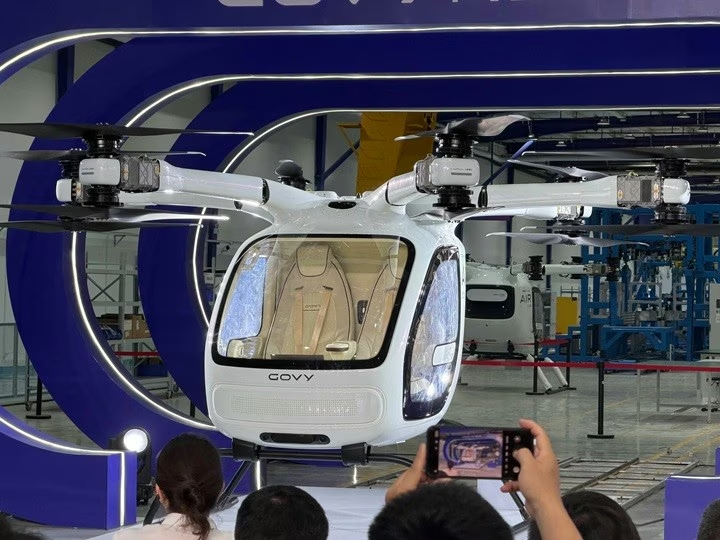
GAC hasn’t spilled every single technical secret just yet, but the details they have shared show a hyper-focus on efficiency and safety:


- Featherweight Build: The entire body is constructed from carbon fiber composites, keeping the weight down to maximize battery efficiency.
- 12-Propeller Setup: It features six arms extending from the cabin, each housing two propellers. This redundancy ensures smooth vertical takeoffs and stable cruising.
- Ultra-Fast Charging: They are using high-energy-density cylindrical batteries. The best part? A full charge takes only about 25 minutes, which is crucial for quick turnarounds.
- No Pilot Needed: This is the wildest part to me. The AirCab supports Level 4 autonomous flight. It is designed to operate completely without human intervention under specific conditions.
Why Target Tourism?
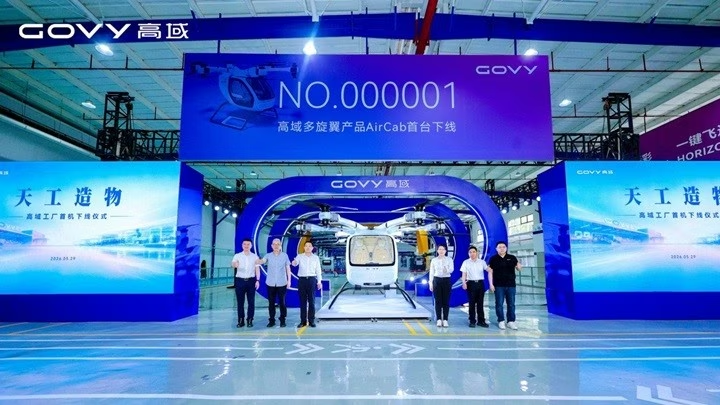
You might be wondering why we aren’t using these to skip morning traffic yet. At roughly $248,000 (1.68 million Yuan), it’s obviously not meant for your daily commute—at least not yet.
I actually really respect GAC’s strategy here. Instead of trying to instantly revolutionize city transit—which is an absolute nightmare of regulations and air traffic control—they are targeting the tourism and sightseeing sector. Imagine taking a short, premium, pilotless flight over a scenic coastline or a historic city. It’s a brilliant way to introduce the public to autonomous flight while justifying the premium price tag.
They are letting the tourism industry fund the early days of this technology while the rest of the world gets used to the idea of giant, pilotless drones carrying humans.
I’m incredibly excited to see how the first commercial flights pan out, but I have to ask you: If you were offered a scenic flight in a Level 4 autonomous flying taxi with no pilot on board, would you strap in, or are you keeping your feet firmly on the ground?
You Might Also Like;