

It’s a quiet morning here. Before I have to log off, put on my suit, and head into the bank for my day job, I was digging through the latest aerospace updates, and I saw something that genuinely gave me goosebumps. If you’ve been following my articles, you know I am absolutely obsessed with our push toward deep space, space mining, and eventually Mars colonization. But to get to Mars, we have to conquer the Moon first.
With the massive success of the Artemis 2 mission just last month—finally sending our astronauts back into lunar orbit after decades—the momentum is real. Now, NASA is already gearing up for the next massive milestone. Visual confirmation has arrived from Florida: the core stage of the Space Launch System (SLS) for the upcoming Artemis 3 mission is officially being assembled.
Here is my breakdown of what is happening in the Vehicle Assembly Building right now, why the mission plan for Artemis 3 has radically changed, and why the private space race is causing a few headaches for NASA.
The Beast is Taking Shape: Inside the SLS Assembly

When I look at the photos coming out of the Kennedy Space Center, the sheer scale of human engineering never fails to amaze me.
NASA technicians have successfully maneuvered the 65-meter-long core stage of the Artemis 3 rocket into a vertical position. This isn’t just an empty tube; it is the backbone of the most powerful rocket NASA has ever built. Right now, the engineering teams are preparing to bolt on the four massive RS-25 engines to the bottom of this core stage.
What I find incredibly cool about the RS-25s is that they are actually leftover, heavily modernized engines from the Space Shuttle era. It’s a brilliant piece of technological recycling that provides the brute force needed to break Earth’s gravity.

- Total Height: When fully stacked with the Orion capsule, the upper stage, and the two massive solid rocket boosters, this mechanical titan will stand 98 meters tall.
- Total Weight: Fully fueled and ready for launch, the rocket tips the scales at a mind-bending 2.6 million kilograms.
The Big Pivot: Why Artemis 3 is No Longer a Moon Landing
If you have been following the original Artemis roadmap, you might be a little confused right now. Originally, Artemis 3 was supposed to be the historic mission where boots finally touched the lunar dust again.
However, plans change. NASA has officially shifted the actual Moon landing to Artemis 4 in 2028.
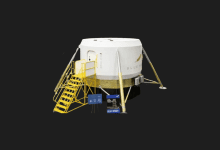
Why the delay? I was reading through the mission architecture, and it boils down to a bottleneck in the private sector. The Artemis program heavily relies on commercial partners to build the actual landing craft—specifically SpaceX’s Starship and Blue Origin’s Blue Moon lander. Because both of these incredibly complex vehicles are facing development delays, NASA had to pivot.
Instead of a landing, Artemis 3 is now shaping up to be a highly critical orbital test and docking mission.
What Will Actually Happen During Artemis 3?
Rather than going all the way down to the surface, the Artemis 3 crew will launch inside the Orion capsule into Earth orbit. From there, they will execute high-stakes rendezvous and docking maneuvers with either the SpaceX Starship or the Blue Origin lander.
Honestly, I think this is the right call. You do not want the first time you test a commercial lunar lander’s life support and docking seals to be a quarter of a million miles away in the vacuum of deep space. Testing it in Earth orbit first is a crucial safety net.
The SpaceX vs. Blue Origin Showdown

This brings me to the most fascinating part of modern spaceflight: the corporate space race. NASA no longer wants to be tied down to a single contractor. They are actively pitting Elon Musk’s SpaceX against Jeff Bezos’s Blue Origin.
NASA has made it clear: whoever finishes their technical and safety certifications first gets to fly the missions.
- SpaceX’s Starship: Currently, Starship is the preferred vehicle for the Artemis 4 landing. However, despite their explosive and spectacular test flights, SpaceX still has to solve some massive technical hurdles. The biggest one? In-orbit refueling. To get Starship to the Moon, they have to launch multiple tanker ships to fill it up while it orbits the Earth. It is an engineering nightmare that hasn’t been perfected yet.
- Blue Origin’s Blue Moon: While Blue Origin has been quieter, they are steadily developing their lander. If SpaceX gets bogged down trying to figure out cryogenic fluid transfer in zero gravity, Blue Origin could easily swoop in and take the lead.
Relying on private companies introduces huge risks to NASA’s timeline, but it also brings rapid innovation. As someone who analyzes tech for a living, watching this hardware evolve in real-time is the ultimate thrill. The success of these landers won’t just determine our return to the Moon; they are the exact same technologies we will eventually use to establish a foothold on Mars.
I am incredibly curious about your take on this space race. Do you think SpaceX will figure out in-orbit refueling in time for Artemis 4, or will Blue Origin pull off an upset and get their lander ready first? Drop your thoughts in the comments, let’s talk about it!
You Might Also Like;