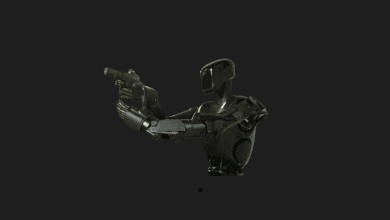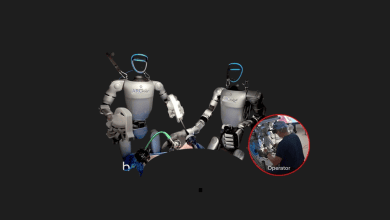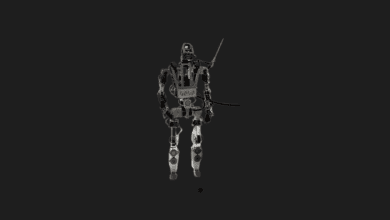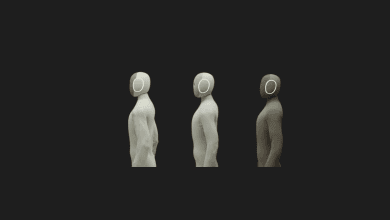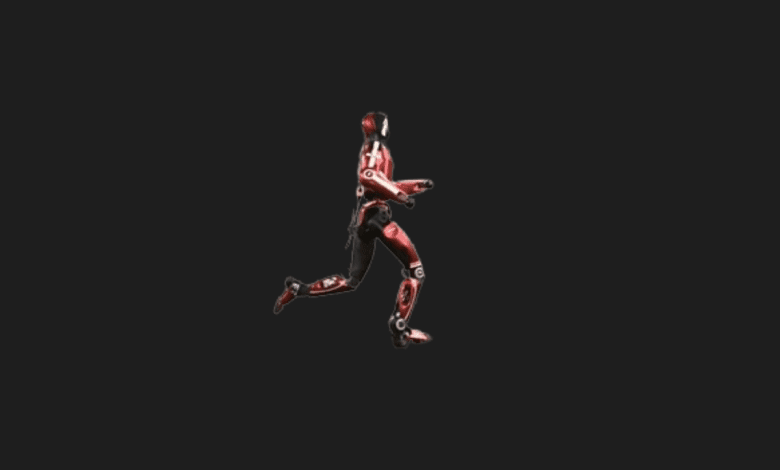

I’ve been tracking the humanoid robot race for a while now, and just when I thought things were reaching a steady pace, a newcomer literally sprints past the competition. China-based MirrorMe Technology has just unveiled Bolt, a humanoid robot that doesn’t just walk—it flies.
Reaching a staggering speed of 10 meters per second (36 km/h) in real-world tests, Bolt has officially claimed the title of the world’s fastest full-sized humanoid. To give you some perspective, that’s faster than most casual cyclists and getting dangerously close to professional sprinting speeds.
More Than Just a Famous Name

The name “Bolt” isn’t a coincidence. MirrorMe explicitly stated they drew inspiration from the legendary Jamaican sprinter Usain Bolt. While many robots look impressive in pre-rendered videos or controlled lab environments, Bolt is proving its mettle in the real world.
When I looked into its specs, I noticed MirrorMe went for a “human-optimized” build:
- Height: 175 cm (approx. 5’9″)
- Weight: 75 kg (approx. 165 lbs)
Compare that to Xpeng’s Iron (178 cm / 70 kg), and you see a trend: the industry is moving away from clunky, heavy metal giants and toward lean, athletic frames that mimic human proportions. I find this fascinating because it suggests that to achieve human-like movement, we truly have to respect the physics of the human form.
The Tech Pedigree Behind the Speed

MirrorMe Technology isn’t some random startup that appeared overnight. Based in Shanghai and officially founded in May 2024, their core team hails from Zhejiang University, one of China’s top technical powerhouses.

They’ve been iterating fast. Before Bolt, they had:
- Baobao & Apollo: Early functional models.
- Black Panther II: Their research workhorse.
Actually, I saw a video of the Black Panther II hitting a peak speed of 13.4 meters per second back in late 2025. While that was a specialized research feat, Bolt represents the transition of that raw power into a more “complete” humanoid package.
Why Does Speed Even Matter?

You might be wondering, “Ugu, why do we need a robot that runs like an Olympic athlete? Are they going to chase us down?” While the “Terminator” jokes are inevitable, the real value here isn’t just about the sprint; it’s about dynamic stability. A robot that can handle the physics of a 10 m/s run is a robot that won’t fall over when it trips on a warehouse floor or navigates a rocky construction site.
In my view, we are watching the “athletic foundation” of the future workforce being built. MirrorMe isn’t just building a runner; they are building a machine with human-level (or superior) physical perception and agility.
Final Thoughts: A New Era of Mobility
I’m genuinely impressed by how quickly the “stiff, robotic gait” is disappearing. Seeing Bolt move makes me realize that the gap between biological movement and mechanical execution is closing faster than I anticipated. We are moving out of the “industrial arm” era and into the “autonomous athlete” era.
rI have to ask: If these robots become available for commercial use, would you feel comfortable sharing a sidewalk with a machine that can easily outrun you, or does that level of speed feel a bit too “sci-fi” for comfort?
You Might Also Like;