Volkswagen Also in the Robotaxi Race: Testing the Gen.Urban Vehicle

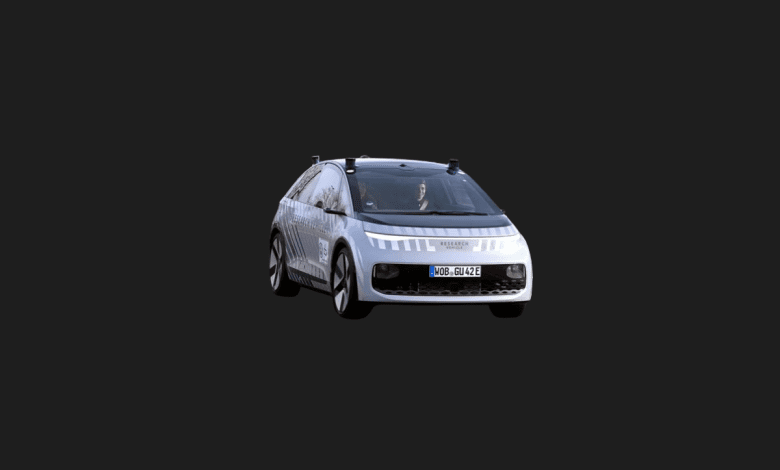

Volkswagen is continuing tests of its vehicle named Gen.Urban, which moves completely autonomously and has no steering wheel or gas pedal.
As the robotaxi competition heats up, Volkswagen’s research vehicle named Gen.Urban has entered a new testing phase. This prototype, which hasn’t attracted much attention until now, has been undergoing intensive testing for about a year.
Being Tested in Wolfsburg Traffic
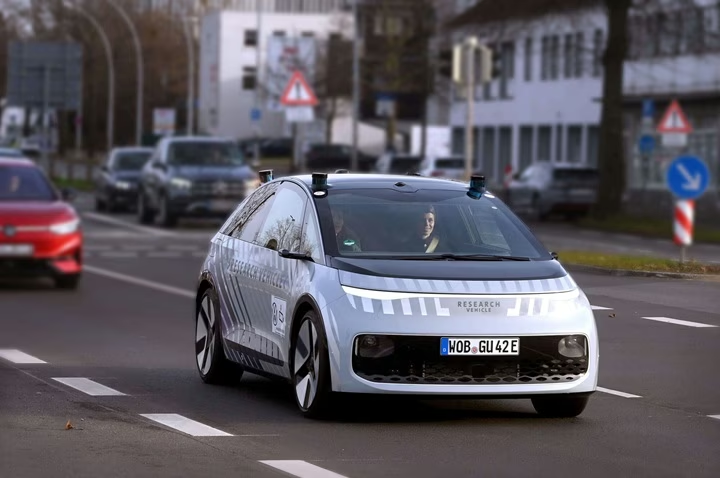
Thanks to these efforts, Gen.Urban can now travel autonomously in Wolfsburg traffic. Although Volkswagen has not shared many technical details about the vehicle, it is known that the model does not have a classic steering wheel and pedals. Nevertheless, for safety purposes, an attendant sits in the front passenger seat. This person can intervene in the vehicle when necessary using a specially developed control panel containing a joystick.
In terms of design, Gen.Urban gives the impression of a futuristic ID.3. Its body with flowing lines draws attention with a wide front grille, a light strip extending across the upper section, and low-positioned headlights. The vehicle also features hidden door handles and digital side mirrors. One of the most striking elements is the four or five sensors located on the roof. These are accompanied by a camera positioned at the front.
Although Volkswagen does not disclose technical details, the focus of the recent testing process is the passenger experience. The company aims to collect comprehensive data on user behaviors and interaction with the vehicle using Gen.Urban. Topics examined include how passengers spend their time in a driverless vehicle and how comfortable they feel. Additionally, how different age groups, from children to the elderly, interact with autonomous vehicles is also being investigated.
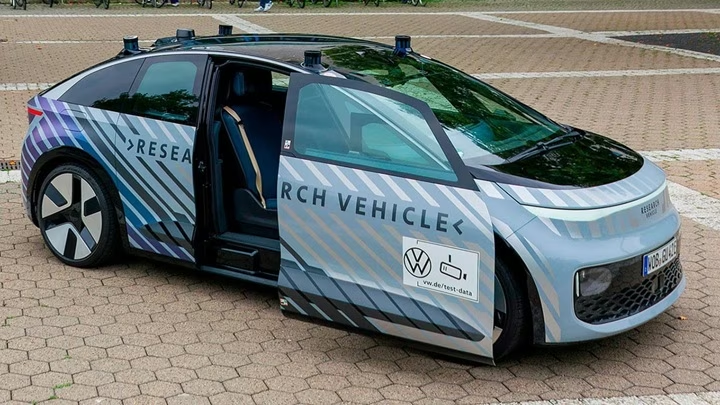
Volkswagen states that the obtained data will play an important role in developing the interior design and user experience of future models. An interesting detail is that personalization begins before getting into the vehicle. Through an application, users can adjust many settings, from cabin temperature to ambient lighting, before the vehicle arrives. Once inside the vehicle, the passenger sits in the driver’s seat, and the seat is automatically adjusted to the preferred position. A wide front screen showing various information is located in front of them.


You Might Also Like;