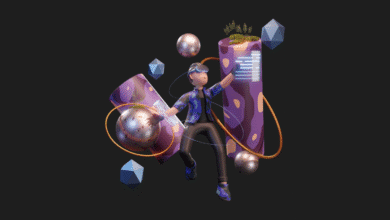
Ilknur Pınarcı, a math teacher and principal at Yeniçağa Multi-Program Anatolian High School in Bolu, Turkey, is using the metaverse to eliminate students’ long-standing prejudice against math: “When will I ever use this in real life?” With a creative approach, she helps students experience the real-world applications of math problems inside a virtual universe.
Blending Mathematics with Metaverse Technology

Pınarcı began working with Web3 tools and metaverse technologies three years ago. Her first step in merging these concepts with education came through the European Union’s eTwinning project, where she created a digital universe to show students how math problems apply to daily life.
For the past year and a half, she has been teaching mathematics through the metaverse, allowing students to immerse themselves in interactive, scenario-based learning using avatars and virtual environments.
Teaching with Avatars and Real-Life Scenarios

“Mathematics is full of abstract concepts, rules, and formulas,” Pınarcı explained. “In order for a student to love something, they need to understand its meaning. When students can’t link topics like derivatives or integrals to real life, they ask, ‘What’s the point of this?’ This is where technology steps in.”
She designed educational scenarios in the metaverse to visualize how math and geometry function in real-life contexts. For instance, for the topic of LCM and GCF (Least Common Multiple and Greatest Common Factor), which is usually explained through standard textbook questions, she created a virtual land plot.
A farmer avatar asks the students for help: “These are the dimensions of my land. I want to plant trees at equal intervals to minimize cost. How many saplings should I buy?” Through these immersive problems, students clearly see how the concepts are used in real-world settings—breaking down their resistance toward math.

Students Embrace VR Learning
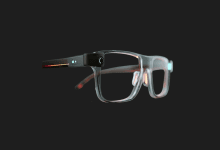
“Although the metaverse has been around for years, its integration into education is still very new. We need to analyze it well,” Pınarcı noted. “Students in high school are highly interested in this space. Wearing VR headsets, stepping into that world, and not knowing what to expect—it all sparks curiosity.”
She has opened the virtual math laboratory to students from other schools as well and emphasized the importance of teachers becoming more familiar with technology-enhanced education.
eTwinning Project Trains Teachers and Students Across Borders
Through the eTwinning project, Pınarcı and her team provided training to 10 math teachers from 9 provinces in Turkey, and 5 international teachers from Spain, Romania, Moldova, and Jordan.
Later, under Turkey’s Ministry of Education’s “Mathematics Mobilization” program, the Meta-Mat Project was implemented, reaching 57 students from 13 different schools. According to a Mathematics Attitude Scale used in the study, students’ interest in math rose from 2 to 4 out of 5—a significant improvement.
“We’ve successfully captured students’ interest. Now, we will begin to measure how this method affects academic performance,” said Pınarcı.