Time Magazine Selects the Most Noteworthy New Technologies of 2025; Here are the Highlights



Time Magazine has selected the most noteworthy new technologies across various fields, from artificial intelligence and space exploration to robotics and consumer electronics. Here are the prominent innovations of 2025:
Time Magazine has already started listing the best of 2025. Selecting the year’s best in different disciplines like cinema, music, and fashion, Time has also chosen the standout inventions and devices of the year in technology. The complete 100-item list, which brings together the year’s prominent new technologies in various areas from health to entertainment, and robotics to artificial intelligence, can be accessed here. Below are the highlights among the new technologies featured in Time’s list.
Time’s Best New Technologies of 2025 Here are 20 new inventions highlighted in Time’s list of “The Most Noteworthy New Technologies of 2025“:
1️⃣ Figure 03: The Next-Generation Home Assistant
As AI-powered humanoid robots rapidly advance, US-based Figure AI has developed one of the most ambitious examples in the field. Designed in human form, the Figure 03 can perform household tasks such as folding laundry, loading dishes, and recognizing objects in a home environment. Company founder Brett Adcock says the goal is not only to provide physical labor but to establish a robotic system that can interact naturally with humans in domestic tasks. Although the Figure 03 is still in the testing phase, its mobility and task learning capabilities are already drawing significant interest in technology circles. Figure AI‘s Helix neural network forms the robot’s brain. Helix, a multimodal AI system, perceives the environment by combining visual, auditory, and motor inputs, allowing the robot to convert simple human commands into contextually appropriate actions. The system also has the capacity for trial-and-error learning, which increases task efficiency with every use. According to Brett Adcock, this development could create a transformation in the field of robotics similar to the leap seen in large language models. The company aims for the Figure 03 to begin limited deployment in homes by 2026.
2️⃣ Unitree R1: The Affordable Humanoid Robot
Another humanoid robot that attracted attention this year came from China. China-based Unitree Robotics aims to make humanoid robot technology more accessible with its robot, the Unitree R1. A significantly lower-cost robot than the Figure 03, the Unitree R1 stands out with its low weight of just 25 kg and its 26-joint structure. Thanks to its built-in artificial intelligence systems, it features voice recognition and image processing capabilities, allowing it to understand commands and perceive its surroundings. Technically, the R1’s most striking aspects are its mobility and control flexibility. The robot can run, perform somersaults, and even execute more complex motor actions like boxing. These capabilities are made possible by advanced motor drive systems and precise sensor control algorithms. This high performance, combined with its high degree of movement freedom, makes the R1 an “accessible humanoid platform” for robotics research and prototyping.
3️⃣ DeepSeek R1: The AI That Created an Earthquake Effect in the Artificial Intelligence World

This year’s most talked-about model in the field of artificial intelligence was the DeepSeek R1. This large language model (LLM), released as a surprise at the beginning of the year, created a veritable “earthquake effect” in the AI world. The DeepSeek R1 demonstrated that Chinese companies could compete head-to-head with their Western rivals, while also attracting attention with its innovative approach that allowed it to be developed at a much lower cost.


4️⃣ Meta Ray-Ban Display: A New Era Begins in Smart Glasses
Meta, a pioneer in the smart glasses sector, raised the bar further with the Meta Ray-Ban glasses introduced this year. In particular, the Ray-Ban Display, which comes with a built-in screen, is seen as the first step of a new era in this category. A small screen with 600×600 pixel resolution located on the right lens allows users to send messages and answer calls without taking out their phones. The glasses can be used in both prescription and non-prescription versions. The accompanying Neural Band detects electrical signals in the forearm muscles, tracking the user’s finger movements, allowing actions like dragging windows, pinching, and texting to be performed naturally. The band has a battery life of 18 hours, and the glasses last for six hours. This combination elevates the augmented reality and wearable technology experience to a completely different level compared to a few years ago.
5️⃣ Major Industry Breakthroughs in Quantum Chips
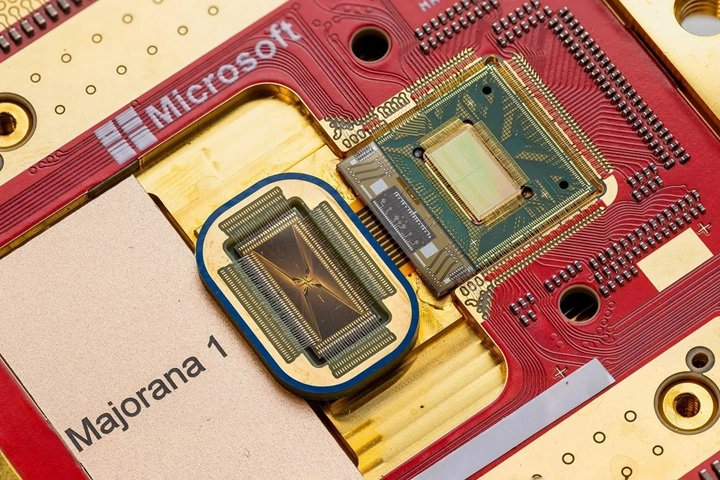
The age when quantum computers can solve problems that even the most powerful supercomputers cannot is not fully here yet. However, a series of developments over the past year is rapidly bringing this future closer. In December, Google introduced the Willow quantum chip; this was shortly followed by Microsoft’s Majorana 1 and Amazon’s Ocelot chips. IBM is preparing to launch its new Nighthawk processor before the end of the year. Each of these chips offers developments that enable experimental systems and quantum units to operate more stably and reliably. Although the approaches differ, this simultaneous progress indicates the rapid expansion of the field. Marin Ivezic, founder of Applied Quantum, compares this breakthrough in quantum chips to the “Cambrian explosion,” where life on the planet suddenly proliferated.
6️⃣ Nvidia DGX Spark: A Supercomputer on Your Desk
Nvidia developed the DGX Spark with the goal of moving AI research away from cloud servers and directly onto the desktop. This device is positioned as a “desktop AI supercomputer” and can offer 1 petaflops of performance. The device comes with 128 GB of unified memory, making it possible to perform fine-tuning or inference processes for 200 billion parameter models on the desktop. The DGX Spark operates on Nvidia‘s Grace Blackwell GB10 Superchip architecture, which allows the CPU and GPU to share data via high-speed common memory. Priced at $3,999, the Spark finds its place on Time’s list as a remarkable device that makes high-performance AI hardware accessible to a wider audience.
7️⃣ Nintendo Switch 2: A New Level in Portable Gaming Experience
The Nintendo Switch, launched in 2017, fundamentally changed the concept of a portable game console. The Nintendo Switch 2, introduced in 2025, takes this legacy one step further, strengthening both the portable and home console experience. The console allows users to enjoy a high-resolution gaming experience both connected to a TV at home and in handheld mode. Technically, the Switch 2 is equipped with the Nvidia Tegra T239 processor and advanced DLSS / ray tracing technologies. Its 7.9-inch HDR screen offers 1080p resolution and a 120 Hz refresh rate in portable mode, and can provide up to 4K display in TV mode. Thanks to 12 GB of LPDDR5X memory and optimized storage infrastructure, even large games run smoothly. These features make the Switch 2 ideal for both mobile gamers and users seeking high graphics performance. Launched in June 2025, the device quickly reached millions of sales figures, solidifying Nintendo‘s leadership in the portable gaming sector.
8️⃣ Google DeepMind Genie 3: The AI That Transforms Text into Interactive Digital Worlds
While most artificial intelligence models give a one-time and static response to a given command, Google DeepMind‘s new model, Genie 3, completely changes this. Introduced in August 2025, Genie 3 can instantly convert the text you write into interactive digital worlds. For example, after telling it to create a river, you can add a boat or marine life into it, and the results are real-time, stunning, and explorable for several minutes. Currently open to a limited number of academics and content creators, Genie 3 offers a wide range of potential applications. Google‘s new model paves the way for using artificial intelligence not just for information generation, but also for creating digital experiences and educational environments.
9️⃣ Vera C. Rubin Observatory

The Vera C. Rubin Observatory, established on Cerro Pachón mountain in Chile, is generating excitement as it will allow us to see the universe in much greater detail. Referred to as a “discovery machine” in the scientific world, this giant observatory will create a continuous diary of the universe by taking thousands of photographs of the sky every night. Thanks to the 8.4-meter Simonyi telescope and the 3,200-megapixel LSST Camera, the observatory can detect changes in the sky by capturing a frame every 30 seconds. The detection of thousands of new asteroids in the very first tests has already proven the data collection power of this system. Rubin’s difference comes from the technical infrastructure behind this extraordinary speed and precision. Thanks to its wide field of view, high pixel density, and advanced data processing algorithms, the observatory can re-scan the entire sky within a few days. This allows real-time tracking of supernova explosions, comets, or clues related to dark matter. Vera Rubin will be one of humanity’s most powerful tools for understanding the structure of the universe by collecting data on billions of celestial objects over the next decade.
🔟 Cailabs Tilba-L10: The Laser Era in Satellite Communication

Today’s communication between satellites and the ground mostly occurs via radio waves. However, this method has certain limitations. France-based Cailabs aims to overcome these restrictions with its laser-based ground station, the Tilba-L10. Thanks to optical technology, the Tilba-L10 is unaffected by bad weather conditions, is better protected against hostile interference, and has a high transmission capacity. While radio waves can typically transmit data at speeds of 1–2 gigabits/second in common frequencies, the Tilba-L10‘s laser technology enables data transmission up to 20 gigabits/second. This allows for wider bandwidths in satellite communication and significantly speeds up data transfer.
AirCo AirMade SAF: A Vehicle that Produces Flight-Ready Fuel from the Atmosphere
AirCo produces a synthetic jet fuel called AirMade by collecting carbon dioxide and hydrogen from the air. This fuel meets all existing aviation standards without using fossil fuels, thus aiming to reduce the carbon footprint of aviation. In April, the US Air Force tested the technology with a flight powered entirely by CO2-sourced fuel. AirMade has already received significant orders from commercial airlines and secured $69 million in new investment. These developments pave the way for the use of sustainable fuel in the aviation sector, offering the potential to seriously reduce carbon emissions. AirCo‘s approach, which directly converts atmospheric gases into energy, stands out as the harbinger of a new era that minimizes the environmental impact of flights.
FibreCoat: Radar-Absorbing Material
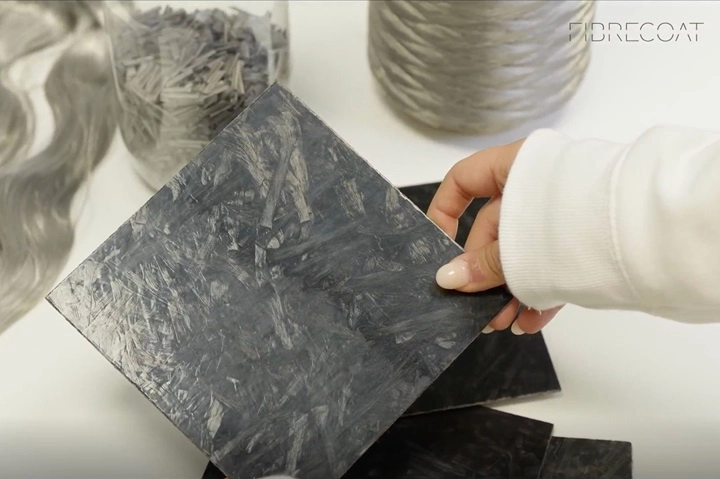
FibreCoat has developed a new composite material that can absorb radar waves by 99.99%. These thin and flexible sheets prevent vehicles like fighter jets, unmanned aerial vehicles (UAVs), and submarines from being detected by radar. While traditional stealth engineering uses angled designs or special paints that need regular reapplication to deflect radar waves, FibreCoat‘s flexible sheets are made of a multi-layered composite of special metal-coated glass and basalt fibers. This basic structure is blended with polymer binder layers, designed to absorb and dissipate energy across a wide radar frequency band. The thin yet multi-layered architecture ensures that incoming radar waves are absorbed by the material rather than reflected off the surface; different layers target different frequencies, converting the energy into heat or dissipating it through phase cancellation. This brings a wide-band stealth capability that cannot be achieved with a single type of paint or a single geometry.
Cognixion Axon-R: The Brain Interface that Gives Voice to Silence
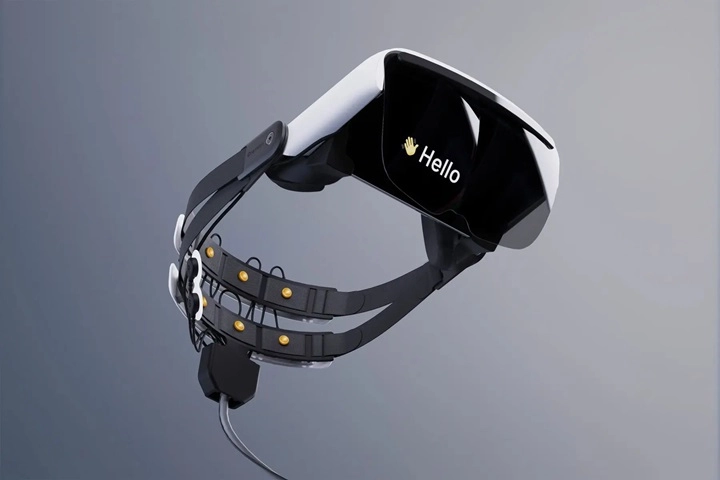
The Axon-R, developed by Cognixion, offers people who have lost the ability to speak due to traumatic brain injury, stroke, ALS, or other neurological diseases a chance to communicate again. This non-surgical headset measures the user’s eye, head, and brain activities, allowing them to select letters, words, or commands. At the same time, an artificial intelligence model specially trained for each user offers sentence suggestions and response predictions, accelerating communication. An integrated speaker in the headset generates speech in a tone close to the user’s own voice, personalizing the experience. The company’s founder and CEO, Andreas Forsland, says the device “gives people their lives back.” Cognixion, which began clinical trials with late-stage ALS patients in March, is managing the distribution of the Axon-R with Blackrock Neurotech, a leading company in the brain-computer interface field.
Honor’s Silicon-Carbon Batteries
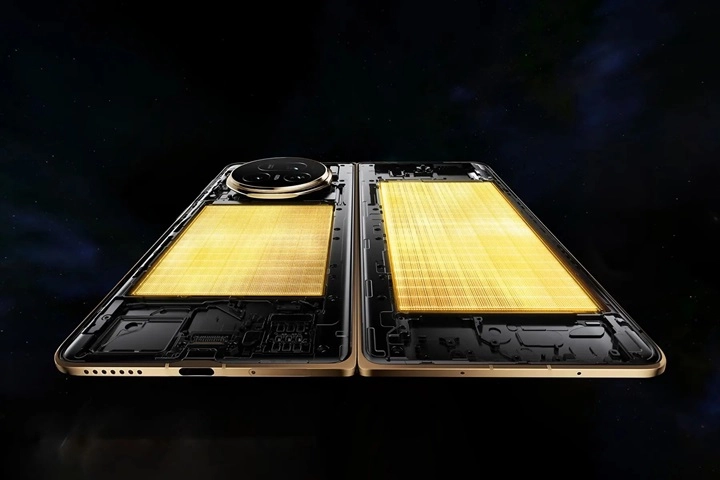
As foldable phones become thinner, the capacity limit of batteries becomes a significant hurdle for manufacturers. This is because the lithium-ion batteries currently in use have reached physical limits in terms of energy density. Honor‘s developed silicon-carbon battery technology aims to overcome these limits. The company has succeeded in producing both thinner and higher-capacity batteries with a new composition that partially replaces lithium with silicon. Following its first battery containing 10% silicon launched in 2024, Honor introduced its next-generation battery this year, which has a 25% silicon content, is only 2.3 mm thick, and has a 6,100 mAh capacity. This battery, used in the Honor Magic V5 model in July, offers a usage time of over 35 hours while significantly reducing the thickness of foldable devices. The company plans to integrate the same technology into its smartwatches and laptops in the future.
BMW iX3: A New Era in Electric SUVs

The German automaker BMW showcased the first product of its $11 billion investment in its next-generation vehicle architecture, called “Neue Klasse,” this year. The recently introduced BMW iX3 took the stage as the first member of this new platform. The iX3 offers a 400-mile range on a single charge and can gain 175 miles of range in just 10 minutes thanks to its advanced battery system. This feature greatly reduces charging times for long journeys and makes electric SUVs more practical. The new platform houses what BMW calls the “digital nervous system“; four separate computers can remotely update the vehicle’s software and continuously optimize system performance. With these technologies, the iX3 sets a new standard not only in electric driving but also in the digital experience and driving assistants. Forty different models built on this platform are planned to be launched by 2027, and the iX3 stands out as the first representative of the new chapter opened for electric vehicles in BMW‘s 109-year history.
Dreame X50 Ultra: The Robot Vacuum that Crosses the Threshold
The Dreame X50 Ultra finds its place on Time’s list with its innovative design that combines robot vacuum and mopping technology. Equipped with advanced navigation, powerful suction, and smart sensors, this device stands out as one of the most innovative cleaning solutions of 2025. The X50 Ultra, which offers deep cleaning with 20,000 Pa suction power, provides unprecedented mobility thanks to the ProLeap system that can overcome obstacles up to 6 cm. Furthermore, the VersaLift sensor allows the device’s height to be lowered to 89 mm, enabling it to clean even under low furniture. With 3DAdapt technology and 360° mapping features, it can recognize 200 different objects in the home and safely bypass obstacles. Additionally, thanks to the AceClean system, the mops are automatically cleaned at 80°C and operate with a system that does not require manual emptying for 100 days. The Dreame X50 Ultra, with all these features, makes home cleaning more efficient and effortless.
Jetson Air: The More Affordable Smart Heat Pump
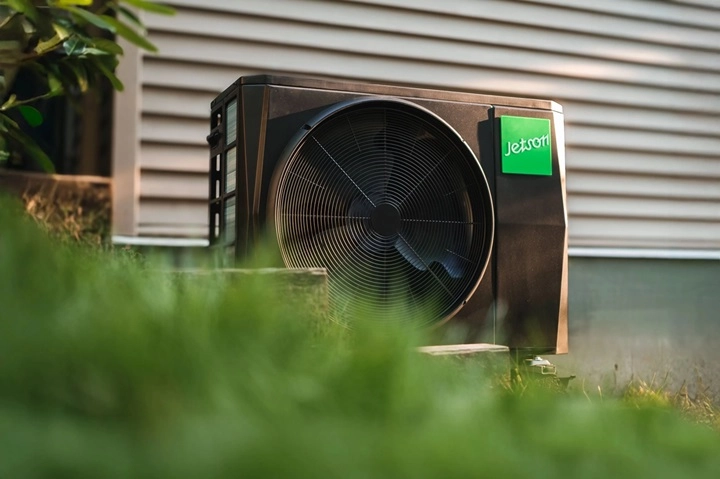
Heat pumps, which use electricity much more efficiently for heating and cooling homes, have become increasingly prominent in recent years. Still, the widespread adoption of these systems is often limited by high installation costs and technical support requirements. However, projects that are taking important steps to both reduce installation costs and increase the user’s long-term savings are coming up one after another. Jetson Air is one of them, finding its place on Time’s list. Jetson Air demonstrates its difference in this field, particularly with its accessibility and ease of use. The device requires technicians to be on-site only on the day of installation, which significantly reduces initial investment costs. Jetson Air operates with a pump system that extracts heat from the ambient air and transfers it indoors, and can cool the indoor space by working in reverse in the summer. Its smart sensors optimize fan and compressor speeds in real-time, minimizing energy consumption. Furthermore, remote access and control features offer the user both comfort and energy management capabilities. All these features make Jetson Air a practical and smart option for homes looking to increase energy efficiency.
Jackery Solar Roof: Aesthetics and Energy Together

Traditional solar panels often do not harmonize with the aesthetics of homes and can detract from the appearance when mounted on the roof. Jackery‘s new Solar Roof design provides a solution to this problem. The first curved solar tiles on the market minimize aesthetic concerns, especially in regions with Mediterranean-style terracotta roofs. Homeowners can choose between terracotta or obsidian color options. This paves the way for the natural integration of solar energy into urban structures. Each 10-kilogram tile is designed to withstand harsh conditions like high winds, hail, and extreme temperatures. Moreover, with a solar cell conversion efficiency that stands out in the industry, more than 25% of the incoming light can be converted into electrical energy. These features make the Solar Roof not only an environmentally friendly energy source but also a long-lasting and reliable roofing solution.
XReal One: Augmented Reality (AR) Headset in Normal Glasses Design
While augmented reality technology promises a fascinating experience, it often remains impractical because it is used with bulky and heavy headsets. The XReal One series offers a stylish and portable solution to this problem. These cinema-experience AR glasses, which look like ordinary sunglasses, can be connected to phones, tablets, computers, or game consoles via a USB-C connection. The glasses create a virtual 310-inch screen that seems to float in the air in front of the user, and the built-in spatial processing chip stabilizes this screen, preventing image shifting and nausea. This allows the user to watch movies, play games, or work with a fixed virtual screen wherever they choose. XReal CEO Chi Xu describes this experience as “accessible augmented reality for everyone, everywhere.”
EcoFlow Ocean Pro Home: The Battery That Provides Uninterrupted Power to Homes

The EcoFlow Ocean Pro home energy storage system redefines the limits of security. Launched in the US in July, the system provides uninterrupted power by integrating with solar panels, the power grid, and generators using AI-powered storage technology. The Ocean Pro can deliver up to 24 kilowatts of continuous power and expand its 10 kilowatt-hour capacity up to 80. The system, which operates flawlessly in temperatures ranging from -20 to 60 degrees Celsius, sets a new safety standard for home energy systems with its structure resistant to water up to 1 meter in case of flooding and its automatic fire suppression cells in case of fire.
You Might Also Like;