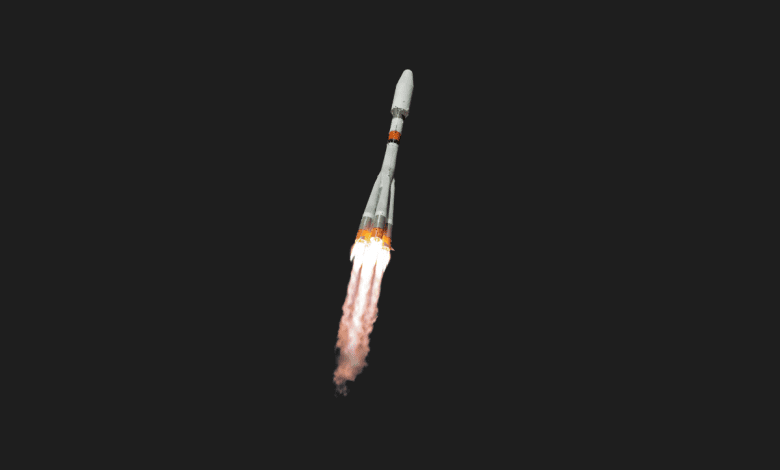

Northrop Grumman has successfully tested an engine developed for the first rocket launch from Mars. This vehicle, called MAV (Mars Ascent Vehicle), will bring rock and soil samples from the Red Planet back to Earth.
A critical threshold has been crossed in the Mars Sample Return (MSR) mission, which aims to bring rock and soil samples from Mars to Earth for the first time. Northrop Grumman successfully conducted a ground test of the second rocket motor for the Mars Ascent Vehicle (MAV), which will be used in this historic mission. The MAV will be a first for humanity, as a rocket has never before been launched from another planet.
Launching from the Martian Surface

The MSR, one of the most ambitious space missions in human history, will involve a multi-stage operation to retrieve samples from the Red Planet. As part of the mission, NASA‘s Perseverance rover, currently operating on the Martian surface, is collecting rock and soil samples using its robotic arm and drilling systems. The collected samples are placed in special tubes and left on the surface for future retrieval. In the next step of this multi-year plan, a second rover will be sent to Mars with a special lander to collect the tubes left by Perseverance and place them into a capsule. This capsule will then be launched into Mars orbit via the MAV.
The MAV, approximately 3 meters (10 feet) tall and weighing 450 kilograms (about 69 kg on Mars), consists of a two-stage solid-fuel rocket. Equipped with avionics, sensors, and guidance systems, the vehicle will travel at a speed of 4 kilometers per second (reaching orbit in 10 minutes) to carry the sample capsule into Mars orbit. There, the capsule will rendezvous with another pre-positioned spacecraft, enabling its return to Earth.
Key Test Details and Future Outlook
The static motor tests conducted recently primarily focused on the performance of the MAV’s second stage. While details of the new fuel mixture used by the rocket were not disclosed, it is highly likely to be an ammonium perchlorate-based composite propellant. This type of fuel has been previously used in Northrop Grumman’s STAR rockets and is known for its high durability in space environments. One of the notable aspects of the test was the rocket’s high-speed rotation during combustion. This indicates that the rocket will utilize spin stabilization to maintain its trajectory and balance during launch from Mars.
However, there is no definitive information on when the Mars samples will be brought to Earth, as significant hurdles remain due to the program’s high cost. Nevertheless, if everything goes smoothly, the target is the early 2030s.

You Might Also Like;