I find myself checking space launch schedules these days the same way I used to check movie showtimes. Think about it for a second—just a decade ago, a rocket launch was a rare, monumental event that stopped the world for a few hours. Today? It feels like we are literally catching a bus to Low Earth Orbit (LEO).
While researching the upcoming launch manifests, I was genuinely blown away not just by the sheer volume of rockets leaving our atmosphere, but by the diversity of the players involved. We aren’t just watching NASA or Roscosmos anymore. We are watching a fiercely competitive, highly innovative global space economy in action.
If you want to know what’s heading to space, who is sending it, and why it actually matters, you are in the right place. Let’s break down the upcoming missions, look at the heavyweights stepping onto the launchpad, and explore the complete launch roster.
The Shift: From Rare Events to a Daily Routine


When I look at the current state of space exploration, the biggest takeaway isn’t just the technology—it’s the cadence. The space industry has shifted from a slow, government-dominated crawl to a rapid, commercially-driven sprint.
We are seeing a massive deployment of satellite constellations, crucial tests for human spaceflight, and brand-new launch vehicles trying to prove they have what it takes to survive the brutal physics of escaping Earth’s gravity well.
Here are the key trends I’m noticing in the upcoming schedule:
- The Megaconstellation Rush: It’s impossible to ignore the sheer number of Starlink missions. SpaceX is treating space launches like a conveyor belt, rapidly building out global internet infrastructure. But they aren’t alone anymore; Amazon’s Project Kuiper (launching via ULA’s Vulcan) is pushing hard to catch up.
- The New Heavyweights: We are finally seeing the next generation of heavy-lift rockets stepping up. Vehicles like Blue Origin’s New Glenn and ULA’s Vulcan are essential for breaking SpaceX’s near-monopoly on heavy payloads.
- Global Independence: Countries like India (ISRO) and Japan are aggressively advancing their own domestic launch capabilities, proving that you don’t need to rely on the US or Russia to reach orbit.
Deep Dive: The Missions You Can’t Miss


Let’s look beyond the launch dates and talk about what these missions actually represent. I’ve picked out a few standouts from the upcoming roster that I am personally keeping a close eye on.
The Battle for Heavy Lift: New Glenn and Vulcan
For a long time, if you had a massive payload, the Falcon 9 or Falcon Heavy was your default answer. That is finally changing.
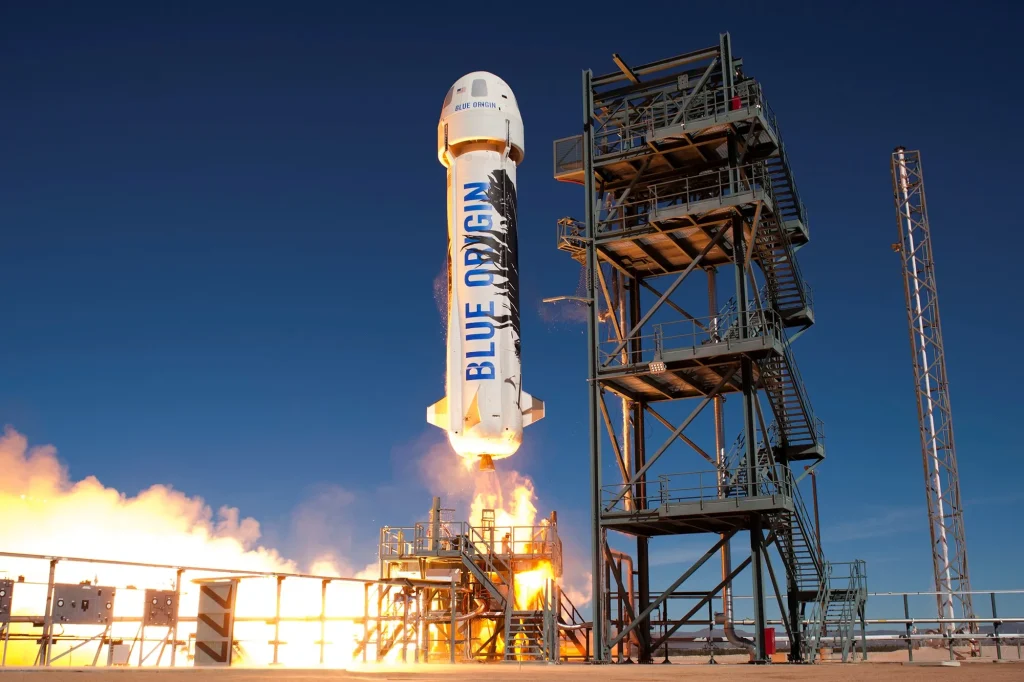
- Blue Origin’s New Glenn: Jeff Bezos’ massive rocket is slated to launch the BlueBird Block 2 satellites. I can’t stress enough how critical this vehicle is for Blue Origin’s future. It’s their ticket to competing for major government and commercial contracts.
- ULA’s Vulcan VC6L: Launching the Amazon Leo payload, Vulcan is United Launch Alliance’s answer to reusable, cheaper spaceflight. Watching Vulcan and New Glenn go head-to-head is going to be the most exciting aerospace story of the year.
ISRO’s Human Spaceflight Ambitions
India’s space agency, ISRO, is quietly executing one of the most efficient space programs on the planet. I am particularly excited about the TV-D2 Gaganyaan Abort Test.
Before you put humans on top of a controlled explosion, you need to know you can get them away safely if things go wrong. This abort test is a critical stepping stone for India’s goal of launching its own astronauts (Gaganauts) into orbit. It’s a huge flex of national engineering capability.
The Rideshare Revolution
Take a look at the Transporter 16 mission by SpaceX. Dedicated rideshare missions have completely democratized space access. Instead of paying tens of millions for a dedicated rocket, small startups, universities, and researchers can basically “buy a ticket” on a Falcon 9 and hitch a ride to a Sun-Synchronous Orbit (SSO). It’s the ultimate carpool, and it’s accelerating space research at an unprecedented rate.
The Complete Upcoming Launch Roster

To give you a clear view of the action, I’ve compiled the upcoming launches into a scannable table. Whether you are planning to watch a live stream from Cape Canaveral or Vandenberg, this is your master list.
| Date / Status | Mission / Payload | Rocket Vehicle | Agency / Company | Launch Location |
| Mar 4 | Flight 3 KAIROS | KAIROS | Space One | Spaceport Kii, Japan |
| Mar 4 | Starlink Group 10-40 | Falcon 9 Block 5 | SpaceX | Cape Canaveral, FL, USA |
| Mar 5 | Starlink Group 17-18 | Falcon 9 Block 5 | SpaceX | Vandenberg SFB, CA, USA |
| Mar 8 | Starlink Group 17-31 | Falcon 9 Block 5 | SpaceX | Vandenberg SFB, CA, USA |
| Mar 10 | EchoStar 25 | Falcon 9 Block 5 | SpaceX | Cape Canaveral, FL, USA |
| Mar 12 | Starlink Group 17-24 | Falcon 9 Block 5 | SpaceX | Vandenberg SFB, CA, USA |
| Mar 12 | Starlink Group 10-48 | Falcon 9 Block 5 | SpaceX | Cape Canaveral, FL, USA |
| Mar 19 (Proj) | Onward and Upward | Spectrum | Isar Aerospace | Andøya Spaceport, Norway |
| Mar 22 | Progress MS-33 (94P) | Soyuz 2.1a | ROSCOSMOS | Baikonur, Kazakhstan |
| Mar 24 (Proj) | Daughter Of The Stars | Electron | Rocket Lab | Mahia Peninsula, NZ |
| Mar 29 (Proj) | Transporter 16 | Falcon 9 Block 5 | SpaceX | Vandenberg SFB, CA, USA |
| Mar 31 (Proj) | Demo Flight | Soyuz-5 | RKK Energiya | Baikonur, Kazakhstan |
| TBD March | Amazon Leo (LV-01) | Vulcan VC6L | ULA | Cape Canaveral, FL, USA |
| TBD March | GISAT-1A (EOS-05) | GSLV Mk II | ISRO | Satish Dhawan, India |
| TBD March | SDA Tranche 1 (D, E, F) | Falcon 9 Block 5 | SpaceX | Vandenberg SFB, CA, USA |
| TBD March | TV-D2 Gaganyaan Test | Abort Test Booster | ISRO | Satish Dhawan, India |
| TBD March | GSAT-32 | GSLV Mk II | ISRO | Satish Dhawan, India |
| TBD March | BlueBird Block 2 #2 | New Glenn | Blue Origin | Cape Canaveral, FL, USA |
(Note: Launch dates are highly susceptible to weather and technical delays. Always check live streams on the day of the event!)
Why This Matters Down Here on Earth


It’s easy to look at a launch schedule and just see fire and metal going upward. But every single one of these payloads has a direct impact on our daily lives.
When SpaceX launches another batch of Starlinks, or ULA sends up Amazon’s Kuiper satellites, they are actively changing the global telecommunications landscape. They are bringing high-speed, low-latency internet to remote areas that traditional fiber cables will never reach.
When you see missions like the SDA Tranche 1 Transport Layer (being launched by SpaceX), you are watching the modernization of global defense and secure communications. And when ISRO launches Earth observation satellites like the GISAT-1A, they are gathering vital data for agriculture, disaster management, and climate monitoring.
We aren’t just exploring space for the sake of it anymore. We are utilizing it as the ultimate vantage point to manage and connect our own planet.
Final Thoughts
Looking at this schedule, I can’t help but feel a sense of awe at human ingenuity. The rockets are getting bigger, the turnaround times are getting shorter, and orbit is becoming a bustling hub of human activity.
I’ll be keeping a very close watch on how the new heavy lifters perform, because if New Glenn and Vulcan can achieve regular, reliable cadences, the entire economics of spaceflight will shift yet again.
Now, I turn it over to you. Looking at this packed schedule, which launch are you most excited to watch, and do you think the new competitors can finally break SpaceX’s dominance in orbit? Let me know in the comments below!
You Might Also Like;
- The AI Revolution in Home Coffee: Philips Café Aromis 8000 Series
- GoChess Review: The Ultimate AI Smart Chess Board
- Is the Sky Falling? The Frightening 10% Probability of Space Debris
-

-
-
-

-

-

-

-

-
-

-

-