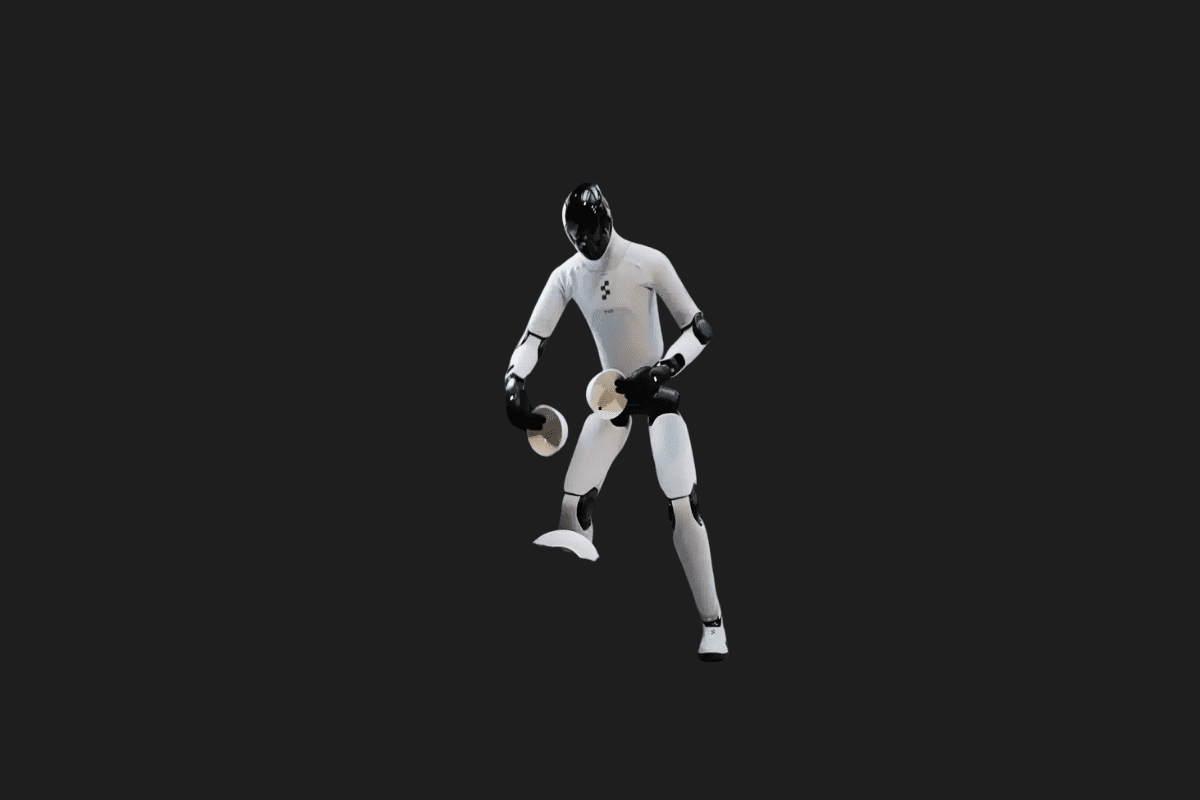
I remember watching the early, clumsy steps of humanoid prototypes just a few years ago and thinking, “We are decades away from this becoming a serious, commercial industry.” Well, looking at the data crossing my desk today, I have to admit I was completely wrong.
I was just digging through a massive new research report from JPMorgan, and the conclusion is absolute: the humanoid robot sector has officially crossed the critical threshold. We are no longer talking about cool science experiments or theoretical lab projects. We have entered the era of brutal, scalable mass production, and the big players are aggressively cornering the market.
If you’ve been tracking the evolution of AI and robotics alongside me, you know this was inevitable. But the sheer speed at which this transition is happening is staggering. Let me break down exactly what this report reveals and why it changes everything for the future of tech.
Out of the Lab, Into the Mega-Factories

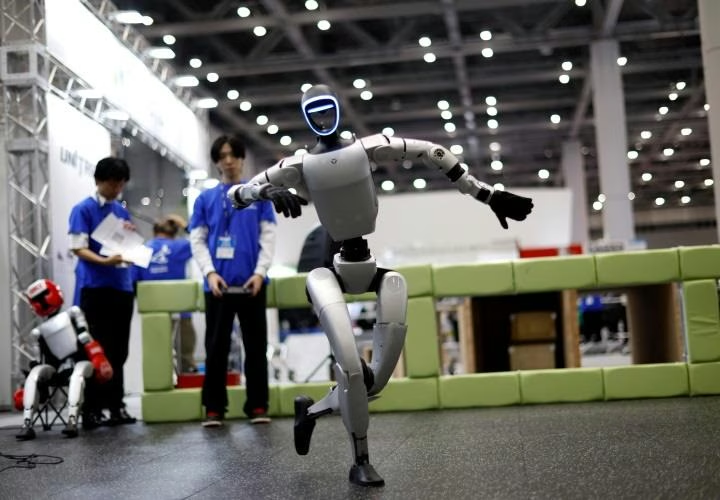
According to the analysts at JPMorgan, we are currently experiencing a massive breakout year for humanoid technologies. Global shipments are projected to eclipse the combined total of all previous years. This isn’t just a sign of technological maturity; it’s a massive green light indicating that commercial demand is exploding.
But what really caught my attention is who is actually building these machines at scale. While Western media heavily focuses on a few high-profile companies, the competition in the East is moving at an unbelievable pace.
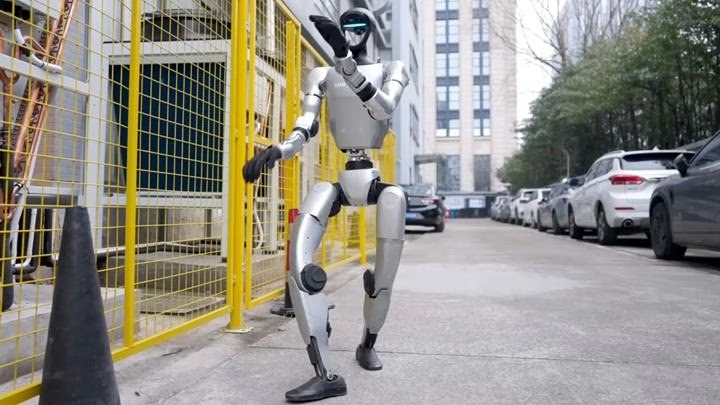
- The Chinese Manufacturing Juggernaut: JPMorgan points out that Tesla is actively trying to catch up not just to Boston Dynamics, but to lightning-fast Chinese competitors. Companies like Unitree, BYD, and Agibot aren’t just showing off prototypes; they have set hard targets to produce tens of thousands of units very soon.
- One Robot Every 30 Minutes: If you want proof of this acceleration, look at Leju Robotics in Guangdong. Their new facility has reached a point where a fully assembled humanoid robot rolls off the production line every half hour. This level of rapid manufacturing proves that the supply chain is already maturing. Morgan Stanley is even projecting tens of thousands of humanoid sales in China alone this year.
The Western Titans: Tesla and Boston Dynamics


Of course, the Western heavyweights aren’t sitting still. The strategies I’m seeing from Tesla and Boston Dynamics show exactly how high the stakes are.
Elon Musk recently confirmed the timeline for the Optimus robot. Production is slated to kick off at the Fremont factory in California around late summer, right after they clear out some older vehicle production lines to make room. Musk was honest about the initial pace—Optimus has around 10,000 individual parts, so the ramp-up will be painfully slow at first. But the long-term vision remains massive, with a secondary, dedicated robotics facility planned for Giga Texas in the near future.
Then there is Boston Dynamics. They recently debuted the commercial production version of the new electric Atlas. But here is the crazy part: you couldn’t buy one even if you had the money. The company announced that their entire planned delivery schedule is already completely reserved by Hyundai and Google DeepMind. Hyundai, their parent company, is integrating these robots into their massive Metaplant America facility, targeting an eventual capacity of 30,000 units annually.
Follow the Money: The Market is Closing
When I look at the financial data provided in the report, a very clear—and somewhat intimidating—picture emerges. The window for small startups to enter this space is slamming shut.
- Capital Monopoly: Recent data shows that the top 10 investment deals accounted for a staggering 95.4% of all capital in the sector. The big money is betting on the proven leaders.
- General Purpose is King: Even though companies building “general-purpose” humanoids only make up about 31% of the deals, they are sucking up over 62% of the funding. Investors want robots that can learn to do anything, not single-task machines.
- The Geographic Divide: North America and the Asia-Pacific region control over 97% of the investments. Europe is practically sitting this revolution out, holding a mere 2.9% share.
The Real Story: Plunging Costs
For me, the most important takeaway from this entire landscape isn’t the production speed or the funding monopolies—it’s the cost.
JPMorgan noted that manufacturing costs for humanoid robots are dropping by approximately 40% annually. This violently shatters the previous expectations of a 15-20% drop.
Why does this matter? Because a 40% annual cost reduction means we aren’t just talking about million-dollar machines meant for automotive assembly lines. We are rapidly approaching the price point of consumer hardware. This massive drop in component costs is paving the way for a very real, very imminent commercial market where personal and home robots become a daily reality.
We are watching the birth of a new apex industry. IDC projects global shipments to cross half a million units by the end of the decade, representing a massive 95% compound annual growth rate.
I’ve always believed that the convergence of AI brains and mechanical bodies would be the ultimate tech revolution of our lifetime, and seeing these numbers confirms it. The infrastructure is being laid down right now, and the giants are taking their positions.
I’m curious to hear your take on this aggressive timeline. If manufacturing costs keep dropping at this 40% rate, how many years do you think we are away from an affordable, general-purpose humanoid robot being a standard household appliance? Let’s discuss it down in the comments!
You Might Also Like;
- The New Era of Space Mechanics: Extending Satellite Lifespans
- AI Discovers Groundbreaking Non-Opioid Painkiller
- Mind Over Matter: What Neuralink’s First Human Trial Really Means for Our Future
-
-

-

-
-

-

-

-

-
-
-

-