
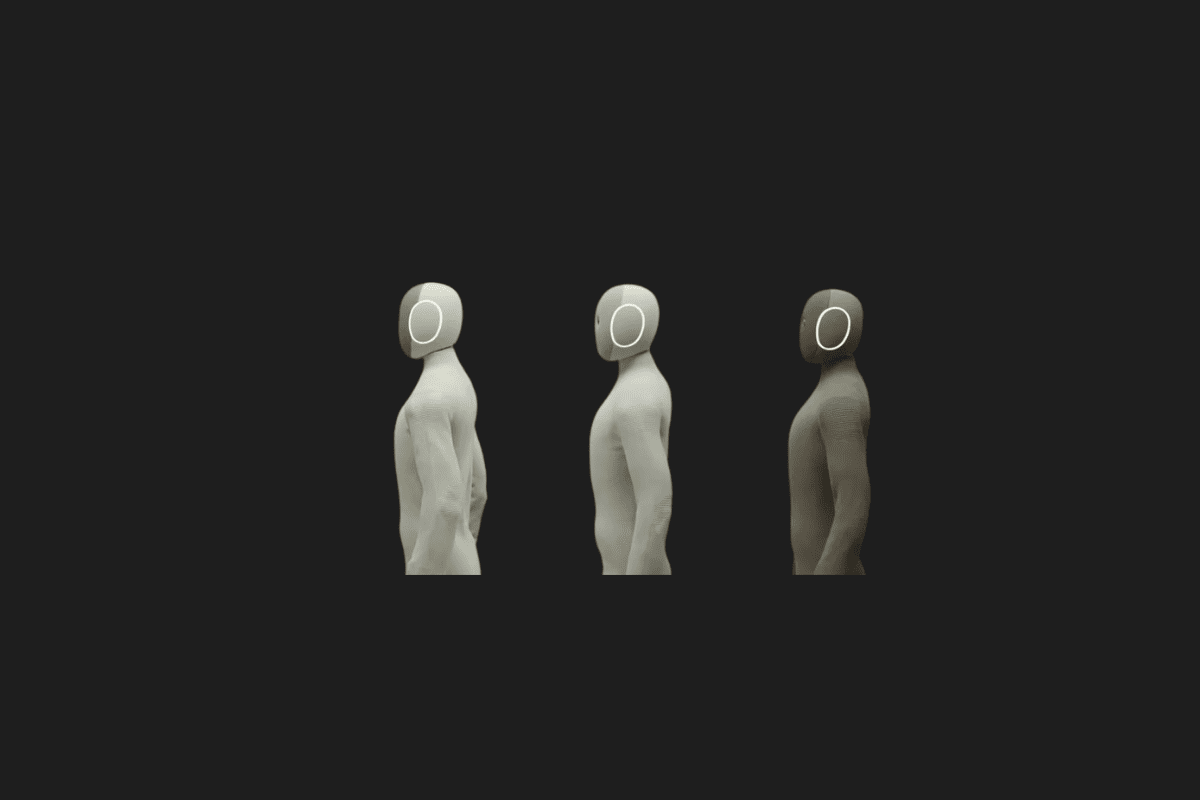
I read something today that honestly gave me chills. We all know humanoid robots are gearing up to step onto factory floors—companies like Figure AI, Apptronik, Tesla, and Agility Robotics are making sure of that. But when I was digging into how these robots are getting so smart, so fast, I stumbled upon a reality that feels like a script straight out of a dystopian sci-fi movie.
Imagine strapping on a camera at work, thinking it’s just a new company policy for quality control, only to realize you are literally teaching a machine how to replace you.
Here is what is happening behind the closed doors of global manufacturing, and why it changes everything we thought we knew about the AI race.
The GoPro Blueprint: Recording Every Move


According to a recent investigation by The Guardian, workers in several production facilities—particularly in India—are being equipped with GoPro-style cameras during their shifts.
Lalita, a worker at a textile factory near Delhi, mentioned that the management recently required all employees to wear these head-mounted cameras. The catch? Nobody told them what the footage was actually for.
As it turns out, these recordings aren’t for security or standard performance reviews. They are being funneled directly into the AI systems designed to train the next generation of humanoid robots.
How Do They Learn?
The industry calls this method “egocentric video” (footage shot strictly from a first-person perspective). By looking through the eyes of a human worker, robot developers can capture the exact nuances of physical labor.
Here is what these AI systems are quietly analyzing:
- Micro-movements: The exact pressure needed to fold a specific fabric.
- Precision tasks: How human fingers maneuver to sew a button or place a delicate part.
- Error correction: How a human naturally reacts and adjusts when something slips or goes wrong.
- Spatial awareness: How workers interact with their immediate physical environment.
These thousands of hours of footage feed into “vision-language-action” models. Just like ChatGPT learns from massive amounts of text, these robots learn by analyzing human motion frame by frame, figuring out the exact sequence required to complete a physical task.
The Rise of the “Dark Factories”


To me, the ultimate goal of all this data harvesting is the most fascinating—and terrifying—part. The manufacturing sector is actively pushing toward the era of the “dark factory.”
If you haven’t heard the term before, a dark factory is a highly automated production facility where human intervention is virtually zero. Because there are no humans walking around, they don’t even need to turn the lights on.
We are already seeing glimpses of this:
- Chinese automaker Zeekr operates highly automated factories where massive portions of vehicle assembly are done without a single human touch.
- According to the International Federation of Robotics, China alone installed around 295,000 new industrial robots just in the last year.
The automation race is moving at breakneck speed, and human workers are unwittingly acting as the highly skilled instructors for their own mechanical successors.
White-Collar Workers Aren’t Safe Either
If you are sitting at a desk thinking this only applies to assembly lines, think again.
A few months ago, a massive internal debate leaked from Meta. They were reportedly testing an internal system called the Model Capability Initiative (MCI). Instead of head-mounted cameras, this system harvested data from office workers by tracking:
- Mouse movements
- Keyboard strokes
- Routine screen captures
The goal? To train future AI agents capable of taking over standard computer-based workflows. Whether you are assembling cars in New Delhi or writing code in Silicon Valley, the dynamic is exactly the same: companies are no longer satisfied with just scraping the internet for data. They are actively mining the daily routines of their workforce.
My Takeaway
I love technology, and I firmly believe AI and robotics will unlock incredible potential for humanity. But this feels like a massive breach of trust. Using workers as involuntary, uncompensated data sources to engineer their own obsolescence crosses a serious ethical line.
If we are going to build a highly automated future, the people building the foundation—the workers providing the training data—deserve transparency, and frankly, a piece of the pie.
What do you think? If your boss asked you to wear a camera tomorrow to “optimize workflows,” would you do it, or would you start updating your resume? Let’s discuss this below!
You Might Also Like;
- Samsung Enters the Robotics Arms Race: Inside the New RX Unit
- The Danger of AI Confidence: Why We Are More Wrong Than Ever
- The Hidden Threat Above Us: Are We Facing a Nuclear Arms Race in Space?
-

-

-

-

-
-

-

-
-

-

-

-
