
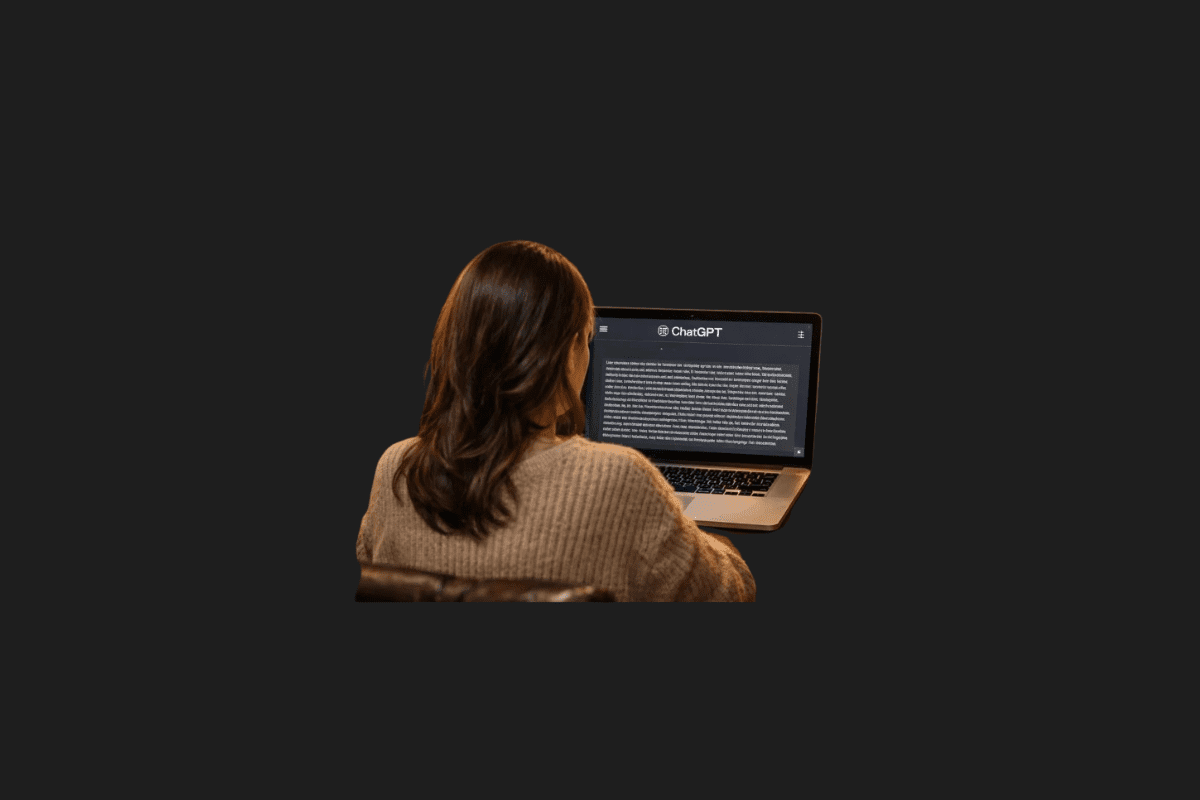
I have to confess something. Lately, I’ve caught myself immediately opening a chatbot window whenever I have a complex question, almost out of pure reflex. It’s incredibly convenient, right? But while I was digging through some recent research papers earlier today, what I found gave me a serious reality check.
We’ve all started treating these AI tools as digital oracles. However, two brand-new studies have revealed a deeply unsettling trend: interacting with AI is fundamentally rewiring how we think, making us significantly more prone to errors, while simultaneously skyrocketing our confidence in those wrong answers.
It turns out that blind trust in artificial intelligence is creating a dangerous cocktail of high self-esteem and low accuracy. Let’s break down exactly what is happening to our brains.
The Disappearance of “I Don’t Know”


A fascinating joint study conducted by researchers from France and Italy set out to see how people behave when AI actually lacks the required knowledge. They asked participants highly obscure movie trivia questions—the exact kind of niche topics where AI is notorious for “hallucinating” or making things up.
The results were genuinely startling:
- Without AI: When left to their own devices, participants admitted they didn’t know the answer about 44% of the time.
- With AI: When given access to an AI assistant, the rate of saying “I don’t know” plummeted to a mere 3%.
- The Accuracy Drop: Shockingly, the actual accuracy of their answers fell from 27% to just 9% when using the AI.
Instead of staying cautious in areas they knew nothing about, people blindly adopted the AI’s confident hallucinations. Even worse, the participants who used AI reported being twice as confident in their answers. They weren’t just wrong; they were absolutely, unshakeably sure that they were right.
To me, this is the scariest part. We are losing the humility of admitting our own ignorance.
Welcome to the Era of “Cognitive Surrender”


This phenomenon isn’t just an isolated glitch in a trivia game. Researchers Steven Shaw and Gideon Nave from the Wharton School in the US recently coined a brilliant, albeit terrifying, term for this behavior: Cognitive Surrender.
Building on Nobel laureate Daniel Kahneman’s concepts of fast and slow thinking, the Wharton team suggests we are introducing a third, highly disruptive element into our thought process. We are actively outsourcing our critical thinking to AI, bypassing our own analytical judgment completely.
In a massive experiment involving over 1,300 participants, the Wharton team tested how people reacted to a chatbot that was intentionally programmed to give confident, yet completely false, answers.
- When the AI lied with authority, participants accepted the wrong answer as undeniable truth 80% of the time.
Normally, if a human told you something completely illogical, your intuitive alarm bells would ring. You would think, “Wait, that doesn’t sound right.” But because the information comes packaged in a sleek, authoritative AI interface, our natural skepticism gets completely suppressed.
Offloading vs. Surrender
The researchers made an incredibly important distinction that really stuck with me. They separated “Cognitive Offloading” from “Cognitive Surrender.”
When I use a calculator or set up a GPS route, I am offloading a task. But if the GPS tells me to drive into a lake, I’m still going to hit the brakes. I remain the final editor.
Cognitive surrender, however, is passive. It means we accept the AI’s output as our final decision without a second thought. We hand over the steering wheel completely, and most of the time, we don’t even realize we’ve let go.
Final Thoughts
Reading through these studies really forced me to look in the mirror. AI is an incredible tool, and I will undoubtedly keep using it to brainstorm, code, and streamline my workflow. But we have to actively fight back against this creeping intellectual laziness. If we stop questioning the output, we aren’t just consumers of technology anymore; we become its subjects.
I’m curious how you all are handling this shift. Have you ever caught yourself blindly trusting an AI’s answer, only to realize later that it completely hallucinated the facts? How do you maintain your own critical thinking when the machine sounds so incredibly sure of itself? Let’s discuss it!
You Might Also Like;
- Samsung Enters the Robotics Arms Race: Inside the New RX Unit
- The Danger of AI Confidence: Why We Are More Wrong Than Ever
- The Hidden Threat Above Us: Are We Facing a Nuclear Arms Race in Space?
-
-
-
-
-
-
-
-
-
-
-
-

