

Let’s be honest, the anxiety around artificial intelligence taking our jobs isn’t just sci-fi paranoia anymore—it is becoming our daily reality. Every time I open my feed, there is a new debate about millions of jobs disappearing. People are naturally becoming defensive and distant toward AI. But as I’ve watched this tech evolve into a literal arms race between nations, one thing is crystal clear to me: slowing down is not an option.
Recently, renowned investor Carson Block predicted that AI could displace about 15% of all knowledge workers within just three years. Even Anthropic’s CEO, Dario Amodei, recently published an essay warning of a workforce transformation on a scale we have never seen before. Since we can’t stop this wave, the conversation has finally shifted to the most important question: How do we prepare the next generation for this completely altered reality?
We’ve Survived This Before: The Century-Old Blueprint


When I was researching how societies adapt to massive technological shifts, I was actually surprised to see that history gives us the perfect playbook.
At the turn of the last century, the US faced a similar crisis. Agricultural jobs were vanishing at a terrifying rate. Over about 50 years, agriculture’s share of total employment plummeted from a third to just 8%, wiping out nearly 10 million farming jobs.
So, what did they do? Did they just invent new jobs out of thin air? No. They completely overhauled the education system.
As economist Byron Auguste points out, state governments didn’t just mandate education; they made high school a fundamental requirement for economic survival. For roughly 30 years, the US opened a new high school almost every single day. Today, experts are arguing that the AI revolution demands an educational reform of the exact same magnitude.
The Alabama Blueprint: Beyond the Standardized Test

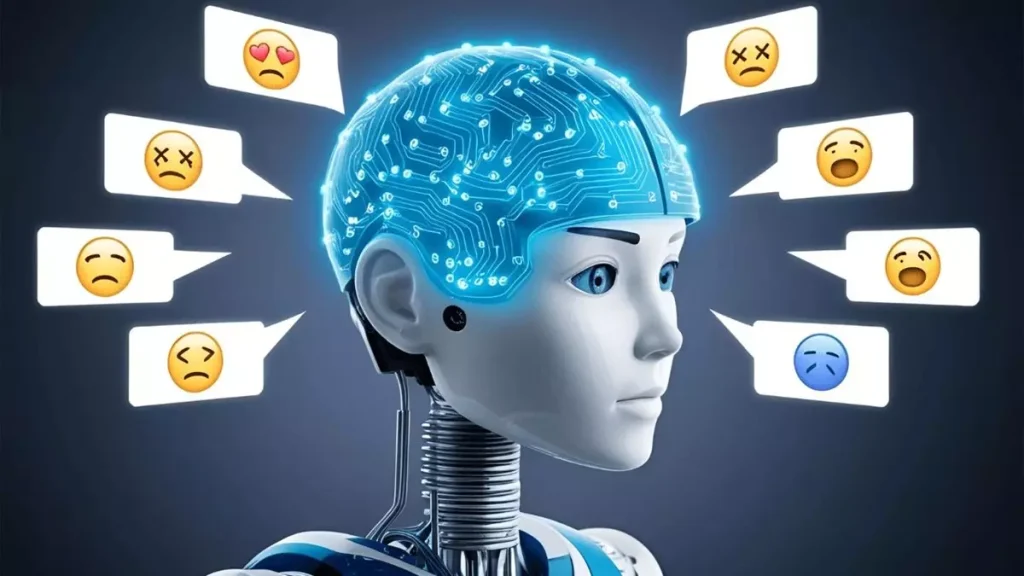
We are already seeing the first seeds of this transformation. A prime example that caught my eye is happening right now in Alabama. The state government is rolling out a plan to completely restructure their high school system.
Their goal? Stop preparing kids just for college, and start preparing them for a rapidly shifting workforce.
Under the traditional system, a student’s worth is mostly measured by college entrance exams. Alabama’s new model throws that outdated metric out the window. Instead, they are going to measure whether students actually have the practical skills needed to survive in an AI-driven economy.
Students won’t just be asked to solve abstract math equations anymore. They will be expected to:
- Interpret highly complex documents
- Analyze massive datasets
- Evaluate and solve real-world problems
State officials noted a massive incentive for this change: about 67% of jobs requiring these high-demand skills pay above the state’s median income. It just makes sense. Why train kids for jobs that algorithms will do for free by the time they graduate?
The “Un-Automatable” Human Skills


If you ask me, the skills that will matter most in the AI era aren’t actually new—they are just becoming the only things that separate us from the machines.
While AI can write code, generate reports, and summarize data in seconds, it still lacks the profound nuance of human experience. To survive the upcoming job market, education must heavily pivot toward teaching:
- Critical and strategic thinking
- Complex human communication and empathy
- Extreme adaptability to changing conditions
- Digital and prompt literacy
Education can no longer be about transferring raw information into a teenager’s brain—AI already has all the information in the world. Instead, we need to teach students how to think, how to navigate uncertainty, and how to synthesize fragmented information into actionable wisdom.
Of course, not everyone agrees. I’ve read counterarguments from educators who worry that focusing too much on the labor market ruins the “soul” of education. But I side with the Alabama officials here: integrating real-world, AI-proof skills doesn’t lower academic standards; it makes them actually relevant to the lives these kids are going to lead.
Just like the shift from the farm to the factory floor a hundred years ago, the transition into the AI era requires more than just new tech. It requires a completely new way of learning.
I’m curious to hear what you guys think about this. If you were designing a high school curriculum today, what is the ONE subject or skill you would make absolutely mandatory for the AI age? Let’s discuss it in the comments!
You Might Also Like;
- Samsung Enters the Robotics Arms Race: Inside the New RX Unit
- The Danger of AI Confidence: Why We Are More Wrong Than Ever
- The Hidden Threat Above Us: Are We Facing a Nuclear Arms Race in Space?
-

-

-

-

-

-

-
-

-
-

-
-

