From the shadow of the Cold War to modern deep space exploration, these are the top 10 most expensive space missions ever undertaken. How were these multi-billion dollar projects shaped, and how did they change the world? Here are the details.
Space research gained momentum through Cold War competition, evolving into humanity’s largest scientific investments. The ideological struggle between the USA and the USSR allocated resources approaching trillions of dollars for rocket development, satellite navigation, deep space telescopes, and human exploration programs. This list reveals the historical details, costs, and scientific legacy of the 10 most expensive space missions in history.

Inspired by Sputnik, GLONASS took shape with the Cicada tests initiated by the Soviets in 1979. The first satellites were launched in 1982, and the system was completed in 1995 with 24 satellites. Following the collapse of the USSR, the system became nearly non-functional; by 2002, only 7 satellites were active. Moscow conducted two major modernization programs between 2002–2011 and 2012–2020, costing a total of $8.3 billion. Regaining full capacity in 2011, the system today provides global coverage.
9. Salyut 6 – The Station That Paved the Way for Long-Term Habitation

Launched in 1977, Salyut 6 became the first station to allow simultaneous resupply and crew transfer thanks to its dual docking ports. The Soviets attempted to simulate the effects of 18 months of weightlessness required for a Mars journey. Due to the short lifespan of Soyuz capsules, rotating visiting crews were utilized. Opening its doors to international guest cosmonauts as well, Salyut 6’s development and operational costs exceeded $9 billion in 1980 values.
8. James Webb Space Telescope – The Great Eye of the Deep Universe

Planned in the 1990s to go beyond Hubble, JWST began construction in 2004 and, after delays, was launched on December 25, 2021. Its position at the L2 point protects it from sunlight, enabling infrared observations. The total development cost was $8.8 billion, with initial 5-year operational support costing $867 million. Webb has already revolutionized science by discovering early universe stars, supermassive black holes, and new exoplanets.

Developed by the ESA, Galileo is the only global navigation system not under military control. While planned to go online in 2008, the project faced significant delays due to satellite failures and launch errors. While the initial budget was $3.1 billion, costs exceeded $10 billion as of 2020. The network, consisting of 28 satellites at an altitude of 23,222 km, provides meter-level precision and offers free service to all users.


6. GPS – The Ancestor of Global Positioning

The idea, developed while studying Sputnik’s radio frequencies, evolved into the US military’s Navstar GPS system. It was opened to commercial flights following the Korean Airlines disaster in 1983. The first GPS device hit the market in 1989. Precision was initially intentionally lowered for security. Today, the installation cost of the system, which operates with 31 satellites, has exceeded $12 billion. in return, GPS technology has contributed $1.7 trillion to the US economy.
5. Hubble Space Telescope – The Eye That Redefined the Universe

Reaching orbit in 1990, Hubble overcame atmospheric distortion to make critical observations that determined the universe’s age as 13.8 billion years. It discovered supermassive black holes at the centers of galaxies and transformed science with deep space images. Excluding service costs, the total mission cost is $16 billion in 2021 figures. Expected to operate until 2030–2040, the telescope remains one of humanity’s most effective scientific tools.
4. SLS and Orion – The System Returning Humanity to the Moon and Mars

The process that began with the Orion capsule in 2004 was reshaped with the development of the SLS rocket after 2010. SLS is more powerful than even the Saturn V, with 8.8 million pounds of thrust. Orion can perform autonomous missions for 21 days. The unmanned Artemis I flight in 2022 successfully orbited the Moon; Artemis II will take a crew near the Moon in 2026. Between 2006 and 2022, a total of $49.9 billion was spent on the two programs. The long-term goal is a Mars mission.
3. International Space Station (ISS) – A Science Base in Earth Orbit
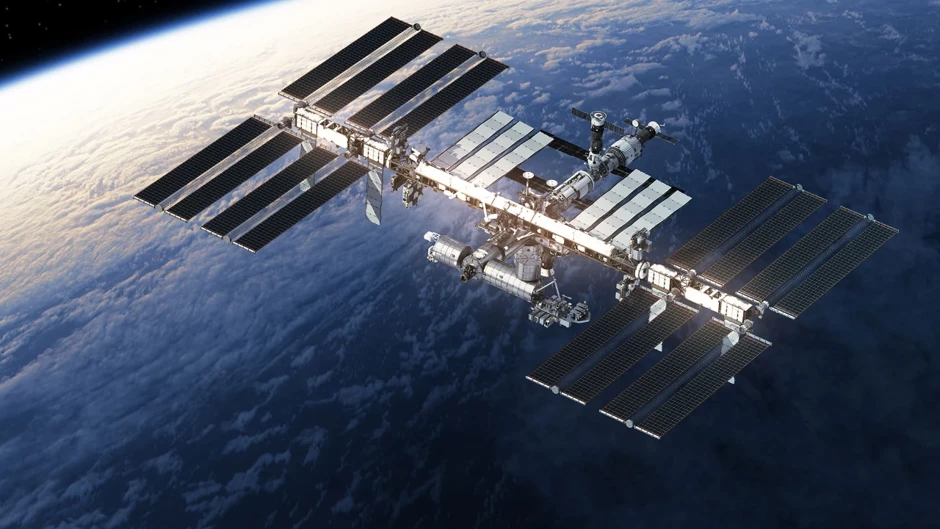
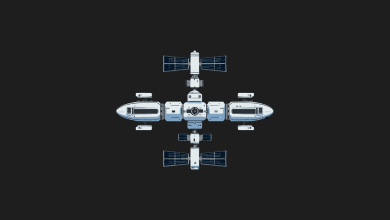
Born from the partnership of the USA and Russia after the Cold War, the ISS has hosted a continuous crew since 2000. With contributions from ESA and JAXA, hundreds of experiments are conducted in physics, biology, protein behavior, plant cultivation, and disaster observation. Its construction cost approximately $100 billion; NASA pays $3 billion annually in maintenance costs. It will remain at the center of scientific research until it retires in 2030.
2. Space Shuttle Program – From the Dream of Reusability to a Massive Project

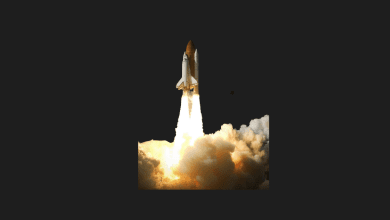
Launched in the 1970s, the shuttle program carried out 135 missions between 1981 and 2011 and played a critical role in launching Hubble and transporting ISS modules. However, the Challenger (1986) and Columbia (2003) disasters shook the program. Preparation times of 54–88 days drove up costs. With $49 billion in development spending, the cost rose to $209 billion including launch costs, making it the second most expensive space project in history.
1. Apollo Program – Humanity’s Historic Step to the Moon

The Apollo Program, which delivered Neil Armstrong and Buzz Aldrin to the Moon in 1969, was the greatest prestige battle of the Cold War. The loss of three astronauts in a cabin fire in 1967 led to a complete redesign of the module. Seven of the 11 flights were manned, and a total of 12 astronauts landed on the lunar surface. The cost at the time was $28 billion; adjusted for inflation, it exceeds $280 billion today, making it the most expensive space mission of all time.
Would you like me to create a comparison table showing the ROI (Return on Investment) for the GPS system versus the scientific value of the Apollo program?
You Might Also Like;