










Why They Abruptly Cancelled Mars and Pivoted to the Moon

LATEST CONTENTS
-
Cyber Culture

Black Hole Energy: Can We Harness the Power of the Universe’s Dark Giants?
Black holes are often seen as cosmic monsters—regions of space where gravity is so strong that not even light can…
Read More » -
Cyber Culture
Quantum Internet in Space: The Future of Instant Cosmic Communication
Imagine astronauts on Mars sending a message to Earth — and receiving a reply instantly. 🚀🌌 Today, space communication is…
Read More » -
Future Science
Accelerated Aging in Space: Human Stem Cells Affected by Microgravity and Cosmic Radiation
As scientists work to understand how the human body reacts to space travel, recent research has revealed significant physiological and…
Read More » -
Space
SpaceX is acquiring EchoStar’s spectrum licenses
SpaceX is acquiring EchoStar’s spectrum licenses in a deal valued at approximately $17 billion. The agreement aims to alleviate regulatory…
Read More » -
Cyber Culture
Can Humans Reproduce on Mars? The Science Behind Life Beyond Earth
The idea of building human colonies on Mars often focuses on food, water, oxygen, and shelter. But there’s a bigger,…
Read More » -
Space
SpaceX to More Than Double Falcon 9 Launches in Florida
SpaceX has received approval to significantly increase its Falcon 9 launch cadence from Cape Canaveral Space Force Station in Florida.…
Read More » -
Space
Amazon’s Starlink Rival Kuiper Secures First Airline Partnership for Satellite Internet
Amazon’s satellite network, Kuiper, which aims to be a rival to Starlink, is finally becoming a reality. After launching more…
Read More » -
Space
Space Elevators: The Future of Cheap Space Travel 🚀
For decades, humanity has dreamed of reaching space as easily as hopping on a plane. While rockets have been our…
Read More »
SPACE NEWS
Launch into the new space age. Your mission control for breaking Space News, tracking daily rocket launches, orbital milestones, and the commercial race to the stars.
SPACE VIDEOS
Your window to the cosmos. Stream the most breathtaking Space Videos, capturing the raw power of rocket launches, lunar landings, and the silent beauty of the deep universe.





SPACE MOVIES
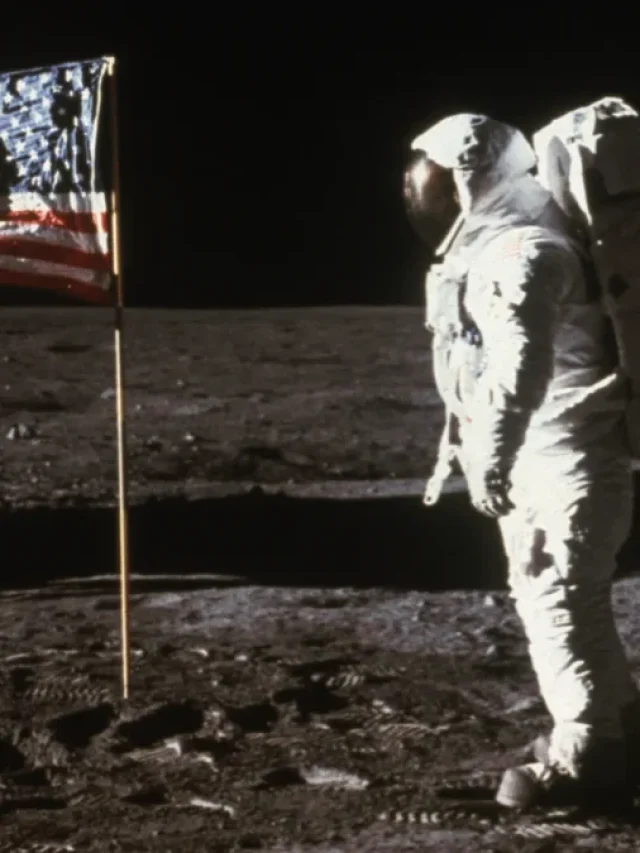
Embark on an interstellar voyage without leaving Earth. Explore our definitive list of Space Movies that visualize humanity’s destiny among the stars, from scientific epics to deep-space thrillers.
SPACE BLOG
Charting the course to the stars. Dive into our Space Blog for deep analyses on Mars colonization, orbital economies, and the engineering challenges of becoming a multi-planetary species
SPACE CALENDER
Sync your watch with the cosmos. Our precision Space Calendar tracks every upcoming rocket launch and orbital mission, ensuring you never miss a moment of history in the making.
Space Categories
Space: Not Just a Vacuum, It’s Our Future Home
I’ll admit it: I’m that person who sets an alarm for 3 AM just to watch a rocket launch live. There is something profoundly humbling yet incredibly empowering about watching humanity leave this rock. But looking at the Space category here on Metaverse Planet, I realized something important: Space isn’t just about astronauts and billionaires anymore. It’s about us.
In this section, I don’t just copy-paste NASA press releases. I try to decode what it actually means when SpaceX blows up another prototype (hint: it’s usually a good thing) or what the James Webb Telescope is really looking for in the dark corners of the universe.
Whether you are a sci-fi dreamer waiting for the first ticket to Mars, or a pragmatist wondering how satellite internet will change the global economy, you are in the right place. We are witnessing the era where “Earth” becomes just our first address, not our only one.
Frequently Asked Questions (And My Honest Thoughts)
Q1: Is living on Mars actually going to happen in our lifetime? Answer: If you asked me ten years ago, I would have said “maybe.” Now? I’m saying “prepare your bags.” With the progress I’m tracking from SpaceX and Blue Origin, the hardware is becoming real. It won’t be a luxury vacation at first—it will be dangerous and gritty—but yes, I believe we will see the first humans on Mars before the 2030s are over.
Q2: Why do we spend billions on space when we have problems on Earth? Answer: This is the question I get asked the most. Here is my take: Space isn’t an escape; it’s a lab. The technology we develop to survive up there (water recycling, solar energy, advanced materials) is exactly what we need to solve climate and resource problems down here. Plus, let’s not forget: GPS, MRI machines, and even the camera in your phone exist because of space research.
Q3: Are we alone in the universe? Answer: That’s the ultimate question, isn’t it? While I haven’t posted any “Little Green Men” news yet, the data coming from modern telescopes is staggering. We are finding exoplanets in the “Goldilocks Zone” (habitable zone) almost every week. We might not find a civilization tomorrow, but finding biological signatures (signs of microbial life) is, in my opinion, just a matter of time.
Q4: Will space travel ever be affordable for normal people? Answer: Right now, it’s a playground for the ultra-rich. But remember, air travel was the same in the 1920s. As reusable rockets (like Starship) become the norm, the cost per kilogram to launch drops drastically. I don’t think we’ll be commuting to the Moon next year, but “orbital tourism” will likely become as common as a luxury cruise within two decades.
Q5: What is “Space Junk” and should we be worried? Answer: Yes, we should. I often write about this because it’s the “climate change” of orbit. There are thousands of dead satellites and debris pieces flying at bullet speeds. If we don’t clean it up (and there are cool startups working on this), we could trap ourselves on Earth. It’s a serious topic that I keep a close eye on.