
I have to admit, I had a sinking feeling of déjà vu while watching the telemetry from the Kennedy Space Center this week.
If you’ve been following the Artemis program as closely as I have, you know the drill: The rocket looks majestic on the pad, the countdown begins, anticipation builds… and then, the hydrogen leaks start.
NASA has officially confirmed what many of us feared during the latest “Wet Dress Rehearsal.” The historic Artemis 2 mission—the one destined to send four humans around the Moon for the first time in over 50 years—has been pushed back. The February launch window is gone. The new target? Earliest March.
Here is everything you need to know about what went wrong, why liquid hydrogen is NASA’s “frenemy,” and why—despite the frustration—this delay is actually a good thing.
The “Wet Dress Rehearsal” Drama

Let’s break down exactly what happened. This wasn’t just a random check; it was a full-scale simulation. NASA calls it a Wet Dress Rehearsal (WDR). The goal is to load the Space Launch System (SLS) with 750,000 gallons of super-chilled propellant and run the countdown clock right down to the wire.
Everything started relatively well, despite some weather delays in Florida (which, honestly, is par for the course). But as the teams began flowing liquid hydrogen ($LH_2$) into the rocket’s core stage, the sensors lit up.

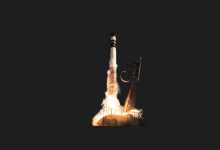
- The Issue: A leak was detected in the connection between the mobile launcher and the rocket.
- The Location: Specifically, the quick-disconnect arm. This is the exact same hardware interface that caused headaches during the unmanned Artemis 1 campaign in 2022.
- The Result: The countdown was halted at T-minus 5 minutes and 15 seconds. They never got to the terminal count where the rocket takes over its own internal power.
I watched the updates roll in. NASA engineers tried to troubleshoot, but the leak concentration spiked above the 4% safety limit. In the world of rocketry, you don’t mess with flammable gas leaks when there are (or will be) humans on top of the stick.
Why is Hydrogen Such a Nightmare?
You might be asking yourself, “It’s 2026. Why can’t NASA stop a pipe from leaking?”
I’ve looked into the physics of this, and it’s fascinatingly difficult. Liquid hydrogen is an engineering nightmare for two main reasons:
- Temperature: To keep hydrogen liquid, it must be chilled to -253°C (-423°F). When you pump something that cold through pipes sitting in warm Florida air, metal contracts, seals shrink, and shapes distort. Keeping a tight seal under those thermal shocks is incredibly hard.
- Size: Hydrogen is the smallest molecule in the universe. It loves to escape. It will find microscopic imperfections in a seal that water or kerosene would never pass through.
NASA loves hydrogen because it is the most efficient rocket fuel for lifting heavy payloads. It gives you the best “bang for your buck” in terms of thrust. But the trade-off is that it is notoriously difficult to handle. As I see it, the SLS rocket is a beast, but it’s a high-maintenance one.
Jared Isaacman’s Perspective: “We Expected This”

While reading through the reactions, I stumbled upon a post by Jared Isaacman (the commander of the Polaris Dawn mission) on X. His take really resonated with me.
He pointed out that there has been a gap of over three years between SLS launches.
“We fully anticipated challenges. That is why we rehearse. These tests are designed to flush out issues before flight to ensure the highest probability of success on launch day.”
He is absolutely right. We often get impatient because we want to see the fire and smoke, but this test did exactly what it was supposed to do: It failed safely on the ground so it wouldn’t fail in the air.
The New Timeline: Eyes on March 6

So, where does this leave us?
NASA has decided against rushing a second rehearsal immediately. Instead, they are taking the time to analyze the data and inspect the hardware. The earliest possible launch window now opens on March 6.
Here is why that specific date matters:
- Orbital Mechanics: You can’t just launch to the Moon whenever you want. The Moon’s position and the Earth’s rotation have to align perfectly for the Orion capsule to return safely.
- The Window: On March 6, a two-hour launch window opens at roughly 04:26 AM
If they miss the March windows, we are looking at further delays. But considering this mission carries astronauts Reid Wiseman, Victor Glover, Christina Koch, and Jeremy Hansen, I am perfectly fine with NASA taking every single second they need.
My Final Thoughts
It is easy to be disappointed by delays. I was ready to see humanity return to deep space next month. But looking at the history of spaceflight, “rushing” is a word that should never appear in a mission control room.
The Artemis 2 mission is not just a loop around the Moon; it is the dress rehearsal for landing on Mars. If dealing with hydrogen leaks now means we have a safer system for the next decade, I’ll happily wait until March.
What do you think? Does NASA’s reliance on liquid hydrogen make the SLS rocket too complicated, or is the efficiency worth the delay headaches? Let’s chat in the comments.
You Might Also Like;