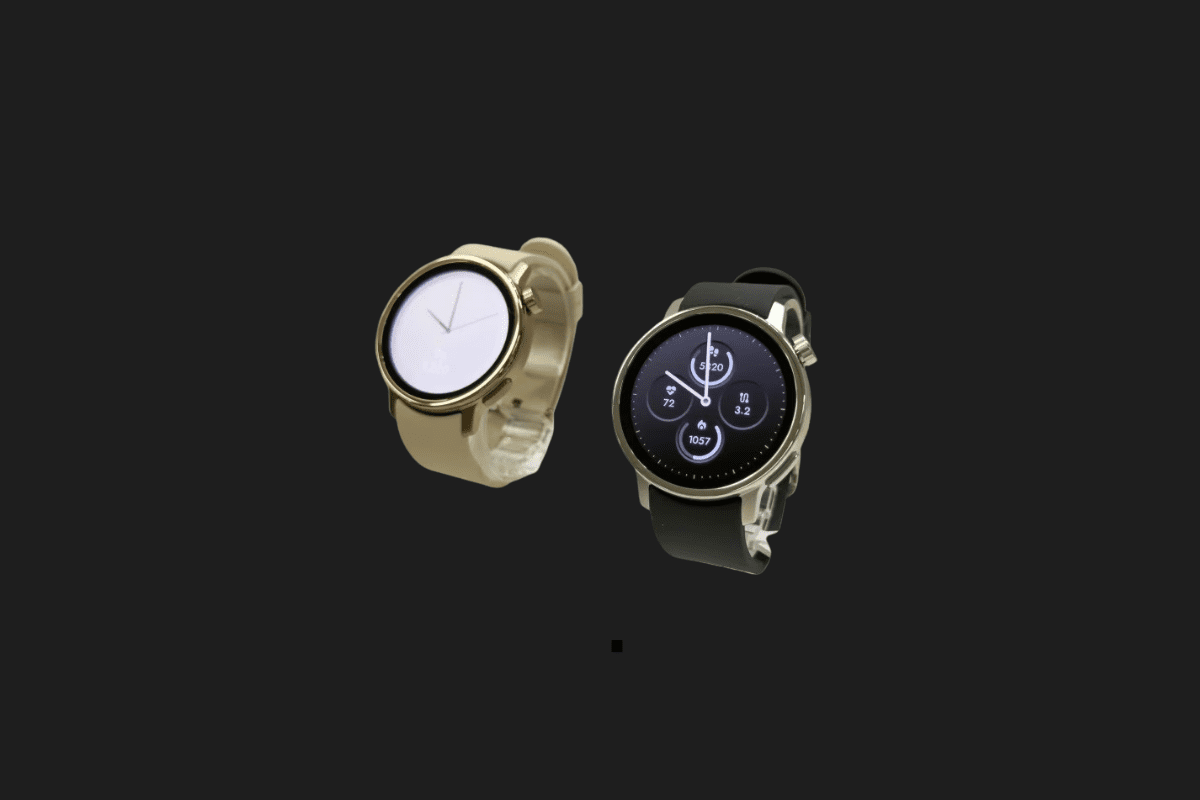
I’ve been watching the wearables space for years, and let’s be honest: it’s been feeling a bit stagnant lately. Every company is releasing another version of the same pedometer, dressed up in a different casing. But when a giant like Sharp decides to enter the arena, my ears perk up. They aren’t just dipping their toes in; they are coming in with two distinct devices—Karada Mate Watch and Karada Mate Ring—that actually try to solve the hardest part of health tracking: nutrition.
Karada Mate Watch: Taking “Calorie Counting” Seriously


Most smartwatches guess your calorie burn based on your movement, but they usually fail miserably when it comes to tracking what you actually put into your body. That’s where the Karada Mate Watch changes the game for me.
Instead of just relying on an accelerometer, Sharp has integrated a bioelectrical impedance (BIA) sensor. This isn’t brand new tech, but seeing it applied to track sugar and water levels in the body is a bold move. It attempts to calculate not just what you burn, but what you consume.
- Design & Display: It sports a clean, 1.32-inch OLED screen with a 466 x 466 resolution. At 11.9mm thick, it’s not the slimmest watch on the market, but it feels sturdy.
- The Ecosystem: It tracks everything you’d expect—SpO2, heart rate, skin temperature, and GPS.
- My Take: The real “killer feature” here is the graphical comparison between your intake and your output. It’s simple, visual, and effective. If you’ve ever struggled to maintain a calorie deficit, having this data on your wrist is a game-changer.
It hits the Japanese market on July 9, 2026, for approximately $370. While that’s a premium price, if the BIA sensor proves accurate, it might be the first watch that actually keeps me honest about my snack habits.
Karada Mate Ring: A Direct Challenge to the Subscription Model


We need to talk about the Karada Mate Ring. For a long time, the smart ring market has been dominated by players who lock their best data behind a monthly subscription wall. It’s frustrating. Sharp seems to have realized this.
Built from titanium with a scratch-resistant Duratect coating, this ring is incredibly light (between 2.1 and 3.1 grams) and boasts 10 ATM water resistance. You can genuinely wear this while swimming without a second thought.
- Battery Life: They are promising up to 14 days. In a world where I’m already charging my phone, my watch, and my laptop, a ring that lasts two weeks is a massive win.
- The Subscription Twist: Sharp is taking a middle-ground approach. The core health tracking (sleep, heart rate, steps) is yours to keep, no strings attached. However, the advanced nutritional tracking—where you use your phone’s camera to identify food—is a $4/month add-on.
For $279, you’re getting a high-end, durable piece of hardware. It’s a very competitive price point that forces the incumbents to reconsider their paywalls.
Why This Matters
I find this move by Sharp fascinating because it shifts the focus from “How many steps did I take?” to “How is my body processing fuel?”
Wearables are moving toward becoming metabolic health tools. We’re moving away from the era of “dumb” activity trackers and toward devices that act as health consultants. If Sharp can nail the software experience, they’ve just disrupted two markets simultaneously.
I’m genuinely curious to see if these sensors—especially the BIA-based nutrition tracking—can stand up to daily use. If they do, I might finally retire my current watch.
What do you think? Are you willing to pay a small monthly fee for AI-powered food tracking, or do you prefer devices that provide all their features upfront? Let me know your thoughts!
You Might Also Like;
- AI Diaries: Weekly AI News and Updates (July 28, 2026)
- Inside the Freelander 8: The Ultimate Luxury Tech Cabin Revealed
- The Era of Self-Healing Spacecraft: Surviving the Cosmos
-

-

-

-

-

-

-

-

-

-

-

-