I was looking through some recent renewable energy infrastructure updates, and I stumbled across a development that genuinely surprised me. When I think of solar energy, my mind immediately goes to massive, sprawling fields of panels taking up huge chunks of land, or maybe a few panels on suburban rooftops. But Spain is pushing the boundaries in a way that feels straight out of a near-future sci-fi novel: they are moving solar farms directly into the open ocean.
Spain’s very first floating offshore solar platform just arrived at the Port of Valencia for rigorous field testing, and it completely shifts how I look at the future of clean energy.
Why the Shift to the Ocean?
Land is becoming a premium commodity. Companies trying to scale up solar energy are constantly hitting a massive roadblock: finding enough empty, usable space without disrupting agriculture or natural habitats. That’s why I think the pivot to floating offshore solar platforms is one of the smartest, most critical technologies the renewable sector is working on right now.
The Valencia Milestone: 500 kW of Power on the Waves

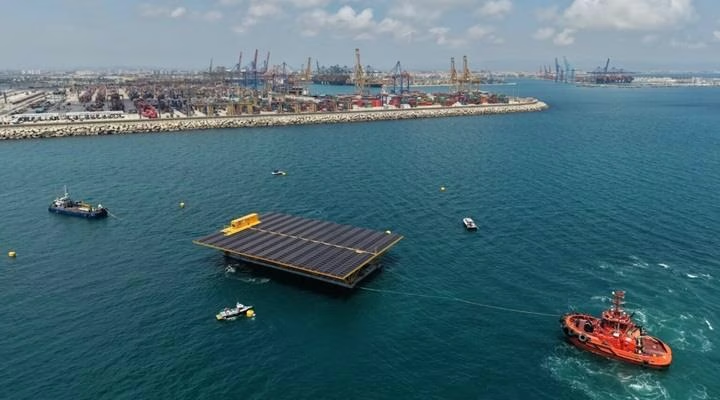
Developed by the Spanish engineering firm BlueNewables, this 500 kW platform isn’t just a concept—it’s actual hardware sitting in the water right now. They are running this as a pilot project in partnership with the Spanish energy company Naturgy. They’ve anchored it off the southern breakwater of the Valencia port to put it through its paces in real, unpredictable ocean conditions.
Here is what makes this engineering feat so impressive to me:
- Catamaran-Inspired Design: The deck is massive, measuring 64 meters long and 41 meters wide.
- High Capacity: The structure houses exactly 600 solar panels.
- Extreme Durability: Mixing high-voltage electricity with corrosive saltwater and violent wave action sounds like an engineering nightmare. Yet, this system is specifically designed to withstand intense wave movements, heavy wind loads, and severe saltwater corrosion.
A 1 MW Vision and Global Scalability
The platform currently in Valencia is just the opening act. The full project, which kicked off recently, involves installing two identical floating platforms side-by-side.
Once fully operational, they will hit a combined installed capacity of 1 MW, generating around 1,500 MWh of electricity annually. To put that into perspective, that is enough juice to power hundreds of homes year-round, completely off the grid, floating right on the ocean surface.
But what I find most promising is BlueNewables’ broader vision. They aren’t just building a one-off science experiment. By utilizing industrial and modular manufacturing processes, they want to slash production times, lower maintenance costs, and mass-produce these platforms for a global market.
The Ultimate Energy Combo?
While researching this, a brilliant thought hit me. Imagine the massive offshore wind farms we already have along coastal regions. What if we drop these floating solar platforms right in the empty spaces between the wind turbines? Generating wind and solar power simultaneously from the exact same ocean footprint would be a game-changer for grid efficiency.
I am incredibly excited to see the data that comes out of these Valencia tests.
But I want to know what you guys think. Does turning our coastal waters into floating power plants sound like the perfect solution to our energy needs, or do you have concerns about maintaining heavy electrical equipment in the open sea? Let’s discuss it in the comments below!
You Might Also Like;
- AI Diaries: Weekly AI News and Updates (July 28, 2026)
- Inside the Freelander 8: The Ultimate Luxury Tech Cabin Revealed
- The Era of Self-Healing Spacecraft: Surviving the Cosmos
-

-

-

-

-

-

-

-

-

-

-

-