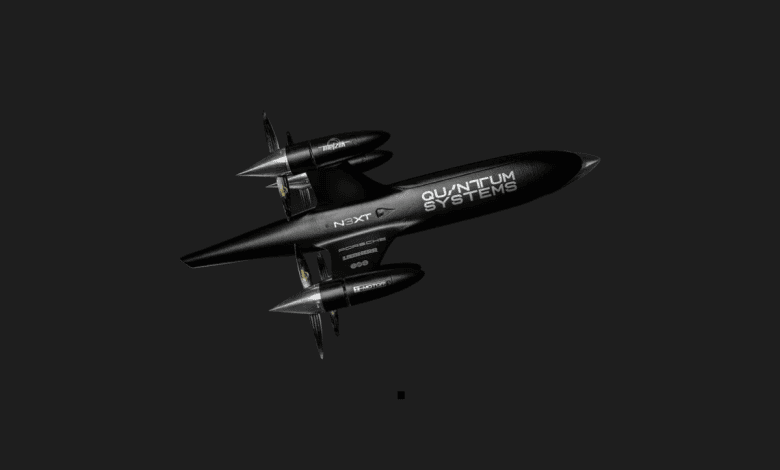
Quantum Systems’ Apex Recordhunter Shatters Electric Flight Speed Records


I’ve been tracking the evolution of electric aviation for a while, but what the team at German drone manufacturer Quantum Systems pulled off recently completely blew my mind. When we talk about battery-powered flight, we usually think about efficiency, range, or maybe quiet urban mobility. We rarely think about raw, face-melting speed.
But on June 26th, the N3XT team at Quantum Systems took their Apex Recordhunter drone to the skies and clocked a staggering 699 km/h (434 mph).
If you are struggling to visualize that, imagine an electric vehicle flying through the air at roughly the cruising speed of a commercial airliner. It’s an insane engineering milestone, and it signals a massive shift in what battery-powered aerodynamics can achieve. Let’s break down exactly what happened, why it matters, and where this technology is actually heading.
The 699 km/h Benchmark: Dethroning the Giants
Right now, the telemetry data from that June 26th flight is sitting with the Fédération Aéronautique Internationale (FAI) for official certification. Once they stamp it—and all signs point to yes—the Apex Recordhunter will officially become the fastest battery-powered flying vehicle on the planet.
To understand just how massive this leap is, we have to look at the current heavyweight champion:
- The Reigning King: For years, the official electric flight speed record has been held by Rolls-Royce’s impressive Spirit of Innovation aircraft, which topped out at 555.9 km/h.
- The New Challenger: Quantum Systems didn’t just beat that record; they obliterated it by nearly 150 km/h using an unmanned platform.
The Drone Speed War Context
The drone racing space has always been the wild west of aerodynamics. Before the Apex stepped up, the landscape looked like this:


- Peregrine V4: Built by the Bell family in South Africa, this rig held a highly respected drone-specific record of 657.59 km/h.
- The Blackbird Controversy: An Australian team claimed to hit 730 km/h. While incredibly fast, it was heavily wind-assisted and failed to secure official FAI certification.
The Apex Recordhunter is cutting through the controversy with verified, independently recorded telemetry.
Beyond the Track: Why Porsche and the Military Care

Here is where the story gets really interesting for me. Whenever I see these extreme speed records, I always ask: Who is funding this, and what is the real-world application?
This isn’t just a hobbyist passion project. The Apex Recordhunter is heavily backed by V4Smart, a battery technology company that operates as a subsidiary of Porsche. When Porsche’s R&D ecosystem gets involved, you know the focus is on pushing next-generation battery cell discharge rates to their absolute limits without catastrophic thermal failure.
But Quantum Systems has explicitly stated that the Apex is a demonstration platform, not a commercial product. So, what are they demonstrating? The future of aerial interception.
The Ukrainian Connection: The Era of Interceptor Drones
We are currently witnessing a massive shift in modern warfare, where low-cost kamikaze and attack drones dominate the skies. Traditional air defense systems are often too slow or too expensive to waste on a $2,000 loitering munition.
This is the real DNA of the Apex project. The data, battery management, and aerodynamic profiles developed here are being funneled directly into real-world defense applications.
Quantum Systems is already working closely with their Ukrainian partner, WIY Drones, to translate this speed into tactical dominance:
- The Strila FPV: A highly agile interceptor drone capable of carrying a 0.5 kg payload, currently aiming for speed certification in its own class.
- The Spys System: A dedicated air-defense interceptor designed to scramble, reach target altitude, and neutralize incoming threats faster than any traditional counter-measure.
My Take on the High-Speed Horizon
When I look at the Apex Recordhunter, I don’t just see a fast RC plane. I see a profound leap in energy density management. To push an electric motor to 699 km/h requires a battery that can dump massive amounts of power in seconds without melting down. The thermal management tech born from this will inevitably trickle down into the consumer EVs we drive and the commercial drones that deliver our packages.
But it also paints a sobering picture of our airspace’s future. The skies are getting incredibly fast, entirely electric, and highly automated. The line between a racing drone and a tactical interceptor is blurring into non-existence.
What do you think? Are we looking at the dawn of a new era in sustainable aviation, or is this high-speed EV tech destined to be exclusively locked behind military and defense contracts? Drop your thoughts below; I’d love to know where you stand on this.
You Might Also Like;