Quantum Doomsday: Could Supercomputers Break the World?


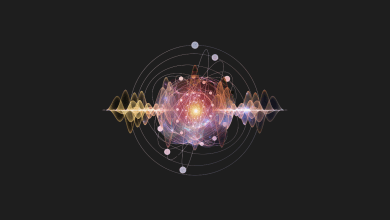
The rise of quantum computing has been one of the most exciting developments in modern technology. Unlike traditional computers, which process information in binary (0s and 1s), quantum computers use qubits that can exist in multiple states simultaneously thanks to quantum phenomena like superposition and entanglement. This allows them to perform certain calculations exponentially faster than today’s most powerful supercomputers.
But with this incredible power comes a dark side — a potential scenario experts call “Quantum Doomsday.”
Why Is Quantum Doomsday a Threat?

Most of today’s digital world is protected by encryption systems such as RSA and ECC. These mathematical codes are practically unbreakable with classical computers, often requiring billions of years to crack. However, a sufficiently advanced quantum computer could break these codes in minutes or even seconds.
This could lead to catastrophic consequences:
- 💸 Bitcoin & Cryptocurrencies – Private keys could be exposed, draining wallets instantly.
- 🏦 Banking Systems – Financial transactions and personal accounts could be hacked.
- 🛰️ National Security – Military communications and even nuclear launch codes could be compromised.
- 🌐 Internet Security – Passwords, emails, and private data could become accessible to anyone with quantum power.
Are We Close to Quantum Doomsday?

Fortunately, we’re not there yet. Building a quantum computer with enough stable qubits to break RSA encryption (estimates suggest around 4,000 fault-tolerant qubits) is still a massive engineering challenge. Companies like Google, IBM, and IonQ, as well as government labs in the U.S., China, and Europe, are racing to achieve “quantum supremacy,” but large-scale, stable quantum computers are likely still a decade or more away.
The Quantum Solution: Post-Quantum Cryptography
While the risks are real, researchers are not standing still. A whole new field called post-quantum cryptography (PQC) is developing quantum-resistant encryption algorithms. Organizations like NIST (National Institute of Standards and Technology) are already standardizing new methods to secure data against future quantum attacks.


At the same time, quantum communication and quantum key distribution (QKD) offer a potential path to truly unbreakable encryption, using the laws of physics rather than mathematics to guarantee security.
The Future: Threat or Opportunity?
The idea of a Quantum Doomsday is both thrilling and terrifying. On one hand, quantum computers could dismantle the security infrastructure of the entire digital world. On the other, they hold the promise of solving humanity’s greatest challenges — from simulating molecules for drug discovery to optimizing global supply chains and enabling a new quantum internet.
The real question is: Will humanity prepare in time?
✅ Final Thought: Quantum computing is not just another step in tech — it’s a leap. If we adapt our security systems before it’s too late, the “Quantum Doomsday” might never arrive. But if we don’t, the day the first truly powerful quantum computer comes online could change the world forever.
You Might Also Like;
- AI Tools Are Coming to Opera Android: Here Are the Innovations
- Top 6 Essential AI APIs for Developers to Integrate Into Your Projects in 2026
- 10 Best AI Tools on Your Phone: Top Mobile Apps for iOS & Android (2026)
Follow us on TWITTER (X) and be instantly informed about the latest developments…