Strange depressions observed in the dunes of the Red Planet, resembling the activity of sandworms, have excited the scientific world. Researchers have revealed the surprising chemical truth behind these tracks, which gave the impression of biological activity, using simulations.
The Martian surface still holds great secrets, despite detailed scans by exploration vehicles. Recently, mysterious pit-like formations that caught the attention of researchers, and at first glance looked like the work of “sandworms,” are exciting the scientific world.
However, the real reason behind these shapes is thought to be not a biological process, but rather the Red Planet’s unique chemical and physical conditions.
On the sand-covered surface of the Red Planet, regular, pit-like depressions surrounded by small sand ridges were observed. These landforms are very similar to mounds created by an animal digging in the soil or the movements of the legendary sandworms in the movie “Dune.” As Lonneke Roelofs, a geoscientist from Utrecht University, stated, these images naturally created an impression of biological activity among scientists.
Unveiling the Mystery: Carbon Dioxide Ice Blocks


The research team launched a comprehensive study to solve the formation mechanism of these mysterious landforms. In light of the available data, the most likely and strongest scientific explanation centered on the idea that these depressions were formed by carbon dioxide ice blocks.
During the winter season on Mars, temperatures drop to minus 120 degrees Celsius, and under these conditions, CO2 ice accumulates on the surface. As winter ends, the dune slopes begin to warm up, and the accumulated CO2 ice masses crack and break. An ice block starting to roll down the slope rapidly turns into gas (sublimates) on its underside due to the large temperature difference between the thin atmosphere and the warm dune sand.
The gaseous CO2 occupies much more volume than the original ice, causing the ice block to suddenly expand in a kind of explosion. The high gas pressure sprays the sand around the block in all directions.
Artificial Simulations Support the Theory
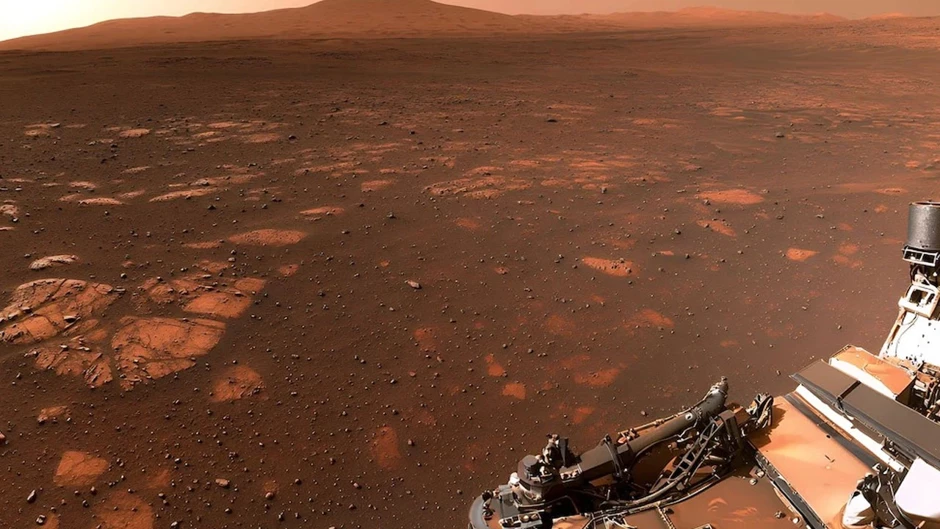
Researchers successfully recreated this process in a simulation environment. A CO2 ice block released from the top of a slope moved by carving hollows into the slope, exactly mimicking the observed depressions. As a result of this process, the block got stuck in a pit surrounded by small sand ridges. Then, as it continued to slide, it left a long and deep track with distinct sand ridges on both sides.
Although these interesting Mars landforms suggest the activity of a living creature at first glance, it is understood that there is a complex chemical and physical process behind them. This situation strengthens the hypothesis that the mysterious formations on the surface of Mars may be the result of the planet’s unique seasonal and atmospheric interactions, rather than biological activity.
You Might Also Like;
- We Selected 10 Series Similar to Stranger Things for Those Who Love It
- Where and How is Silver Used in Electric Vehicles?
- Hyundai Unveils Its Multi-Purpose Wheeled Robot
-

-

-
-
-

-
-
-
-
-
-

-